

Hallstatt
Images

Hallstatt Lake Panorama


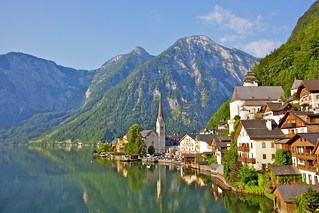


Geographical Genesis
Hallstatt's existence is intrinsically linked to its dramatic geographical setting in the Salzkammergut region of Upper Austria. Situated on a narrow, alluvial fan between the southwestern shore of Hallstätter See and the imposing, steep slopes of the Dachstein massif, the town is a marvel of human adaptation to a challenging environment. The Dachstein, a significant limestone mountain range, provides a breathtaking backdrop and the geological foundation for the region's rich mineral deposits, particularly salt.
The lake, Hallstätter See, is a glacial lake, its deep blue waters reflecting the surrounding peaks and contributing to the microclimate. This alpine environment dictates a temperate climate with distinct seasons, characterized by cold, snowy winters and pleasant, warm summers, ideal for both historical exploration and outdoor activities. The town's location on the national road connecting Salzburg and Graz also historically facilitated trade and cultural exchange, further embedding it within broader European networks.
The Salt Legacy
The historical narrative of Hallstatt is dominated by its salt production, a practice dating back to the Neolithic period, over 7,000 years ago. The extensive salt mines, particularly the Hallstatt Salt Mine (Salzwelten Hallstatt), are among the oldest in the world. This 'white gold' was not merely a commodity; it was the engine of Hallstatt's prosperity and influence.
The wealth generated from salt trade allowed for the development of a sophisticated society during the Early Iron Age (c. 800–450 BC). This period saw the rise of the Hallstatt culture, an archaeological designation for a widespread civilization that significantly impacted Central Europe. This culture is strongly associated with the Proto-Celtic and early Celtic peoples, and its burial grounds near Hallstatt have yielded a wealth of artifacts, providing invaluable insights into their social structure, technology, and beliefs.
The very name 'Hallstatt' is believed to derive from a Celtic word for salt, underscoring its foundational importance.
UNESCO Recognition and the Double-Edged Sword of Fame
In recognition of its unparalleled blend of natural beauty and profound historical significance, Hallstatt was inscribed as a UNESCO World Heritage Site in 1997. It forms the core of the Hallstatt-Dachstein/Salzkammergut Cultural Landscape, an area celebrated for its outstanding universal value. This designation highlights the town's unique archaeological heritage, its dramatic alpine scenery, and the long history of human interaction with this environment.
However, Hallstatt has also become a global icon, leading to significant challenges associated with overtourism. The sheer volume of visitors, particularly during peak seasons, strains local infrastructure, impacts the quality of life for residents, and raises concerns about the site's preservation. This phenomenon forces a critical examination of sustainable tourism practices and the complex relationship between global recognition and local well-being, making Hallstatt a case study in contemporary heritage management.
Economic Pillars and Community Dynamics in a Global Spotlight
The economy of Hallstatt is predominantly driven by tourism, a direct consequence of its UNESCO status and picturesque appeal. The town thrives on attracting visitors eager to experience its historic salt mines, charming architecture, and stunning lake and mountain vistas. This translates into a robust service sector, encompassing hospitality, retail, and cultural interpretation.
Beyond tourism, there's an ongoing effort to preserve and interpret the town's rich archaeological and industrial heritage, providing employment in heritage management and museum operations. The small resident population, numbering around 900, fosters a close-knit community where the impacts of tourism and heritage preservation are keenly felt. Local governance plays a crucial role in balancing economic development with environmental and social sustainability, navigating the complexities of managing a world-renowned site that is also a living community.
The historical reliance on salt mining has evolved into a modern economy that leverages the town's unique identity and natural assets.
Governance and Education
As a municipality within the Gmunden District of Upper Austria, Hallstatt operates under Austrian federal and regional governance structures. The local government is responsible for municipal services, infrastructure development, and urban planning, with a particular focus on managing the impacts of overtourism. This involves implementing regulations on visitor numbers, traffic management, and preserving the town's historic character.
Educational opportunities within Hallstatt itself are limited due to its small size, with primary education likely being the focus. For secondary and higher education, residents would typically travel to larger towns or cities in the region, such as Gmunden or Salzburg. The educational system in Austria emphasizes vocational training and academic pathways, ensuring that young Austrians have access to diverse learning opportunities.
The unique context of Hallstatt means that education might also incorporate elements of local history, heritage preservation, and environmental stewardship, fostering a sense of responsibility towards their extraordinary home.
Go deeper
Frequently Asked Questions
What is Hallstatt and why is it famous?+
How did people in Hallstatt get salt?+
Why is Hallstatt a UNESCO World Heritage Site?+
Where is Hallstatt located?+
What problems does Hallstatt face because of many tourists?+
Based on content from Wikipedia · Licensed under CC BY-SA 4.0