

Győr
Images

Megyeszékhely - Győr-Moson-Sopron megye - Győr


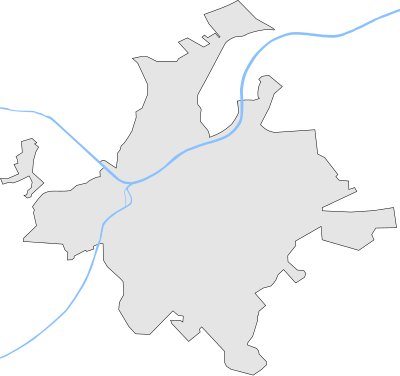


Geostrategic Significance
Győr occupies a position of considerable geostrategic importance in northwest Hungary. Its defining characteristic is its location precisely halfway between Budapest, the national capital, and Vienna, the capital of Austria. This placement on a historically significant Central European road network has cemented Győr's role as a crucial transit point for centuries.
It is not merely a city; it is a nexus, facilitating the flow of commerce, culture, and people across borders. As the principal city of Győr-Moson-Sopron County and the administrative capital of the Western Transdanubia region, its influence extends far beyond its municipal boundaries. Its status as one of Hungary's seven main regional centers underscores its economic and logistical prominence within the national framework.
This advantageous positioning has historically attracted development and continues to be a cornerstone of its identity and economic vitality.
A Palimpsest of Eras
While the provided source focuses on Győr's current status, its historical depth is undeniable, shaped by its strategic location. As a key point on major European routes, settlements in the Győr area likely date back to antiquity, serving as vital stops for various peoples and empires. Throughout the medieval period and beyond, its importance as a fortified town and a center of trade would have been paramount.
The city has undoubtedly witnessed periods of prosperity and conflict, evolving through different political and cultural influences. Its development into one of Hungary's largest cities, the sixth in size, is a testament to its enduring appeal and resilience. Understanding Győr's history requires appreciating how its geographical advantages have consistently made it a focal point for human activity and development across millennia.
The Sociocultural Fabric
Győr is a vibrant urban center where the Hungarian language forms the primary linguistic and cultural bond among its approximately 130,000 residents. As a major regional capital, it serves as a focal point for cultural exchange and the preservation of local traditions, while also embracing modern lifestyles. The city's status as one of Hungary's seven main regional centers implies a diverse population and a rich tapestry of social interactions.
Daily life in Győr is characterized by a blend of economic activity, educational pursuits, and cultural engagement. The city likely hosts numerous festivals, events, and institutions that reflect its heritage and contemporary character, making it a dynamic place for its inhabitants and visitors alike. Its role as a regional hub means it offers a wide range of amenities and opportunities that shape the experiences of its people.
Economic Engine of the West
Győr's economic prowess is intrinsically linked to its strategic location and its designation as a primary regional center. Positioned on a key European corridor, it naturally attracts significant commercial and industrial activity. While specific industries are not detailed in the source, its status as a major city and regional capital suggests a diversified economy.
This likely includes robust manufacturing sectors, advanced service industries, and thriving trade networks, capitalizing on its connectivity to both domestic and international markets. The city's economic strength contributes significantly to the Győr-Moson-Sopron County and the broader Western Transdanubia region, solidifying its role as a vital contributor to Hungary's national economy. Its economic dynamism makes it an attractive location for investment and employment.
Administrative Framework
Győr functions as a significant administrative entity within Hungary, holding county rights that grant it a substantial degree of autonomy and responsibility. This elevated status allows the city to manage its own governance structures, urban planning, and public services effectively. As the capital of Győr-Moson-Sopron County and the Western Transdanubia region, it serves as the seat of regional government and administration, coordinating policies and development initiatives across a wider geographical area.
Its role as one of Hungary's seven main regional centers further emphasizes its importance in the national administrative hierarchy. The governance of Győr is thus multifaceted, encompassing local municipal management and regional leadership, ensuring its continued development and operational efficiency.
The Foundation of Futures
As a major regional center and one of Hungary's largest cities, Győr is a significant hub for education and learning. The presence of county rights and its role as a capital city for a region implies a well-developed educational infrastructure. This likely includes a range of primary, secondary, and tertiary institutions catering to the diverse needs of its population and the surrounding areas.
Universities and colleges in Győr would offer specialized programs, fostering research and innovation, and preparing students for careers in various sectors, including those that drive the city's economy. The educational landscape in Győr is crucial for nurturing talent, promoting intellectual growth, and ensuring the city remains a dynamic and forward-looking center in Hungary.
See also
Frequently Asked Questions
Where is Győr located?+
Why is Győr important?+
How many people live in Győr?+
What language do people speak in Győr?+
What can visitors see or do in Győr?+
Based on content from Wikipedia · Licensed under CC BY-SA 4.0