

Gregorian Chant
Images
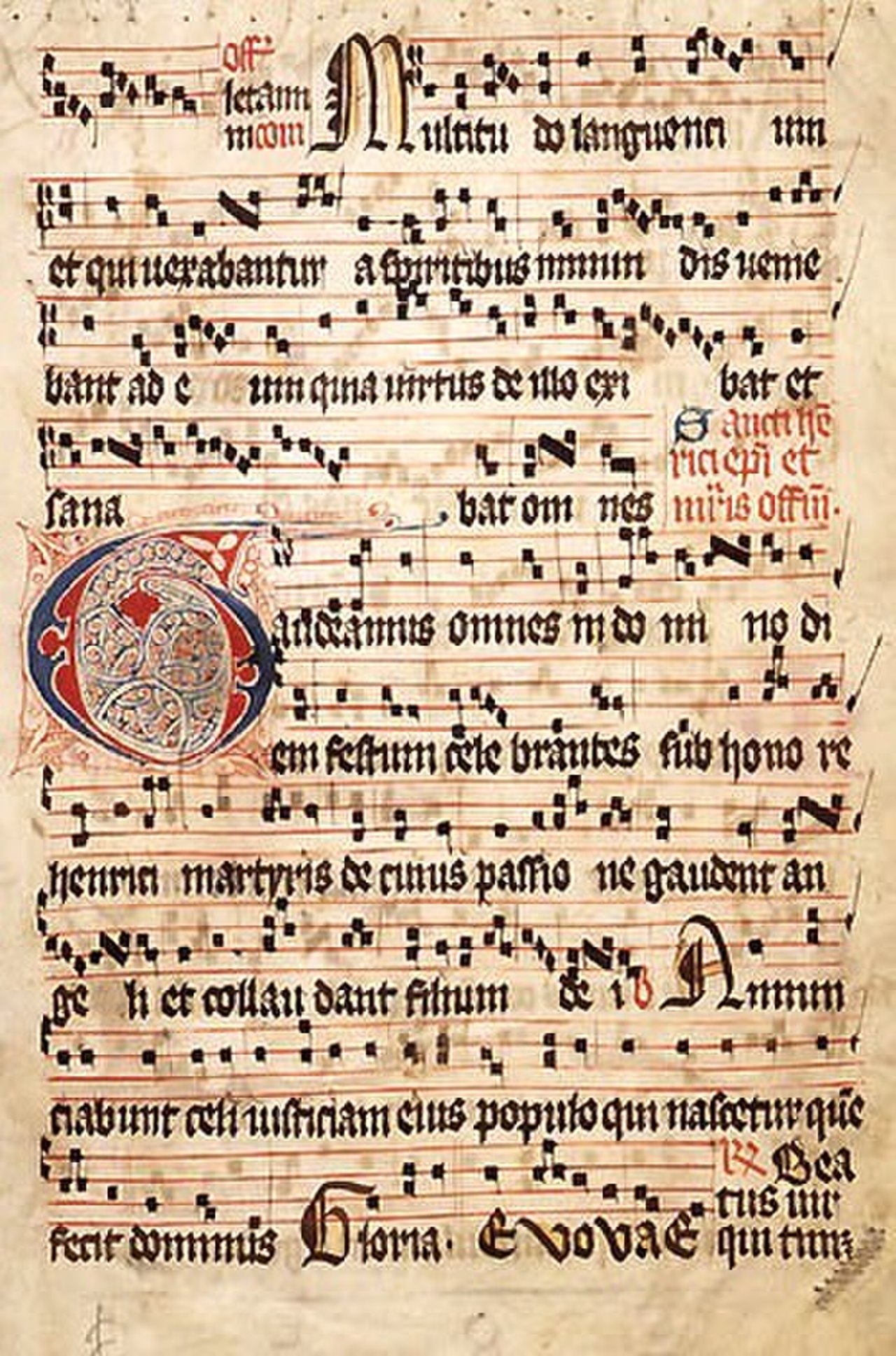
Gregorian chant
The Genesis and Evolution of Monophonic Sacred Song
Gregorian chant represents the apex of a long evolution of sacred music within the early Christian Church, drawing influences from Roman chant traditions, Ambrosian chant, and even ancient Greek musical theory. While the tradition is popularly linked to Pope Gregory I (540-604 AD) and his supposed role in compiling and standardizing the repertoire, modern scholarship indicates a more gradual development. The chant as we know it today largely coalesced and was systematically notated during the Carolingian era (8th-9th centuries), driven by a desire for liturgical uniformity across the vast Frankish empire.
Monasteries, particularly those of the Benedictine order, became crucial centers for its preservation, dissemination, and elaboration. The development of early forms of musical notation, such as neumes, was instrumental in codifying these melodies and ensuring their transmission across geographical and temporal divides, laying the groundwork for future musical developments.
Structural and Performance Characteristics
The defining characteristic of Gregorian chant is its monophonic texture, meaning a single melodic line sung without harmonic accompaniment. This purity of sound was intended to focus the listener’s attention on the sacred text and foster a contemplative state. The rhythm of Gregorian chant is fluid and unmetered, closely following the natural prosody and accentuation of the Latin text.
This contrasts sharply with the metrical rhythms that would later dominate Western music. Melodies are typically conjunct, moving by step or small leaps, contributing to their smooth, flowing quality. Different styles of chant performance exist, ranging from syllabic (one note per syllable) to melismatic (many notes per syllable), each serving to emphasize different aspects of the text’s meaning and emotional content.
The performance often involves call-and-response patterns between a soloist and a choir, or antiphonal singing between two halves of a choir.
Enduring Significance
Gregorian chant’s significance extends far beyond its historical context as the primary music of the Roman Catholic liturgy for centuries. It served as the bedrock upon which much of Western classical music was built. The development of polyphony, the art of combining multiple independent melodic lines, emerged directly from the practice of organum, which involved adding voices to existing chant melodies.
Composers throughout the medieval and Renaissance periods relied heavily on chant melodies as foundational material for their more complex works. Furthermore, Gregorian chant continues to hold profound spiritual and aesthetic value. Its timeless quality and meditative character have led to its resurgence in popularity among diverse audiences seeking spiritual solace, mindfulness, and an escape from the cacophony of contemporary life.
Its influence can still be detected in contemporary sacred music and even in secular genres seeking to evoke a sense of solemnity or antiquity.
The Notation and Transmission of a Sacred Legacy
The accurate transmission of Gregorian chant melodies was a significant challenge before the advent of modern musical notation. Early chant manuscripts utilized neumes, graphic symbols placed above the text that indicated melodic contour but not precise pitches or rhythms. Over time, these neumes evolved into diastematic notation, where symbols were placed on a staff with lines representing specific pitches, allowing for more accurate reproduction.
This development was crucial for standardizing the chant repertoire across different regions and ensuring its consistent performance. The study of these manuscripts provides invaluable insights into medieval musical practice, liturgical history, and the evolution of musical notation itself. The careful preservation and scholarly analysis of these ancient scores allow us to experience and understand this foundational musical tradition today.
Gregorian Chant in Contemporary Contexts
While its role in daily Catholic liturgy has evolved, Gregorian chant continues to be performed and appreciated globally. Many monastic communities remain dedicated to its preservation, offering recordings and opportunities for the public to experience its spiritual power firsthand. Beyond traditional settings, contemporary artists and ensembles explore and reinterpret Gregorian chant, infusing it with modern sensibilities or using it as inspiration for new compositions.
Its influence is evident in film scores aiming to create an atmosphere of reverence or mystery, and in New Age music seeking meditative qualities. The enduring appeal of Gregorian chant lies in its ability to transcend time, offering a direct connection to a rich spiritual and musical heritage that continues to resonate with listeners seeking depth, beauty, and contemplation in sound.
Go deeper
Frequently Asked Questions
What is Gregorian chant?+
Why is Gregorian chant called "monophonic"?+
How did people write down Gregorian chant before modern notation?+
Where did Gregorian chant become popular?+
Why do people still listen to Gregorian chant today?+
Based on content from Wikipedia · Licensed under CC BY-SA 4.0