

Grand Army Plaza
Images

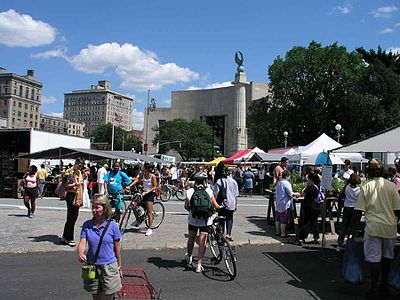
Grand Army Plaza IRT E-Pkwy; Bike Racks (cropped)





The Genesis of a Civic Masterpiece
Grand Army Plaza, originally conceived as Prospect Park Plaza, represents a pivotal element in Frederick Law Olmsted and Calvert Vaux's visionary design for Prospect Park. Its creation was intrinsically linked to establishing a grand and dignified entrance to Brooklyn's premier public space, intended to be a civic monument in itself. The plaza's complex layout, featuring concentric oval rings and eight radial streets, was a sophisticated solution to integrate park access with the burgeoning urban street grid of late 19th-century Brooklyn.
The outer ring, Plaza Street, and the inner ovoid roadway carrying Flatbush Avenue, exemplify an innovative approach to traffic management and pedestrian flow. This design not only facilitated access but also created a dramatic ceremonial approach to the park, setting a tone of grandeur and importance from the outset. The renaming to Grand Army Plaza solidified its role as a memorial space, honoring the sacrifices of the Civil War era.
A Pantheon of Commemoration and Artistic Expression
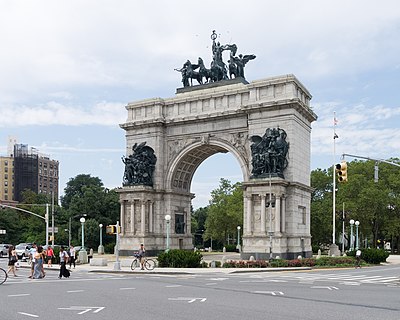
The plaza is a curated outdoor gallery of significant monuments and architectural elements. The Soldiers' and Sailors' Arch, a monumental triumphal arch, stands as the undisputed centerpiece, a powerful symbol of Union victory and remembrance. Its scale and Beaux-Arts design are intended to inspire awe and reflection on the nation's history.
Complementing the arch are the Bailey Fountain, a testament to civic beautification, and the John F. Kennedy Monument, linking historical commemoration to more recent figures. The inclusion of statues of Civil War generals Gouverneur K.
Warren and Henry Warner Slocum, alongside busts of prominent Brooklyn citizens like Alexander Skene and Henry W. Maxwell, creates a layered narrative of leadership and local achievement. The two distinctive 12-sided gazebos, with their granite Tuscan columns and Guastavino vaulting, add architectural richness and provide functional spaces for public respite, showcasing sophisticated construction techniques.
An Intersecting Point of Urban Mobility and Community
Grand Army Plaza functions as a critical node within Brooklyn's transportation network. The convergence of major arteries such as Flatbush Avenue, Vanderbilt Avenue, Prospect Park West, Eastern Parkway, and Union Street underscores its strategic importance. This complex intersection manages significant vehicular and pedestrian traffic, serving as a gateway not only to Prospect Park but also to adjacent residential, commercial, and cultural districts.
Beyond its logistical role, the plaza is a dynamic public forum. It frequently hosts community events, protests, and celebratory parades, transforming the space into a vibrant stage for civic expression. Its open design encourages social interaction and provides a vital public realm where diverse populations can gather, connect, and engage with their city and its history.
Enduring Relevance in the Modern Urban Landscape
The enduring significance of Grand Army Plaza lies in its successful synthesis of historical commemoration, artistic merit, and functional urban planning. It transcends its original purpose as merely an entrance to a park; it is a destination in its own right, a place where history is palpable and public life unfolds. In an era of increasing urbanization, such grand public spaces are vital for fostering community identity and providing essential recreational and cultural opportunities.
The plaza's continued relevance is a testament to the foresight of its designers and its ongoing role in the social and cultural fabric of Brooklyn, offering a tangible link to the past while serving the needs of a contemporary metropolis.
See also
Frequently Asked Questions
What is Grand Army Plaza?+
Why is there a Soldiers' and Sailors' Arch there?+
How does Grand Army Plaza help people get to Prospect Park?+
What can you see at Grand Army Plaza?+
Why do people gather at Grand Army Plaza?+
Based on content from Wikipedia · Licensed under CC BY-SA 4.0