

Gorgoneion
Images
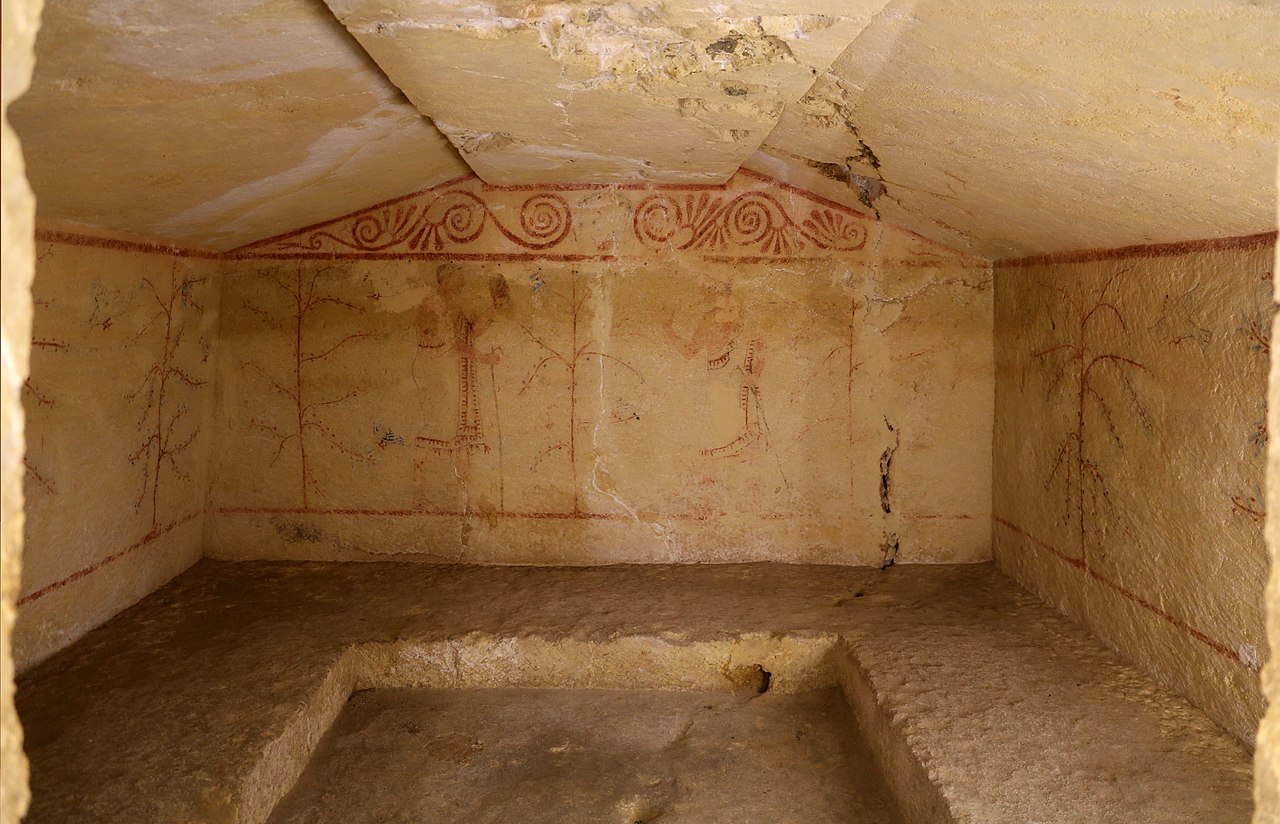
Tomba del gorgoneion, 400 ac ca. 02


The Gorgoneion
The Gorgoneion, a depiction of a monstrous, often terrifying face, served as a potent apotropaic symbol in ancient Greek culture. Its visual characteristics-typically a grotesque visage with bulging eyes, a wide, often lolling tongue, and a characteristic mane of writhing snakes-were deliberately designed to shock and repel. This was not mere artistic expression; it was a functional element intended to avert evil influences, protect against harm, and bring good fortune.
The symbol's power was believed to be inherent in its terrifying appearance, capable of frightening away malevolent spirits, curses, and even human enemies. Its application spanned a vast spectrum, from the personal adornment of amulets and jewelry to the monumental scale of architectural friezes and temple pediments, underscoring its perceived efficacy across different social strata and contexts. The Gorgoneion functioned as a visual guardian, a constant reminder of protective forces at play in a world perceived as susceptible to unseen dangers.
From Mythological Terror to Stylized Iconography
The iconography of the Gorgoneion is inextricably linked to the myth of the Gorgons, particularly Medusa. Originally, the Gorgoneion likely represented the severed head of Medusa, a monstrous figure whose gaze could petrify. The hero Perseus's slaying of Medusa and his subsequent use of her head as a weapon cemented its image as a powerful, albeit terrifying, entity.
Over centuries, the direct representation of Medusa's head evolved into a more stylized and generalized motif. Artists began to adapt and refine the features, sometimes softening the terror, other times exaggerating it, to suit specific artistic and functional purposes. This evolution saw the Gorgoneion transition from a specific mythological depiction to a broader symbolic language of protection.
It became a recognizable icon, its power understood through cultural transmission and repeated use, transcending its literal origins to become a universal symbol of warding and defense.
The Psychological and Societal Significance of the Gorgoneion
The pervasive presence of the Gorgoneion in ancient Greek society speaks volumes about its psychological and societal significance. In an era where belief in the supernatural was deeply ingrained, such symbols provided a tangible means of confronting and mitigating perceived threats. The Gorgoneion offered a sense of agency and control in the face of uncertainty, allowing individuals and communities to actively engage with the forces they believed governed their lives.
Its use on military equipment, such as shields and helmets, demonstrates its role in bolstering morale and intimidating adversaries, contributing to a psychological advantage in conflict. Furthermore, its placement on public buildings and domestic spaces suggests a collective desire for security and prosperity, reinforcing social cohesion through shared belief in protective iconography. The Gorgoneion thus functioned not only as a charm but as a cultural artifact that reflected and shaped ancient Greek perceptions of danger, protection, and the divine.
Manifestations of the Gorgoneion Across the Ancient World
The Gorgoneion's adaptability allowed it to manifest in a remarkable array of forms and media throughout the ancient Greek world and beyond. In sculpture, it adorned temple pediments, metopes, and altars, serving as imposing guardians of sacred spaces. Vase painting frequently featured the Gorgoneion, often as a central motif on shields or as decorative elements on the vessels themselves. In architecture, it was carved into friezes, keystones, and even drainage spouts, integrating protective imagery into the very fabric of buildings.
Personal adornments, such as rings, pendants, and fibulae (brooches), carried the Gorgoneion as a portable amulet, offering constant protection to the wearer. Its influence even extended to coinage, where it appeared on coins as a symbol of the issuing authority's power and protective oversight. This widespread dissemination highlights the Gorgoneion's enduring appeal and its successful integration into the visual culture of antiquity.
Enduring Legacy and Modern Relevance
While the specific mythological context of the Gorgoneion belongs to antiquity, its underlying concept of using powerful imagery for protection or intimidation continues to resonate. The principle of the apotropaic symbol, designed to ward off evil, can be seen in various forms throughout history and even in contemporary culture, albeit often secularized. The Gorgoneion's artistic legacy is undeniable, influencing subsequent artistic traditions and remaining a subject of fascination for scholars and art enthusiasts alike.
Its complex blend of terror and protection, its deep roots in mythology, and its pervasive presence in ancient art make it a compelling case study in the power of symbols. The Gorgoneion serves as a potent reminder of how ancient peoples sought to navigate their world, using art and belief to create a sense of security and order against the perceived chaos of existence.
See also
Frequently Asked Questions
What is a Gorgoneion?+
Why did people put a Gorgoneion on shields and helmets?+
How did the Gorgoneion look?+
Where can you find a Gorgoneion in ancient Greek art?+
Why did the Gorgoneion change over time?+
Based on content from Wikipedia · Licensed under CC BY-SA 4.0