

Gödel's Loophole
Images
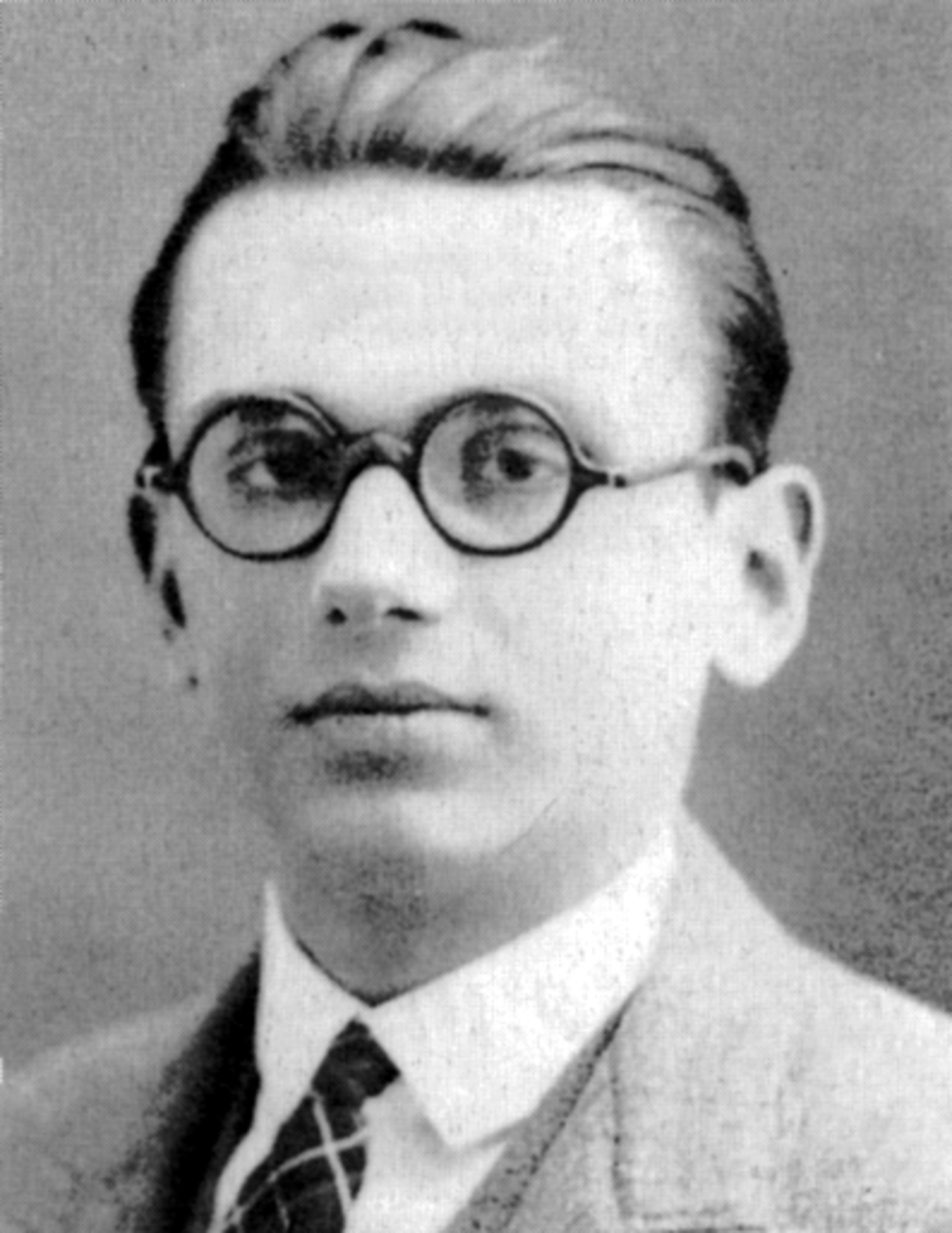
Gödel's Loophole
The Genesis of a Constitutional Paradox
In 1947, Kurt Gödel, a towering figure in 20th-century logic and mathematics, reportedly identified what he termed a 'loophole' within the United States Constitution. This was not a mere oversight or a practical vulnerability, but a potential logical contradiction inherent in the document itself. Gödel's insight suggested that the Constitution, the supreme law of the land designed to safeguard a republic, might contain provisions that could be legally manipulated to dismantle that very republican structure and institute a dictatorship.
The nature of this 'loophole' was never explicitly detailed by Gödel, who shared it verbally with his friend Oskar Morgenstern. This lack of explicit documentation has rendered it an enduring enigma, a theoretical problem that continues to challenge legal scholars and philosophers by positing that the foundational text of American democracy might contain the seeds of its own subversion through purely legal means.
Kurt Gödel and the Transmission of an Unsettling Idea
Kurt Gödel, an Austrian-American mathematician and philosopher, was renowned for his incompleteness theorems, which revolutionized mathematical logic by demonstrating inherent limitations in formal axiomatic systems. His ability to discern fundamental logical structures extended, it seems, to the realm of law and governance. Gödel confided his discovery of the constitutional loophole to Oskar Morgenstern, a fellow intellectual and economist.
Morgenstern, in turn, discussed the matter with Albert Einstein, underscoring the perceived gravity of Gödel's finding. However, Morgenstern's later recollections, written in 1971, omitted the specific details of the loophole. This deliberate or accidental omission has created a historical vacuum, fueling decades of speculation about the precise logical mechanism Gödel envisioned.
The story itself, passed through a chain of eminent thinkers, lends an almost mythical quality to the concept, elevating it beyond a simple legal theory to a profound philosophical question about the limits of formal systems.
The Enduring Significance
The significance of Gödel's Loophole transcends its status as a mere theoretical curiosity; it strikes at the heart of legal certainty and the perceived invincibility of constitutional democracy. If a constitution, intended as the ultimate guarantor of a nation's political order, can be shown to contain an internal mechanism for its own legal dissolution into an authoritarian regime, it raises profound questions about the nature of law, power, and societal stability. American constitutional law scholar John Nowak's characterization of it as 'one of the great unsolved problems of constitutional law' encapsulates its enduring intellectual weight.
It forces a contemplation of whether any set of rules, however meticulously crafted, can be entirely immune to manipulation or self-contradiction, particularly when the stakes involve the fundamental structure of governance and individual liberties.
Speculative Mechanisms
The precise manner in which Gödel's Loophole might function remains a subject of intense academic debate, largely due to the absence of Gödel's own detailed explanation. Theories often gravitate towards the Constitution's amendment process or its provisions for emergency powers. One line of thought suggests that a series of constitutionally permissible amendments, perhaps initiated under the guise of national security or governmental efficiency, could incrementally erode democratic principles.
Another possibility involves a complex interpretation of existing clauses, allowing for the concentration of power in a way that bypasses traditional checks and balances. The core of the speculation is that the loophole would not involve an extralegal coup but a legalistic subversion, utilizing the Constitution's own framework to achieve an outcome antithetical to its foundational spirit. It's a thought experiment in how a formal system can be used to dismantle itself.
Gödel's Loophole in Contemporary Context
In the contemporary landscape, Gödel's Loophole serves as a potent reminder of the theoretical fragility of democratic institutions and the importance of continuous vigilance. While no concrete instance of this loophole being exploited has ever been documented, its conceptual existence, posited by a mind of Gödel's caliber, encourages critical examination of legal frameworks. It prompts reflection on the inherent limitations of formal systems and the potential for unforeseen consequences arising from complex rules.
The loophole underscores that the health of a democracy relies not only on its written laws but also on the active participation, critical thinking, and ethical commitment of its citizens and leaders to uphold its underlying principles, even when faced with seemingly legal pathways to undermine them.
See also
Frequently Asked Questions
What is Gödel's Loophole?+
Who discovered Gödel's Loophole?+
Why is Gödel's Loophole important?+
Did Gödel write down the loophole?+
Can someone use the loophole to become a dictator?+
Based on content from Wikipedia · Licensed under CC BY-SA 4.0