

Franz Schubert: The Music Wizard!
Images
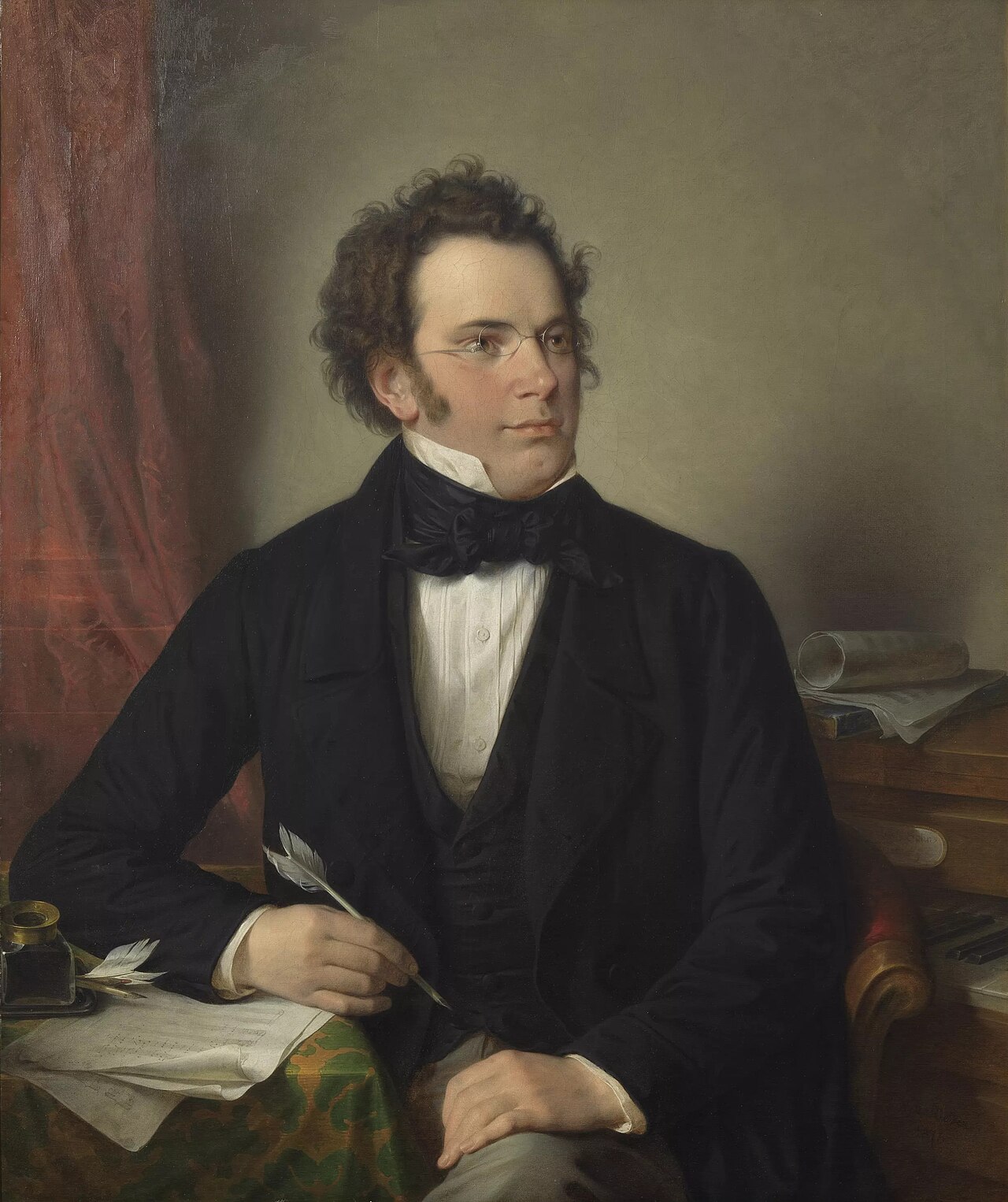
Franz Schubert
Prodigious Talent and Early Influences in Vienna
Born on January 31, 1797, in Himmelpfortgrund, a suburb of Vienna, Franz Peter Schubert displayed an almost preternatural musical aptitude from a very young age. His father, a schoolmaster, provided his initial violin instruction, while his elder brother Karl taught him piano. Schubert's innate talent quickly outstripped their capabilities, leading him to seek more advanced tutelage.
At eleven, he secured a coveted place as a choirboy at the Stadtkonvikt, a Viennese boarding school. Here, he was exposed to a rich musical environment, studying orchestral scores by masters like Haydn, Mozart, and Beethoven, and even playing in the school orchestra. This formative period instilled in him a deep understanding of classical forms while simultaneously nurturing his burgeoning compositional voice.
Despite his passion for music, he also pursued studies to become a schoolteacher, a path he followed briefly after leaving the Stadtkonvikt in 1813, yet his true calling remained composition, which he continued to pursue with relentless dedication under the guidance of Antonio Salieri.
An Unparalleled Output
Schubert's tragically short life, ending on November 19, 1828, at the age of 31, belies the sheer volume and breadth of his musical output. His catalog boasts over 600 Lieder, a genre he elevated to an art form, imbuing German poetry with profound musical sensitivity and psychological depth. These songs, ranging from the dramatic narrative of 'Erlkönig' to the introspective despair of 'Winterreise,' explore the full spectrum of human emotion.
Beyond his vocal works, Schubert composed seven complete symphonies, including the iconic 'Unfinished' Symphony (No. 8) and the majestic 'Great' Symphony (No. 9). His contributions to chamber music are equally significant, featuring masterpieces such as the 'Trout' Quintet, the String Quintet in C major, and the haunting 'Death and the Maiden' String Quartet (No. 14). His piano works, including the Impromptus and his final three sonatas, showcase his innovative harmonic language and lyrical gift.
Operas and sacred music also feature in his diverse oeuvre.
From Local Acclaim to Posthumous Reverence
While Schubert's music was cherished by a close circle of friends and intellectuals in Vienna during his lifetime, widespread public recognition was limited. His admission to the Gesellschaft der Musikfreunde in 1821 provided a platform, and he was able to give a solo concert of his works in March 1828, a rare and successful event that marked a high point in his public career. However, this recognition came late, and he died just eight months later.
The true extent of Schubert's genius was recognized and championed in the decades following his death by prominent 19th-century composers like Felix Mendelssohn, Robert Schumann, Franz Liszt, and Johannes Brahms. They actively promoted his works, introducing his lyrical melodies and innovative harmonies to a global audience and solidifying his status as a foundational figure of the Romantic movement.
Schubert's Enduring Impact on Musical History
Franz Schubert's legacy is immense, fundamentally shaping the course of Western classical music. He is credited with bridging the Classical and Romantic eras, infusing classical structures with unprecedented emotional intensity and subjective expression. His mastery of melody, characterized by its natural flow and poignant beauty, remains unparalleled.
The Lieder, in particular, transformed song into a vehicle for profound psychological exploration, influencing generations of composers. His symphonic and chamber works, while rooted in classical tradition, pushed harmonic boundaries and expanded the expressive potential of instrumental music. Today, Schubert's compositions are not merely historical artifacts but vibrant, living works that continue to captivate audiences with their emotional resonance, technical brilliance, and timeless lyrical appeal.
His music offers a profound connection to the human spirit, making him one of the most beloved and significant composers in history.
Go deeper
Frequently Asked Questions
What made Franz Schubert a music wizard at such a young age?+
How many songs did Schubert write before he turned 32?+
Why is Schubert's "Unfinished" Symphony famous?+
What kinds of music did Schubert write besides songs?+
Who helped people learn about Schubert's music after he died?+
Based on content from Wikipedia · Licensed under CC BY-SA 4.0