

Federal monarchy
Images
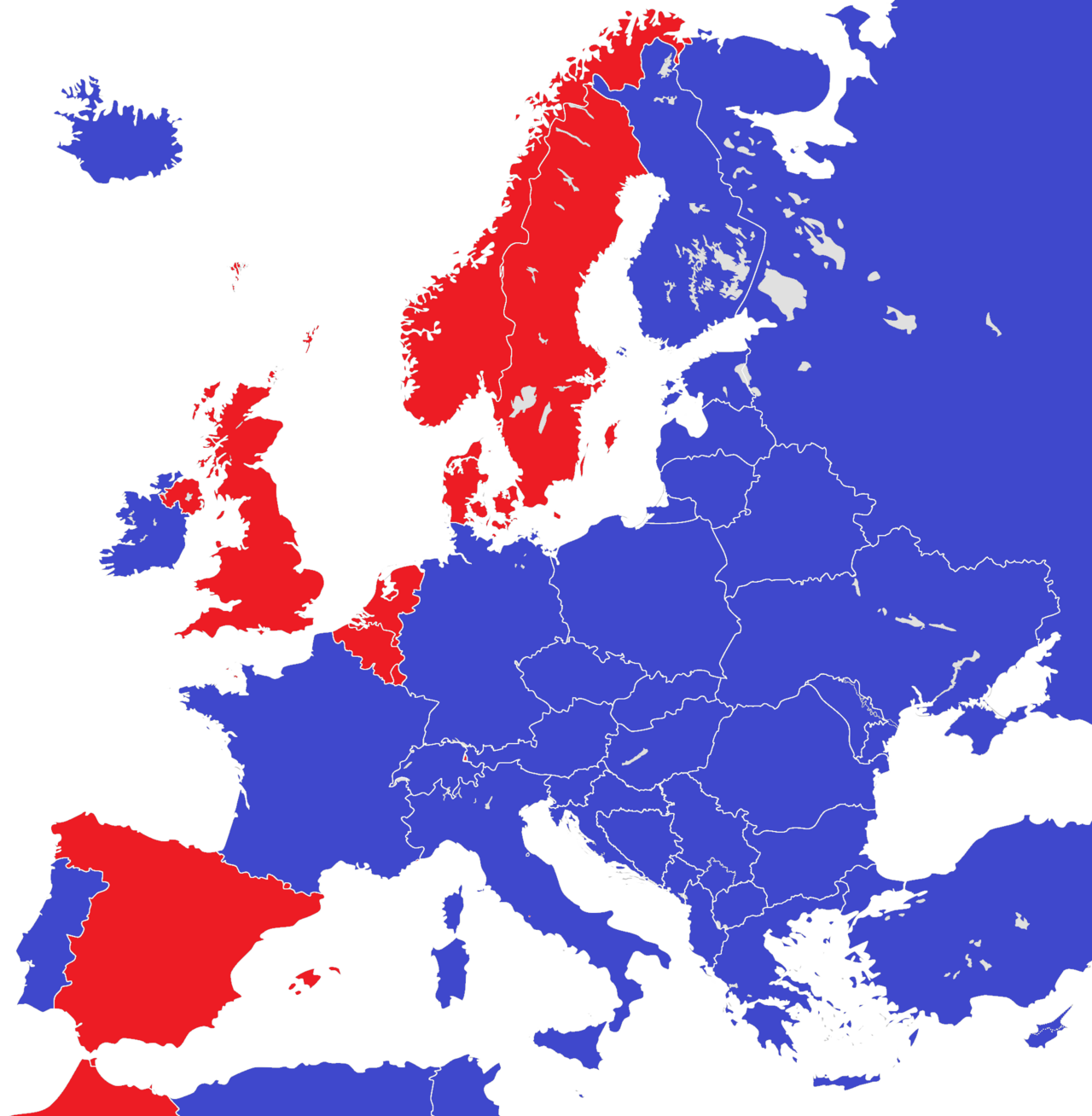
Europe 2015 monarchies versus republics


The Dual Nature of Sovereignty in Federal Monarchies
A federal monarchy represents a sophisticated political arrangement where a single monarch acts as the supreme head of a federation composed of constituent states. These states, while united under one crown, possess varying degrees of autonomy. The defining characteristic is the dual sovereignty: the monarch embodies the overarching sovereignty of the federation, often serving as a symbol of national unity and continuity, while the constituent states retain significant sovereign powers within their own territories.
This can manifest in diverse ways; some states might have their own hereditary monarchs, maintaining a dynastic link, while others could operate under republican forms of government, electing their leaders. The federal structure necessitates a clear delineation of powers, typically enshrined in a constitution, that specifies which responsibilities fall under the federal government (e.g., foreign affairs, defense) and which remain with the states (e.g., education, local law enforcement, cultural affairs).
This division is crucial for maintaining the integrity of both the federation and its member states, preventing the over-centralization of power and allowing for tailored governance that respects regional identities and needs.
Historical Trajectories and Evolutionary Pathways
The genesis of federal monarchies can be traced through various historical contexts, often emerging from the consolidation of disparate territories or the evolution of feudal systems. Early forms might be seen in empires where a paramount ruler exercised suzerainty over vassal states, allowing local rulers considerable latitude in exchange for tribute and military service. Over time, these relationships could formalize into more structured federations.
For instance, the development of the British Commonwealth, while not a strict federal monarchy in its entirety, showcases elements of shared headship and regional autonomy. Historically, the Holy Roman Empire, with its complex web of principalities and kingdoms under an elected Emperor, also exhibited characteristics that prefigured modern federal monarchies. The evolution from loose confederations to more tightly integrated federal structures was often driven by the need for greater collective security, economic cooperation, and a unified international presence, while simultaneously seeking to preserve the distinct political and cultural identities of the constituent units.
The Enduring Significance
The enduring relevance of the federal monarchy lies in its capacity to reconcile the often-competing demands of national unity and regional pluralism. In an increasingly globalized world, where national identity can be both a source of strength and a point of contention, this system offers a framework for diverse populations to coexist under a common sovereign. The monarch, as a figurehead often removed from the day-to-day political fray, can serve as a unifying symbol that transcends partisan divisions and regional loyalties.
Simultaneously, the federal structure empowers constituent states to address their unique social, economic, and cultural challenges effectively. This localized governance can foster greater civic engagement and responsiveness, as policies are often tailored to specific regional contexts. Furthermore, the existence of multiple centers of power can act as a check against potential governmental overreach, promoting a more balanced and resilient political system.
The federal monarchy, therefore, provides a model for managing diversity within a cohesive national structure.
Mechanisms of Governance
The operational mechanics of a federal monarchy involve a sophisticated division of powers between the federal level and the constituent states. The federal government, headed by the monarch, typically exercises authority over matters of national importance. The monarch's role can range from being a powerful executive leader to a largely ceremonial figurehead, depending on the specific constitutional framework.
In many modern federal monarchies, the monarch's duties are primarily symbolic, with executive power vested in an elected government (e.g., a Prime Minister and cabinet). The constituent states, meanwhile, possess their own legislative bodies, executives, and judiciaries, with powers often enumerated in the federal constitution or reserved to the states. This distribution ensures that states can enact laws and policies relevant to their populations, manage their budgets, and administer public services.
The relationship between the federal and state governments is often characterized by cooperation and negotiation, with mechanisms in place to resolve disputes and ensure the smooth functioning of the federation. This intricate balance of power is fundamental to the stability and effectiveness of the federal monarchical system.
Contemporary Manifestations and Theoretical Implications
While not as common as federal republics or unitary monarchies, federal monarchies continue to exist and offer valuable case studies for political science. Their existence challenges simplistic dichotomies between monarchy and democracy, demonstrating that monarchical systems can incorporate democratic principles and federal structures. The study of federal monarchies prompts deeper theoretical considerations about the nature of sovereignty, the role of tradition in modern governance, and the optimal balance between centralized authority and regional autonomy.
For instance, the varying degrees of power wielded by monarchs in different federal monarchies highlight the adaptability of the institution. Furthermore, the ongoing evolution of these systems, often through constitutional reform, provides insights into how political structures can adapt to changing societal needs and expectations while retaining core historical elements. Understanding federal monarchies enriches our comprehension of the diverse forms that political organization can take globally.
See also
Frequently Asked Questions
What is a federal monarchy?+
Why do some states in a federal monarchy have their own monarchs?+
How does a federal monarchy keep the country together while letting states be independent?+
When did federal monarchies first appear?+
What is the role of the monarch in a federal monarchy?+
Based on content from Wikipedia · Licensed under CC BY-SA 4.0