

Eurasian griffon vulture
Images
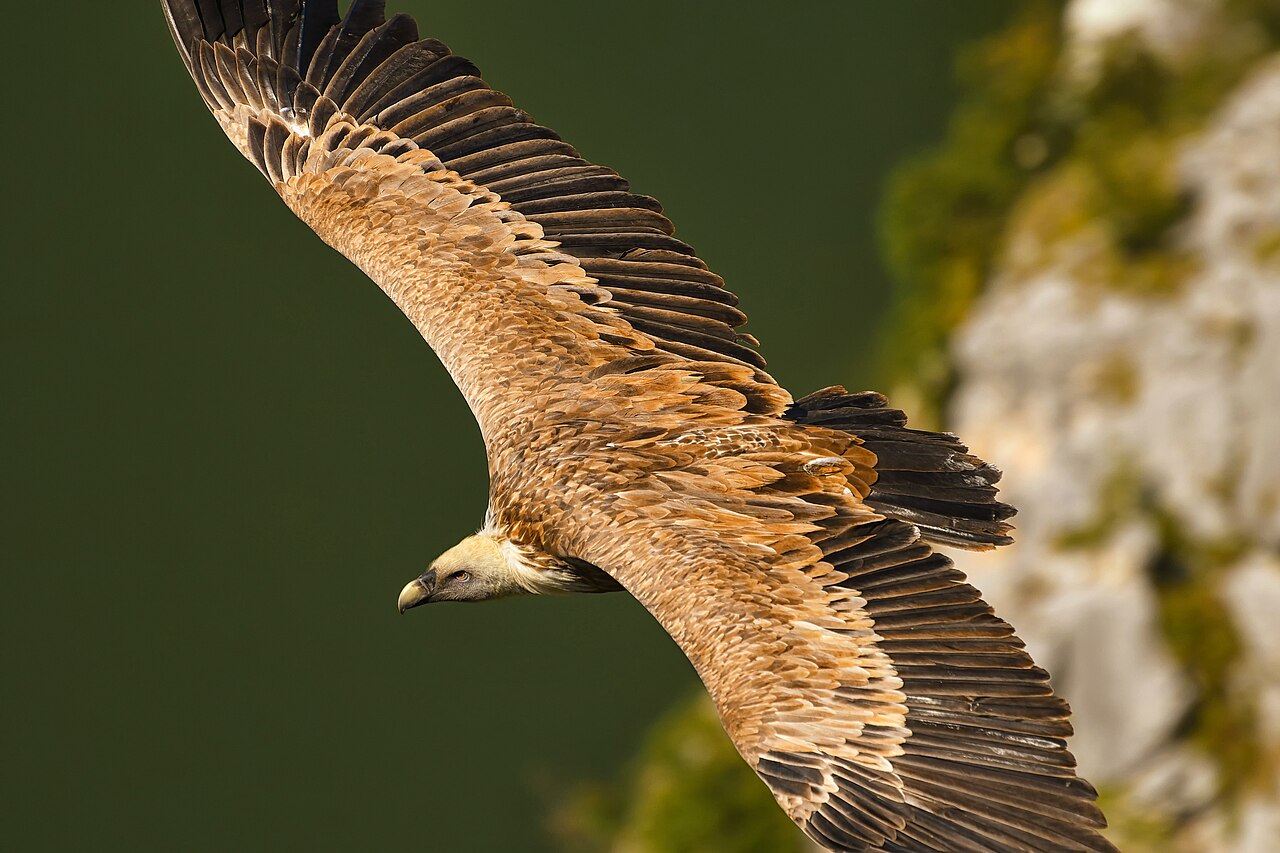
Eurasian griffon vulture flying over nature reserve Uvac, Serbia




Morphology and Adaptations of a Master Scavenger
The Eurasian griffon vulture (Gyps fulvus) is a formidable avian species, characterized by its impressive size and specialized adaptations for a scavenging lifestyle. Adults typically weigh between 6 and 12 kilograms, with a remarkable wingspan reaching up to 2.8 meters, allowing for efficient soaring over vast territories. Its plumage is generally pale brown to buff, contrasting with darker flight feathers, and it possesses a characteristic ruff of downy feathers around its neck.
This featherless neck is a key adaptation, preventing the accumulation of blood and gore during feeding, thus minimizing the risk of infection. The beak is robust and hooked, designed for tearing flesh and sinew from carcasses. Their digestive system is also highly adapted, featuring strong acids capable of neutralizing pathogens that would be harmful to other animals, underscoring their role as nature's ultimate clean-up crew.
Geographic Distribution and Habitat Preferences
The distribution of Gyps fulvus is exceptionally wide, spanning across Southern Europe, North Africa, the Middle East, and extending into Central Asia. This extensive range reflects the species' adaptability to a variety of arid and semi-arid environments. They predominantly inhabit mountainous regions, steep cliffs, and open country with scattered vegetation, such as savannas and steppes.
These habitats offer crucial advantages: high vantage points for spotting carrion from afar, and inaccessible cliff ledges or rock formations for nesting and roosting, which provide safety from terrestrial predators. Their presence is often indicative of healthy populations of large ungulates, which form the basis of their food supply.
Ecological Significance
The Eurasian griffon vulture performs an indispensable ecological service as an obligate scavenger. By consuming carcasses, they significantly reduce the proliferation of diseases that could otherwise spread through decaying organic matter. This function is critical for maintaining the health of both wildlife and domestic animal populations, and by extension, human health.
Their efficient consumption of carcasses also accelerates nutrient cycling within ecosystems, returning vital elements to the soil. In areas where griffon vulture populations have declined, the accumulation of carcasses has been linked to increased disease outbreaks and negative impacts on local economies and public health, highlighting their status as a vital ecosystem engineer.
Life Cycle, Reproduction, and Longevity
Eurasian griffon vultures are characterized by their longevity, with individuals in the wild commonly living for over 30 years. This extended lifespan is coupled with a slow reproductive rate; females typically lay a single egg annually, which is incubated by both parents for approximately 50-55 days. The chick, known as a 'vulturine', remains in the nest for about 90-120 days before fledging.
The parents continue to feed and care for the young for several months after it leaves the nest. This slow reproductive strategy means that populations are vulnerable to declines and require a considerable amount of time to recover, making effective conservation measures paramount for their long-term survival.
Conservation Challenges and Future Prospects
Despite being classified as 'Least Concern' globally, Eurasian griffon vulture populations face numerous threats across their range. These include poisoning from veterinary drugs (like diclofenac, though less prevalent now in their core range than in Asia), accidental ingestion of lead shot from hunting activities, electrocution and collisions with power lines, and habitat degradation. In some regions, intentional poisoning and persecution by humans also pose significant risks.
Conservation efforts focus on mitigating these threats through public awareness campaigns, promoting safer veterinary practices, implementing anti-poisoning measures, and protecting critical nesting and feeding sites. International cooperation is essential due to their vast migratory range and interconnected populations.
See also
Frequently Asked Questions
What does an Eurasian griffon vulture look like?+
How big is their wingspan?+
Where do they live?+
Why are they important for the environment?+
How long do they live and how many babies do they have?+
Based on content from Wikipedia · Licensed under CC BY-SA 4.0