

The Emancipation Proclamation: A Giant Leap for Freedom!
Images

Orignial Emancipation Proclamation redux




The Evolution of Lincoln's Stance
Initially, President Abraham Lincoln's primary objective in the Civil War was the preservation of the Union, not the immediate abolition of slavery. However, the protracted conflict and the strategic advantages of undermining the Confederacy's labor force compelled a shift in policy. The Preliminary Emancipation Proclamation, issued on September 22, 1862, served as a stark warning: states in rebellion had until January 1, 1863, to return to the Union, or their enslaved populations would be declared free.
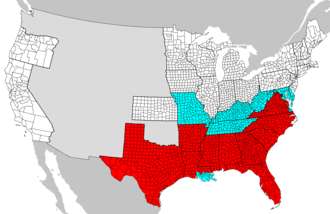
This was a calculated executive action, leveraging Lincoln's authority as Commander-in-Chief during wartime. It was a 'fit and necessary war measure' designed to cripple the Confederacy's economic and military capacity by removing its enslaved workforce and to garner support for the Union cause, both domestically and internationally. The Proclamation's limited scope, excluding border states and Union-occupied territories, reflected the delicate political balance Lincoln had to maintain.
The Proclamation's Legal and Practical Reach
The Emancipation Proclamation, officially designated Proclamation 95, took effect on January 1, 1863. It declared that 'all persons held as slaves within any State or designated part of a State, the people whereof shall then be in rebellion against the United States, shall be then, thenceforward, and forever free.' While it could not be immediately enforced in Confederate-held territories, it provided the legal framework for liberation as Union armies advanced. Crucially, the Proclamation authorized the enlistment of formerly enslaved men into the Union Army and Navy.
This was a profound transformation, allowing those who had been oppressed to actively participate in their own liberation and the defense of the nation. The Proclamation applied to over 3.5 million enslaved individuals, fundamentally altering the moral and strategic landscape of the war.
A Catalyst for Change and International Diplomacy
The Emancipation Proclamation had far-reaching consequences. It deeply angered white Southerners and their sympathizers, who viewed it as an incitement to social upheaval. Conversely, it galvanized abolitionists and significantly boosted the morale of African Americans, both free and enslaved, encouraging many to escape to Union lines.
Internationally, the Proclamation undermined any potential European support for the Confederacy. Nations like Great Britain and France, which had strong anti-slavery sentiments, found it increasingly difficult to align with a cause that explicitly relied on the institution of slavery. The Proclamation effectively redefined the Civil War, transforming it from a struggle for national unity into a moral crusade against slavery.
Beyond the Proclamation
While the Emancipation Proclamation was a pivotal moment, it did not end slavery nationwide. Lincoln recognized the need for a more permanent and comprehensive solution. He actively pushed for the passage of the 13th Amendment to the U.S. Constitution, which would abolish slavery and involuntary servitude throughout the entire country.
The Senate passed the amendment in April 1864, and the House of Representatives followed in January 1865. Ratified by the necessary three-fourths of the states by December 1865, the 13th Amendment made slavery unconstitutional, solidifying the gains initiated by the Emancipation Proclamation and setting the stage for Reconstruction and the ongoing struggle for civil rights.
Go deeper
Frequently Asked Questions
What was the Emancipation Proclamation?+
Why did Lincoln decide to issue the Emancipation Proclamation?+
How many people were affected by the Emancipation Proclamation?+
When did the Emancipation Proclamation become official?+
Did the Emancipation Proclamation end slavery for everyone?+
Based on content from Wikipedia · Licensed under CC BY-SA 4.0