

Elementary Mathematics: Your First Math Adventure!
Images
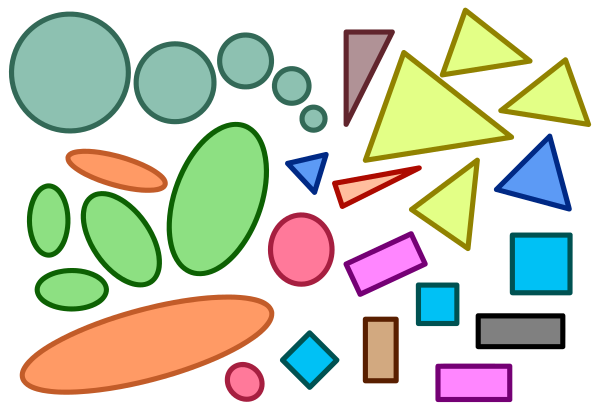
Elementary mathematics
The Genesis of Numeracy
Elementary mathematics represents the foundational stratum of mathematical literacy, encompassing concepts that have been fundamental to human civilization for millennia. Its roots trace back to ancient practices of counting, measuring, and calculating necessary for trade, agriculture, and construction. Over centuries, these practical applications evolved into abstract mathematical disciplines.
The formalization of elementary mathematics into a structured curriculum, as we know it today, is a pedagogical innovation aimed at ensuring universal access to essential quantitative reasoning skills. This global standardization allows for a common language and framework, facilitating further academic pursuits and professional integration. The progression from concrete manipulation of objects to abstract symbolic representation is a critical developmental leap fostered within these early stages of mathematical education, preparing students for the complexities of higher mathematics and scientific inquiry.
Cognitive Architecture
The study of elementary mathematics is profoundly influential in shaping cognitive development. It cultivates essential skills such as logical reasoning, critical thinking, and problem-solving. Engaging with number sense, for instance, enhances a student's ability to understand magnitude, quantity, and relationships between numbers, which is crucial for abstract thought. Geometry and measurement foster spatial reasoning and visualization capabilities, vital for fields ranging from engineering to graphic design.
Early exposure to algebraic concepts, even in their simplest forms, introduces students to symbolic manipulation and the power of generalization, laying the groundwork for understanding complex functions and models. This rigorous mental training not only prepares students for advanced mathematical subjects but also equips them with transferable analytical skills applicable across diverse academic and professional domains, making it a cornerstone of intellectual growth.
The Indispensable Toolkit
Elementary mathematics is far more than an academic subject; it is an indispensable toolkit for navigating the complexities of modern life and participating effectively in a technologically driven world. From managing personal finances and understanding economic indicators to interpreting scientific data and making informed civic decisions, quantitative literacy is paramount. In the professional sphere, foundational mathematical skills are prerequisites for a vast array of careers, particularly within the STEM fields (Science, Technology, Engineering, and Mathematics), but also in business, healthcare, and the arts.
The ability to analyze information, identify patterns, and solve problems logically, honed through elementary mathematics, empowers individuals to adapt to evolving challenges and contribute meaningfully to innovation and societal progress. Its pervasive influence underscores its status as a critical life skill.
From Arithmetic to Advanced Disciplines
The curriculum of elementary mathematics serves as a vital bridge, connecting basic numerical and spatial understanding to the more abstract and complex theories encountered in higher education. Concepts like arithmetic operations form the bedrock for calculus, while geometric principles underpin fields like computer graphics and theoretical physics. Early exposure to algebraic notation and problem-solving strategies prepares students for advanced topics such as linear algebra, differential equations, and abstract algebra.
Furthermore, the data analysis skills developed, including understanding statistics and probability, are crucial for fields like artificial intelligence, machine learning, and big data analytics. This foundational knowledge is not merely preparatory; it is intrinsically linked to the conceptual frameworks of advanced mathematics, enabling students to grasp and contribute to cutting-edge research and technological development.
See also
Based on content from Wikipedia · Licensed under CC BY-SA 4.0