

The Amazing Electrical Grid!
Images
Electrical grid


The Genesis and Evolution of Electrification
The electrical grid represents one of humanity's most significant technological achievements, fundamentally reshaping civilization. Its origins trace back to the late 19th century, a period of rapid industrialization and scientific discovery. Early pioneers like Thomas Edison, with his direct current (DC) Pearl Street Station in 1882, demonstrated the feasibility of centralized power generation.
However, it was the advent of alternating current (AC) systems, championed by Nikola Tesla and George Westinghouse, that truly unlocked the grid's potential. AC's ability to be easily transformed to high voltages allowed for efficient transmission over vast distances, overcoming the limitations of DC's short range. This innovation spurred the development of interconnected power systems, transforming urban landscapes and enabling the widespread adoption of electric lighting, machinery, and eventually, a myriad of electrical appliances that define modern life.
The Architecture of Power
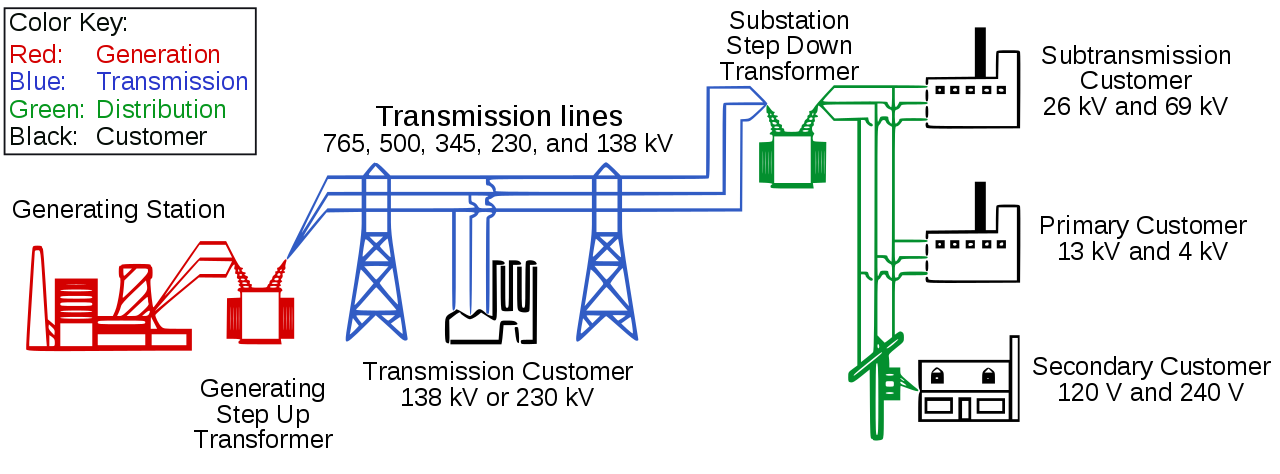
The electrical grid is a sophisticated, multi-layered system designed for reliability and efficiency. At its apex are power generation facilities, which convert primary energy sources-fossil fuels, nuclear reactions, hydropower, wind, solar, geothermal-into electrical energy. This raw electricity is then stepped up to extremely high voltages (hundreds of thousands of volts) for transmission across long distances via robust transmission lines, often supported by massive towers.
This high-voltage transmission minimizes energy loss due to resistance. As electricity approaches consumption centers, it enters substations where transformers reduce the voltage in stages. Finally, local distribution networks, comprising lower-voltage lines and poles, deliver electricity to individual homes, businesses, and industries, ready for use at standard household voltages.
This intricate flow ensures power reaches its destination with minimal waste.
The Indispensable Role in Societal Functionality
The electrical grid is not merely a convenience; it is the bedrock upon which modern society is built. Its pervasive influence extends to virtually every sector: healthcare relies on it for life-support systems and diagnostic equipment; communication networks, including the internet and telecommunications, are entirely dependent on a stable power supply; transportation systems, from electric trains to traffic signals, require constant electricity; and industrial production, from manufacturing to agriculture, is powered by the grid.
Furthermore, public safety, economic stability, and even national security are inextricably linked to the grid's uninterrupted operation. Disruptions can have cascading effects, leading to significant economic losses, social disruption, and potential threats to public well-being, underscoring its critical infrastructure status.
Challenges and the Dawn of the Smart Grid
Despite its robustness, the traditional electrical grid faces mounting challenges. Aging infrastructure, increasing demand, the integration of intermittent renewable energy sources, and the growing threat of cyberattacks and extreme weather events necessitate a paradigm shift. The concept of the 'smart grid' represents this evolution.
By incorporating digital communication technologies, sensors, and advanced control systems, smart grids offer enhanced monitoring, automation, and flexibility. They enable better management of energy flow, facilitate demand-response programs, improve fault detection and restoration times, and can more seamlessly integrate distributed energy resources like rooftop solar panels. This modernization is crucial for ensuring a reliable, efficient, and sustainable energy future capable of meeting the complex demands of the 21st century.
Interconnections, Resilience, and Future Outlook
Modern electrical grids are often highly interconnected, forming regional or even continental networks. These interconnections enhance reliability by allowing power to be shared between different areas, helping to balance supply and demand and providing backup during localized outages. However, these very interconnections can also propagate disruptions across wider areas if not managed carefully.
Building resilience against natural disasters and malicious attacks is a paramount concern, leading to investments in grid hardening, redundant systems, and advanced cybersecurity measures. The future outlook for the electrical grid involves a continued transition towards decarbonization, decentralization, and digitalization, aiming to create a more agile, secure, and environmentally sustainable energy infrastructure that can adapt to evolving technological landscapes and societal needs.
Go deeper
Frequently Asked Questions
What is the electrical grid and why is it important?+
How did the electrical grid start?+
Why does the grid use high voltage for long‑distance transmission?+
What are some of the power sources that feed the grid?+
What is a smart grid and why do we need it?+
Based on content from Wikipedia · Licensed under CC BY-SA 4.0