

Edward Scissorhands
Images

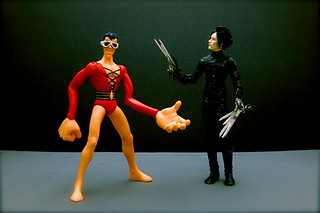
File:New York Comic Con 2015 - Edward Scissorhands (21442118814).jpg




Genesis of a Suburban Outsider
The genesis of Edward Scissorhands lies deeply rooted in Tim Burton's personal experiences and artistic sensibilities. Conceived from his childhood upbringing in the seemingly idyllic yet stifling suburban landscape of Burbank, California, Burton's initial story concept was a stark contrast to the cookie-cutter normalcy he observed. This personal narrative was then meticulously translated into a screenplay by Caroline Thompson.
The film's development journey, including its initial rejection by Warner Bros. before finding a fast-tracked path at 20th Century Fox following the success of Burton's 'Batman,' underscores the industry's initial hesitation towards such a unique and unconventional project. The collaboration with composer Danny Elfman, marking their fourth partnership, further solidified the film's distinct gothic and whimsical tone, creating a sonic landscape as integral as its visual one.
The Art of the Unfinished
Edward's defining characteristic, his scissor hands, are not merely a physical impediment but the very instruments of his unique artistic expression. In the sterile, conformist environment of the suburbs, Edward's ability to sculpt hedges into fantastical creatures and give avant-garde haircuts stands in stark opposition to the mundane. His most profound artistic act is the ice sculpture of Kim Boggs, a breathtakingly beautiful, ephemeral creation that reflects his inner longing and love.
This act, however, is tragically misinterpreted by the community, highlighting a central theme: the fear and rejection of the 'other,' even when that other possesses extraordinary gifts. The film uses Edward's artistry to question societal norms and the superficiality often found in conventional life.
Critique of Suburban Conformity and the Nature of Humanity
Edward Scissorhands serves as a powerful allegory for the pressures of conformity within suburban culture. The brightly colored, meticulously maintained neighborhood represents an idealized but ultimately hollow existence, where individuality is suppressed. Edward, the ultimate outsider, disrupts this facade, exposing its inherent flaws and hypocrisies.
His gentle nature and artistic soul are contrasted with the superficiality and gossip of the residents. The film probes the definition of humanity, suggesting that true humanity lies not in physical form or societal acceptance, but in empathy, creativity, and the capacity for love, qualities Edward embodies despite his artificial origins.
Enduring Legacy and Cinematic Significance
Upon its release, Edward Scissorhands achieved both critical acclaim and commercial success, grossing significantly more than its budget. Its impact is evident in its numerous accolades, including a British Academy Film Award for Best Production Design and a Hugo Award for Best Dramatic Presentation. The film's enduring legacy lies in its unique blend of dark fantasy, romance, and social commentary, solidifying Tim Burton's distinctive directorial style.
It remains a touchstone for discussions on otherness, acceptance, and the power of art. For both Burton and Elfman, it represents a deeply personal work, resonating with audiences who connect with its themes of isolation and the search for belonging in a world that often misunderstands difference.
Key Figures and Their Contributions
The film's success is a testament to the collaborative efforts of its key figures. Tim Burton, as director and co-story writer, infused the project with his signature gothic aesthetic and personal narrative. Caroline Thompson's screenplay masterfully translated Burton's vision into a compelling story. Johnny Depp's portrayal of Edward is iconic, conveying vulnerability and innocence through minimal dialogue.
Winona Ryder as Kim Boggs provides the emotional anchor, representing the audience's journey from apprehension to empathy. Dianne Wiest and Alan Arkin offer nuanced performances as the adoptive parents, while Vincent Price, in his final on-screen role, lends a poignant gravitas as the inventor. Danny Elfman's score is crucial, weaving a melancholic yet magical tapestry that defines the film's atmosphere.
Go deeper
Frequently Asked Questions
What is Edward Scissorhands about?+
Why does Edward have scissor hands?+
How does the movie show that being different is okay?+
Where does the story take place?+
Who helped make the music for the film?+
Based on content from Wikipedia · Licensed under CC BY-SA 4.0