

EASE/ACCESS: Your Ticket to Space!
Images
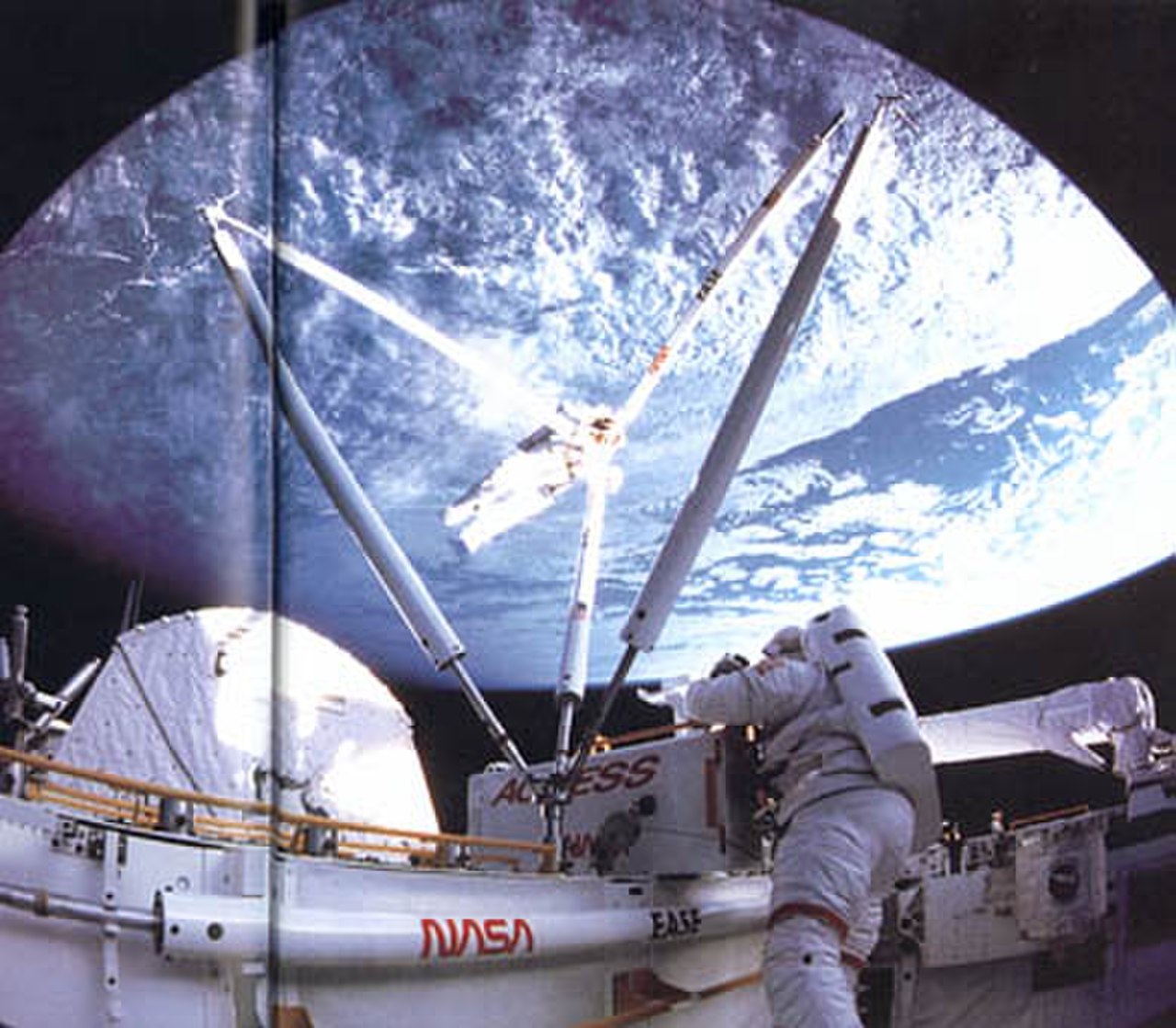
EASE/ACCESS
![Nokia get it - MSFT dont [do this on yer zune]](https://live.staticflickr.com/1201/525679034_7213fce43e_n.jpg)


The Genesis and Evolution of EASE/ACCESS in Astronomy
The development of EASE/ACCESS, and similar data processing frameworks, emerged from the escalating challenges posed by increasingly sophisticated astronomical instruments. As telescopes evolved from simple light collectors to complex multi-wavelength observatories, the volume and complexity of generated data grew exponentially. Early astronomical data was often proprietary and difficult to share or compare.
The need for standardized, interoperable data formats and processing pipelines became paramount. EASE/ACCESS, or the principles it embodies, arose from this necessity, aiming to create a common language and methodology for handling observational data. This evolution reflects a broader trend in science towards open data practices and collaborative research, where standardized tools are essential for pooling knowledge and accelerating discovery.
The transition from ad-hoc processing to systematic frameworks like EASE/ACCESS has been fundamental to the progress of fields ranging from cosmology to exoplanetology.
A Cornerstone of Astronomical Research
The importance of EASE/ACCESS extends far beyond mere data management; it is a foundational pillar of modern astronomical research. By providing a consistent and reliable method for calibrating, cleaning, and formatting observational data, it ensures the scientific integrity of research findings. This standardization is crucial for reproducibility, allowing other scientists to verify results and build upon existing work.
Furthermore, EASE/ACCESS facilitates the creation of large, homogeneous astronomical catalogs and archives, which are invaluable resources for statistical studies and the identification of rare celestial phenomena. It democratizes access to high-quality astronomical data, enabling researchers worldwide, regardless of their institution's resources, to participate in cutting-edge science. Ultimately, EASE/ACCESS empowers astronomers to ask more profound questions about the universe and to derive more accurate answers.
Deconstructing the EASE/ACCESS Mechanism
The operational mechanics of EASE/ACCESS involve a multi-stage processing pipeline, each step meticulously designed to refine raw observational data into scientifically usable information. Initially, raw data, often in formats like FITS (Flexible Image Transport System), is subjected to initial calibration. This includes correcting for instrumental biases, such as detector non-uniformities and electronic noise, and applying photometric and astrometric solutions.
Subsequent stages involve sky subtraction to remove background light, cosmic ray removal to eliminate spurious signals, and potentially image co-addition or mosaicking for extended objects or deep field observations. For spectroscopic data, EASE/ACCESS principles guide the extraction of spectra, wavelength calibration, and flux calibration. The output is typically a scientifically calibrated image or spectrum, ready for further analysis, such as source detection, photometry, spectroscopy, or modeling.
This rigorous, systematic approach ensures that the derived scientific conclusions are robust and not artifacts of the observation or processing chain.
The Broader Impact
The principles embodied by EASE/ACCESS are not confined to ground-based or space-based telescopes alone; they are integral to the entire ecosystem of space exploration data. Missions ranging from planetary probes to cosmic microwave background satellites rely on sophisticated data processing frameworks to make sense of their observations. As we look towards future endeavors, such as the search for biosignatures on exoplanets or the detailed mapping of dark matter, the demands on data processing will only increase.
EASE/ACCESS, or its advanced successors, will be essential for handling the petabytes of data expected from next-generation observatories. Moreover, the development of machine learning and artificial intelligence techniques is increasingly being integrated into these pipelines, promising even more efficient and insightful data analysis. The legacy of EASE/ACCESS is one of enabling deeper, more comprehensive understanding of the cosmos.
EASE/ACCESS in Context
A critical aspect of EASE/ACCESS and similar frameworks is their contribution to data interoperability and the establishment of robust astronomical archives. By adhering to established standards and producing data in widely recognized formats, EASE/ACCESS ensures that data from different instruments and missions can be combined and analyzed coherently. This is vital for large-scale surveys and for building comprehensive catalogs that span multiple wavelengths or time periods.
Major astronomical archives, such as those managed by NASA and ESA, rely heavily on data that has undergone processing akin to what EASE/ACCESS provides. These archives serve as invaluable repositories for the scientific community, allowing researchers to access and re-analyze data for new investigations, thereby maximizing the scientific return from expensive observational facilities. The long-term accessibility and usability of astronomical data are direct beneficiaries of such standardized processing methodologies.
See also
Frequently Asked Questions
What is EASE/ACCESS and why is it important for space science?+
How does EASE/ACCESS help scientists use data from telescopes?+
Why do scientists need a standard tool like EASE/ACCESS instead of doing their own data processing?+
Can people from small schools or countries use EASE/ACCESS to study space?+
What kinds of discoveries can EASE/ACCESS help scientists make?+
Based on content from Wikipedia · Licensed under CC BY-SA 4.0