

The Duodenum: Your Body's Tiny Food Choo-Choo!
Images
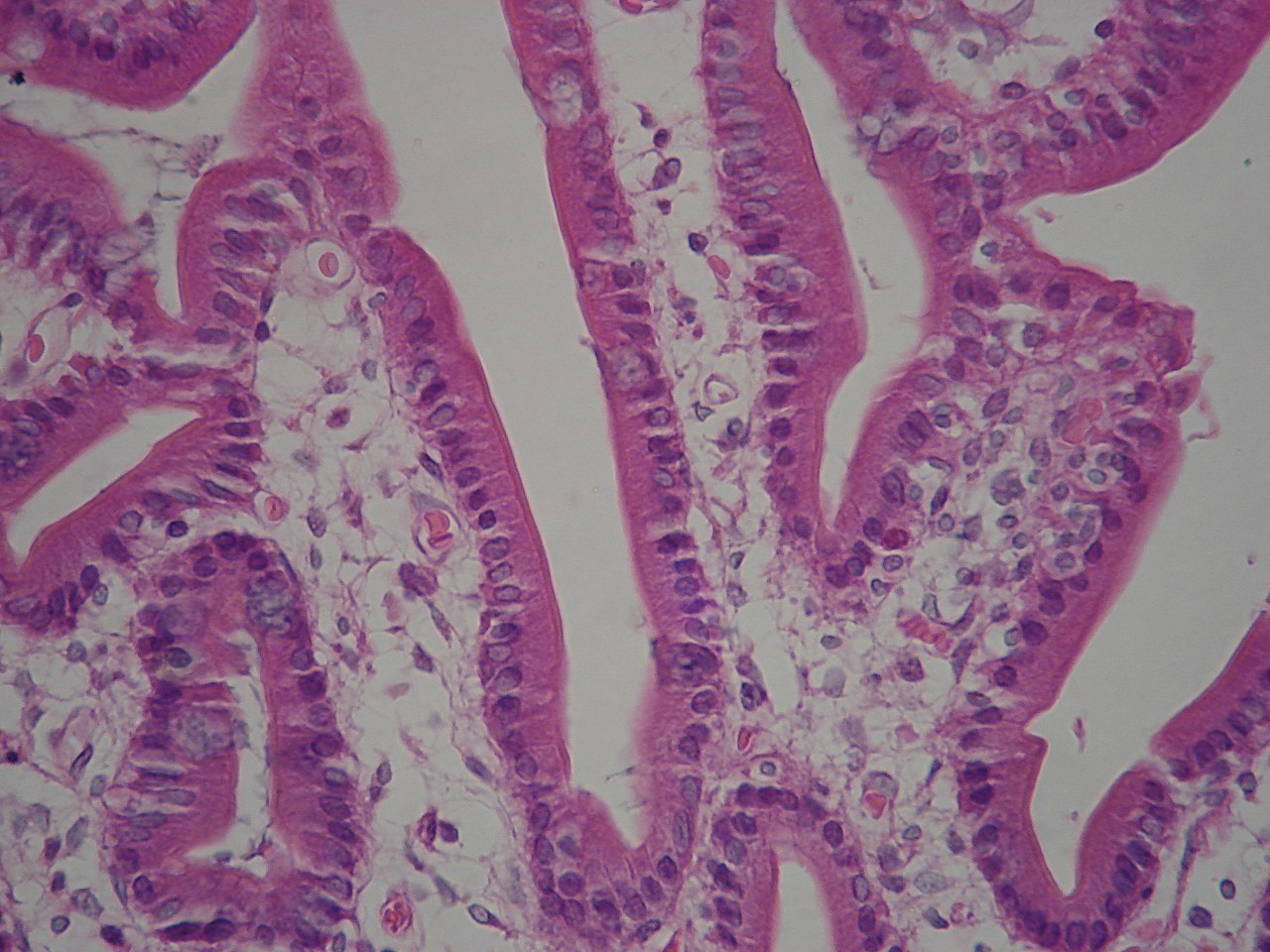
Microvilli-Duodenum


Anatomical Architecture of the Duodenum
The duodenum, derived from the Latin for 'twelve fingers' width,' is the initial segment of the small intestine, extending approximately 25-38 cm (10-15 inches) in humans. Its unique C-shape cradles the head of the pancreas. Anatomically, it's divided into four distinct parts: the superior (first) part, which is a mobile bulb; the descending (second) part, which receives the common bile duct and pancreatic duct; the transverse (third) part, which passes horizontally across the abdomen; and the ascending (fourth) part, which terminates at the duodenojejunal flexure, supported by the ligament of Treitz.
This intricate structure is lined with villi and microvilli, dramatically increasing its surface area to optimize the absorption of nutrients. The muscular walls facilitate peristalsis, propelling the chyme (partially digested food) forward while mixing it thoroughly with digestive secretions.
The Duodenum's Role in Chemical Digestion and Absorption
Upon receiving acidic chyme from the stomach, the duodenum's primary role is to neutralize this acidity with bicarbonate secreted by the pancreas. This creates an optimal alkaline environment for pancreatic enzymes to function. These enzymes are critical for breaking down carbohydrates into monosaccharides, proteins into amino acids, and fats into fatty acids and glycerol.
Bile, produced by the liver and stored in the gallbladder, is also released into the duodenum to emulsify fats, increasing their surface area for enzymatic action. Beyond macronutrient digestion, the duodenum is a critical site for the absorption of essential micronutrients. It is the principal location for iron absorption, facilitated by specific transport proteins.
It also plays a significant role in absorbing calcium, vitamin D, and certain B vitamins, including vitamin B12, though absorption of B12 becomes more prominent further down the small intestine.
Hormonal Regulation and Gut-Brain Axis
The duodenum is not just a passive conduit; it's an active endocrine organ. It secretes key hormones that regulate digestion and appetite. Secretin, released in response to acid, stimulates the pancreas to release bicarbonate.
Cholecystokinin (CCK), released in response to fats and proteins, stimulates gallbladder contraction and pancreatic enzyme secretion, while also slowing gastric emptying and promoting satiety. Gastric Inhibitory Peptide (GIP) and Motilin also play roles in regulating motility and secretion. These hormones highlight the duodenum's integration into the broader digestive and metabolic control systems, including its communication with the brain via the gut-brain axis, influencing hunger, satiety, and overall well-being.
Clinical Significance and Pathologies
Given its central role, the duodenum is susceptible to various pathologies. Duodenal ulcers, often caused by H. pylori infection or NSAID use, are common and can lead to pain, bleeding, and perforation. Celiac disease, an autoimmune disorder triggered by gluten, causes damage to the duodenal villi, severely impairing nutrient absorption.
Conditions like duodenitis (inflammation) and obstructions can also arise. The study of the duodenum is therefore crucial in gastroenterology, with diagnostic tools like upper endoscopy allowing direct visualization and biopsy. Understanding its complex physiology is fundamental to diagnosing and managing a wide range of gastrointestinal disorders that impact millions worldwide.
Evolutionary Perspective and Comparative Anatomy
The duodenum, as the initial segment of the small intestine, is a conserved feature across vertebrates, reflecting its fundamental importance in nutrient processing. While its basic function remains consistent, its relative length and specific adaptations can vary significantly between species, correlating with dietary habits and digestive strategies. For instance, herbivores with diets high in cellulose may have different duodenal structures or associated digestive organs compared to carnivores.
Studying these comparative anatomical differences provides insights into evolutionary pressures and the diverse ways life has adapted to extract energy and nutrients from various food sources, underscoring the duodenum's ancient and vital evolutionary lineage.
Go deeper
Frequently Asked Questions
What is the duodenum and where is it in the body?+
How does the duodenum turn food into energy?+
Why does the duodenum absorb iron and other nutrients?+
What can happen if the duodenum gets ulcers or celiac disease?+
How does the duodenum help control hunger and fullness?+
Based on content from Wikipedia · Licensed under CC BY-SA 4.0