

DNA Replication: Making Copies of Your Body's Blueprint!
Images

DNA replication




The Fundamental Imperative
DNA replication is the biological process by which a cell duplicates its DNA, ensuring that each daughter cell receives an identical copy of the genome. This process is absolutely fundamental to life, underpinning cell division (mitosis and meiosis), organismal growth, tissue repair, and the transmission of genetic information from one generation to the next. Without accurate and efficient DNA replication, the integrity of the genetic code would be compromised, leading to cellular dysfunction, genetic disorders, and the inability of species to persist.
The fidelity of replication is paramount, as even minor errors can have significant consequences for an organism's health and evolutionary trajectory.
The Orchestrated Beginning of Replication
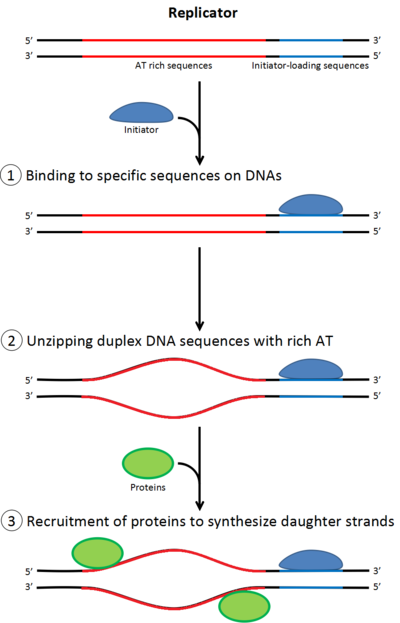
DNA replication is a highly regulated process that begins at specific sites on the DNA molecule called origins of replication. In eukaryotes, multiple origins exist along each chromosome, allowing for faster replication. The process is initiated by initiator proteins that bind to these origins, recruiting other proteins.
Crucially, the enzyme helicase is then recruited to unwind the double helix by breaking the hydrogen bonds between complementary base pairs, forming a replication bubble with two replication forks moving in opposite directions. Single-strand binding proteins (SSBs) then stabilize these unwound strands, preventing them from reannealing and protecting them from degradation. Topoisomerases also play a role by relieving the torsional stress generated by unwinding.
The Symphony of Polymerases and Ligases
The core enzymatic machinery responsible for synthesizing new DNA strands is DNA polymerase. There are various types of DNA polymerases, each with specific roles. DNA polymerase III is the primary enzyme for synthesizing new DNA in prokaryotes, while eukaryotes have multiple polymerases (e.g., Pol δ and Pol ε) that work in concert.
DNA polymerase can only add nucleotides to the 3' end of an existing strand, meaning synthesis always proceeds in the 5' to 3' direction. This leads to a difference in synthesis between the two template strands: the leading strand is synthesized continuously, while the lagging strand is synthesized discontinuously in short fragments called Okazaki fragments. DNA primase synthesizes RNA primers to initiate synthesis on both strands.
Finally, DNA polymerase I (in prokaryotes) or other enzymes (in eukaryotes) remove the RNA primers and replace them with DNA, and DNA ligase seals the nicks between Okazaki fragments, creating a continuous DNA molecule.
Termination and Proofreading
Replication termination varies between prokaryotes and eukaryotes. In circular bacterial chromosomes, replication forks meet at a specific termination region. In linear eukaryotic chromosomes, replication continues until forks meet or reach the ends of the chromosomes (telomeres).
A critical aspect of replication is its remarkable accuracy, achieved through proofreading mechanisms. DNA polymerases possess 3' to 5' exonuclease activity, allowing them to detect and remove incorrectly incorporated nucleotides immediately after they are added. Further DNA repair pathways exist to correct any errors that escape proofreading, ensuring a very low mutation rate, typically around 1 error per 10^9 to 10^10 base pairs replicated.
This high fidelity is essential for maintaining genomic stability.
Regulation and Significance in Modern Biology
The cell cycle is tightly regulated to ensure that DNA replication occurs only once per cell cycle, typically during the S phase. Checkpoint proteins monitor the process, halting division if errors are detected. Dysregulation of DNA replication is a hallmark of cancer, where cells divide uncontrollably, often with compromised replication fidelity.
Understanding DNA replication has revolutionized molecular biology and medicine, leading to advancements in genetic engineering, diagnostics, and therapeutics, including targeted cancer treatments. The study of replication continues to uncover intricate regulatory networks and novel enzymatic functions, highlighting its central role in biological processes.
See also
Frequently Asked Questions
What is DNA replication?+
Why do cells copy DNA before they divide?+
How does a cell start copying its DNA?+
Why is the leading strand made differently from the lagging strand?+
How does the cell keep the new DNA accurate?+
Based on content from Wikipedia · Licensed under CC BY-SA 4.0