

Dental braces
Images

Dental braces orthobraces parts 3


A Historical Perspective
The quest for aligned dentition is not a modern phenomenon. Archaeological evidence suggests rudimentary attempts at tooth alignment in ancient civilizations, with some accounts pointing to the use of animal intestines by Egyptians to ligate teeth. However, the formalization of orthodontics as a discipline began to emerge in the 18th century.
Pierre Fauchard, often hailed as the 'father of modern dentistry,' described devices in his 1728 work that could potentially move teeth. Later, in the early 19th century, figures like Christophe-François Delabarre developed devices using metal bands and wires. The true systematization of orthodontic treatment, however, is largely credited to Edward Angle, who in the late 19th and early 20th centuries developed diagnostic methods and appliance designs that laid the groundwork for contemporary orthodontic practice.
His work established classifications for malocclusions and introduced the concept of 'straight-wire' appliances, fundamentally shaping how braces are understood and applied today.
The Multifaceted Significance of Orthodontic Correction
The importance of dental braces extends far beyond mere cosmetic enhancement, playing a critical role in both functional occlusion and long-term oral health. Misaligned teeth, or malocclusions, can impede efficient mastication, potentially affecting nutrient absorption and contributing to temporomandibular joint (TMJ) disorders. Furthermore, crowded or improperly positioned teeth create areas that are difficult to clean effectively, significantly increasing the susceptibility to dental caries, periodontal disease, and even tooth loss.
Orthodontic treatment addresses these issues by creating a harmonious relationship between the teeth, jaws, and facial structures. This not only facilitates proper chewing and speech but also enhances the longevity of the dentition by reducing abnormal wear patterns and making oral hygiene more manageable. The psychological benefits of improved aesthetics, leading to increased self-confidence, are also a significant, though often secondary, outcome.
Biomechanical Principles
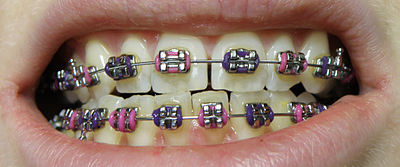
The efficacy of dental braces is rooted in fundamental biomechanical principles governing bone remodeling and cellular response to mechanical forces. Braces function by applying controlled, continuous or intermittent forces to the teeth via brackets and archwires. This force induces a biological response in the periodontal ligament and alveolar bone.
When force is applied, cells within the ligament undergo changes. On the side of the tooth experiencing pressure, osteoclasts are stimulated to resorb bone, widening the socket and allowing the tooth to move. Conversely, on the side experiencing tension, osteoblasts deposit new bone, filling the space created by the tooth's movement.
The rate and direction of tooth movement are meticulously managed by orthodontists through precise adjustments to the appliance, considering factors like force magnitude, duration, and vector. Modern advancements include the use of low-friction systems and sophisticated wire materials that allow for more efficient and less traumatic tooth movement.
Technological Advancements and Diversification of Orthodontic Appliances
The landscape of orthodontic treatment has been dramatically reshaped by technological innovation, offering a spectrum of solutions beyond traditional metal braces. Clear aligner systems, such as Invisalign, represent a significant paradigm shift, utilizing a series of custom-fabricated, thermoplastic trays that gradually move teeth. These are removable, offering improved aesthetics and ease of oral hygiene.
Lingual braces, affixed to the inner surfaces of the teeth, provide a virtually invisible treatment option, though they can present challenges with speech and hygiene for some patients. Even conventional braces have seen substantial upgrades. Ceramic brackets, designed to be tooth-colored, offer a more discreet appearance than metal. Self-ligating braces, which employ a built-in mechanism to hold the archwire, can reduce friction and potentially shorten treatment times.
These diverse options allow orthodontists to tailor treatment plans to individual patient needs, preferences, and clinical requirements, making effective orthodontic care more accessible and adaptable than ever before.
See also
Frequently Asked Questions
What are dental braces?+
How do braces help with chewing and cleaning?+
How do braces move teeth?+
Who helped create modern braces?+
How do orthodontists adjust braces?+
Based on content from Wikipedia · Licensed under CC BY-SA 4.0