

Dangdut: Indonesia's Groovy Music!
Images

Liga Dangdut Indonesia 2018


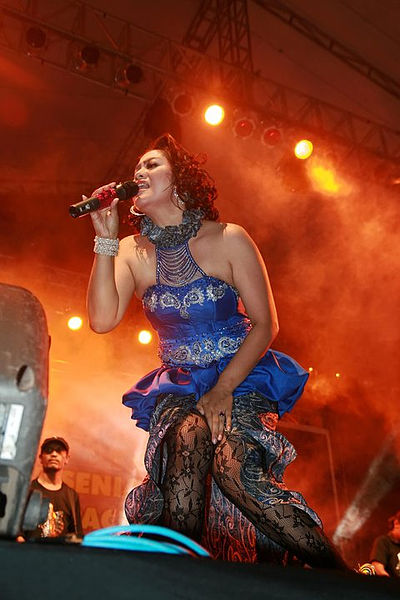


The Genesis and Syncretism of Dangdut
Dangdut emerged as a distinct musical genre in Indonesia during the late 1960s, rapidly ascending to national prominence throughout the 1970s and 1980s. Its very foundation is built upon a rich syncretism, drawing heavily from the melodic structures and rhythmic patterns of Hindustani music, particularly from Indian film soundtracks, and the evocative scales and instrumentation of Arabic music. This core influence is then interwoven with indigenous Indonesian folk traditions, including Javanese, Malay, Minangkabau, and Sundanese musical elements.
This deliberate fusion created a sound that was both novel and deeply resonant with the Indonesian populace, distinguishing it from earlier musical forms and establishing its unique identity. The genre's ability to absorb and recontextualize diverse musical elements is central to its enduring appeal and widespread adoption across the archipelago.
Socio-Cultural Significance and Popularity Dynamics
Dangdut's unparalleled popularity in Indonesia, and its significant presence in neighboring Maritime Southeast Asian countries, stems from its accessibility and its capacity to articulate common cultural themes and emotions. It transcended social strata, becoming the music of the masses. The genre's rhythmic drive, primarily propelled by the distinctive 'tabla' and 'gendang' beats, coupled with often narrative or romantic lyrical content, makes it highly engaging for a broad audience.
While its popularity peaked in the late 20th century, by 2012, Dangdut demonstrated remarkable resilience, maintaining strongholds in Western Indonesia while adapting to regional preferences. The shift towards faster-paced, less Bollywood-influenced styles in some areas highlights its dynamic nature and responsiveness to evolving listener tastes, proving it's more than just music; it's a cultural barometer.
A Blend of Tradition and Technology
The sonic landscape of Dangdut is defined by its eclectic instrumentation, a testament to its hybrid origins and continuous evolution. A typical Dangdut ensemble features a lead vocalist supported by four to eight musicians. The rhythmic foundation is invariably laid by the tabla and gendang, providing the genre's characteristic pulse.
Melodic lines are often carried by instruments like the flute, mandolin, and guitar, with the sitar occasionally adding an authentic Indian flavor. Crucially, modern Dangdut has embraced technological advancements, integrating synthesizers, drum machines, and electronic keyboards. This incorporation of electronic elements allows for greater sonic experimentation and facilitates fusions with contemporary genres such as Western rock, reggae, disco, R&B, hip-hop, house, and electronic dance music, ensuring Dangdut remains relevant in the globalized music scene.
The Enduring Legacy and Future Trajectories of Dangdut
The legacy of Dangdut is cemented by its status as Indonesia's most popular musical genre, a position it has held for decades. Iconic artists like Rhoma Irama and Elvy Sukaesih shaped its early sound and cultural impact, while contemporary divas such as Ayu Ting Ting and Via Vallen continue to innovate and reach new audiences. The genre's ability to absorb influences from global pop music, from Western rock to electronic dance music, demonstrates its adaptability.
This ongoing evolution suggests that Dangdut is not a static artifact of the past but a living, breathing art form. Its continued relevance lies in its capacity to reflect and shape Indonesian identity, offering a powerful medium for cultural expression that resonates across generations and continues to evolve in dialogue with the world.
See also
Frequently Asked Questions
What is Dangdut music?+
Where does Dangdut come from?+
Why do people love Dangdut?+
How is a Dangdut band set up?+
Who are some famous Dangdut singers?+
Based on content from Wikipedia · Licensed under CC BY-SA 4.0