

Łódź Voivodeship
Images

File:Road in Zakrzew, Gmina Kodrąb, Radomsko County, Łódź Voivodeship, Poland - 20060424.jpg




Geopolitical Positioning and Environmental Characteristics
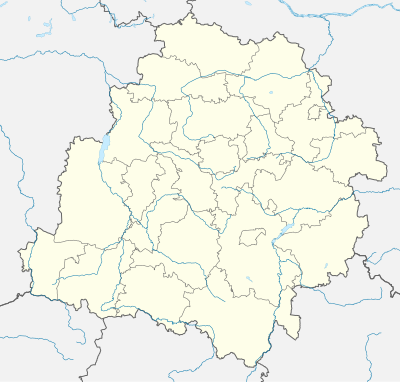
Łódź Voivodeship occupies a strategically significant position in central Poland, acting as a vital logistical and administrative hub. Its territory is characterized by a predominantly lowland topography, featuring extensive plains interspersed with undulating morainic hills and a network of rivers, most notably the Warta and its tributaries. This landscape, shaped by glacial activity, offers a relatively uniform terrain conducive to agriculture and industrial development, though it lacks dramatic mountainous features.
The voivodeship's climate is temperate continental, with distinct seasons: warm summers, cold winters, and moderate precipitation. Its geographical centrality means it is bordered by six other voivodeships: Masovian to the northeast and east, Świętokrzyskie to the southeast, Silesian to the south, Opole to the southwest, Greater Poland to the west, and Kuyavian-Pomeranian to the north. This extensive network of borders underscores its role as a transit region and a point of interaction between diverse Polish territories.
Historical Palimpsest
The historical identity of Łódź Voivodeship is a complex amalgamation, with its lands historically belonging to three of Poland's principal historical provinces: Masovia in the east, Greater Poland in the west, and Lesser Poland in the southeast. This tripartite heritage has imbued the region with a rich and varied cultural and political legacy. The modern administrative entity, established in its current form in 1999, consolidated areas with distinct historical trajectories.
The capital city, Łódź, exemplifies this layered history. Once a modest settlement, it experienced explosive growth during the 19th century, driven by the textile industry and attracting a diverse population of Poles, Jews, Germans, and Russians. This period of rapid industrialization transformed Łódź into a major urban center, often referred to as the 'Polish Manchester,' leaving behind a distinctive architectural and social imprint that continues to shape the region's character.
Socio-Cultural Fabric and Demographic Profile
The population of Łódź Voivodeship is approximately 1.7 million people, making it one of Poland's more populous regions. The dominant language is Polish, with a strong regional dialectal influence reflecting its historical divisions. Culturally, the voivodeship exhibits a blend of traditions inherited from Masovia, Greater Poland, and Lesser Poland, creating a unique regional identity.
The capital, Łódź, is a cosmopolitan city known for its vibrant arts scene, numerous cultural institutions, and a growing reputation as a center for film and media production. The region has been home to many notable figures in Polish arts, sciences, and politics. The demographic profile shows a trend of urbanization, with a significant portion of the population residing in Łódź and its surrounding metropolitan area, though rural areas maintain distinct cultural practices and economic activities.
Economic Dynamics
Łódź Voivodeship's economy has undergone a significant transformation. Historically, it was a powerhouse of the Polish textile industry, a legacy that continues to influence its industrial landscape. While the textile sector has evolved, manufacturing remains a cornerstone, encompassing automotive components, chemicals, food processing, and pharmaceuticals.
The region's central location facilitates robust logistics and transportation networks, making it attractive for distribution and warehousing. Agriculture, though less dominant than industry, is important in the rural areas, focusing on crops like cereals and potatoes, as well as livestock farming. In recent decades, there has been a concerted effort to diversify the economy, with growth in the service sector, information technology, and creative industries, positioning Łódź as an emerging hub for innovation and business.
Governance and Educational Landscape
Łódź Voivodeship is governed by a Voivodeship Sejmik (regional assembly) and a Voivode (governor) appointed by the Prime Minister. The Sejmik is responsible for regional policy-making and budget allocation, while the Voivode represents the central government and oversees administrative functions. The capital city, Łódź, operates under its own municipal government.
The educational system is structured hierarchically, with primary, secondary, and tertiary levels. The voivodeship is home to several prominent higher education institutions, most notably the University of Łódź and the prestigious Łódź University of Technology, which are crucial for research, innovation, and training the skilled workforce needed for the region's economic development. These institutions play a vital role in fostering intellectual capital and driving progress across various sectors.
See also
Frequently Asked Questions
What is Łódź Voivodeship?+
Why is Łódź called the "Polish Manchester"?+
Where does the Warta River flow in Łódź Voivodeship?+
How many people live in Łódź Voivodeship?+
What kinds of industries are in Łódź Voivodeship today?+
Based on content from Wikipedia · Licensed under CC BY-SA 4.0