

Crystal Palace F.C.
Images

Alex McCarthy (27740613413) c

The Genesis of a Club
Crystal Palace Football Club's origins are intrinsically linked to a marvel of 19th-century engineering and design: the Crystal Palace exhibition building. Officially established as a professional entity in 1905, the club adopted its name from this iconic structure, symbolizing a blend of ambition and a connection to a place of national significance. For its initial decade, Palace utilized the very stadium that hosted FA Cup finals within the exhibition grounds, a unique and prestigious home base.
This early association with a venue of such grandeur foreshadowed the club's aspirations. Their subsequent election to the Football League in 1920 marked a formal entry into the established football hierarchy. Throughout its league history, Crystal Palace has predominantly competed in the top two tiers of English football, demonstrating a consistent presence and a deep-rooted commitment to high-level competition.
Since 1964, the club has only experienced a brief period below the second tier, highlighting a remarkable stability and a sustained effort to remain a top-flight contender.
Navigating the Tides of Footballing Fortunes
The narrative of Crystal Palace FC is a compelling study in resilience, marked by periods of significant success interspersed with considerable challenges. The late 1980s and early 1990s represent a particularly bright chapter, with the club achieving a memorable FA Cup final appearance in 1990. This was followed by an extraordinary 1990-91 season where Palace mounted a genuine challenge for the English league title, ultimately finishing in third place – their highest league position to date.
This era showcased their capability to compete at the very pinnacle of English football. However, the club's trajectory has also been shaped by financial instability, leading to two periods of administration in 1999 and 2010. These financial difficulties necessitated significant restructuring and a determined effort to rebuild.
The club's promotion back to the Premier League in 2013 heralded a new era of stability and sustained success, culminating in a club-record thirteenth consecutive season in the top flight as of 2025-26. This sustained presence underscores a period of remarkable recovery and strategic growth.
The Heartbeat of the Club
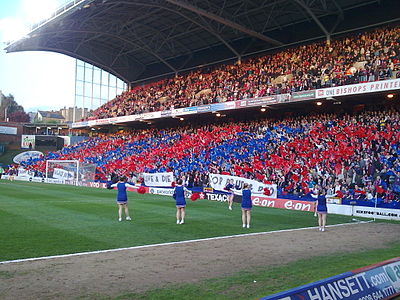
The identity of Crystal Palace is deeply intertwined with its passionate fanbase and the vibrant atmosphere they create at Selhurst Park. The club's distinctive kit, evolving from claret and blue to the iconic red and blue vertical stripes worn today, serves as a visual representation of their heritage. Beyond the on-field action, football rivalries add a significant layer of intensity and narrative to a club's existence.
Crystal Palace boasts a long-standing and particularly fierce rivalry with Brighton & Hove Albion, a competition that has intensified since the 1970s due to geographical proximity and competitive clashes. This rivalry, often dubbed the 'M23 Derby,' generates considerable passion and media attention. Furthermore, Palace engages in intense 'South London Derbies' against local rivals Millwall and Charlton Athletic.
These matches are steeped in history and local pride, often characterized by passionate support and a desire for regional supremacy, making them pivotal fixtures in the football calendar.
A New Dawn
The recent history of Crystal Palace Football Club has been defined by significant achievements that have etched new chapters into their legacy. The club has reached the FA Cup final on multiple occasions, notably in 2016 and again in 2025. The 2025 FA Cup victory was a watershed moment, marking the club's first major trophy and fulfilling a long-held ambition for their devoted supporters.
This triumph was not an isolated incident; it was followed by the club's first FA Community Shield title in the same year, further solidifying their recent success. These accomplishments demonstrate a club that has not only stabilized but is actively striving for greater honors. The sustained presence in the Premier League, coupled with these cup successes, indicates a maturing club with a clear vision for continued growth and a desire to compete at the highest levels of English and European football.
See also
Frequently Asked Questions
What is Crystal Palace FC and where did it get its name?+
When did Crystal Palace FC become a professional club?+
What is the most famous match that Crystal Palace played in the 1990s?+
Where do Crystal Palace play their home games?+
Who are Crystal Palace's main rivals?+
Based on content from Wikipedia · Licensed under CC BY-SA 4.0