

Cricket Field: The Big Green Playground!
Images

Cricket field
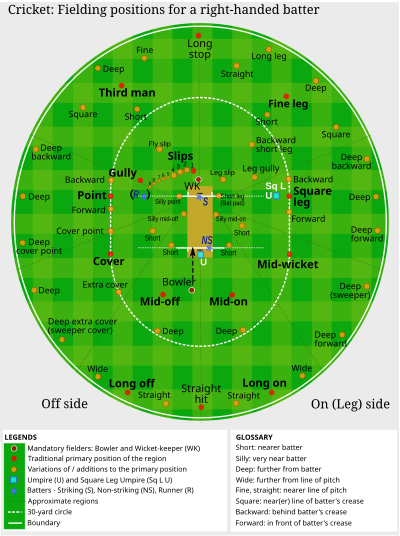


Architectural Diversity
The cricket field, or cricket ground, stands apart from most major sports arenas due to its lack of standardized dimensions and shape. While often described as oval, the actual forms range widely, encompassing perfect circles, elongated ovals, rounded rectangles, and even irregular shapes. This inherent variability is a defining characteristic, contrasting sharply with the rigidly defined playing surfaces of sports like soccer, rugby, or American football.
The only consistent design element is the smooth, curvilinear boundary without sharp corners, a practical consideration for player safety and the unimpeded movement of the ball. The size itself is substantial, with men's fields typically spanning 450-500 feet (140-150 m) in diameter and women's fields slightly smaller at 360-420 feet (110-130 m). This expansive playing area is not merely a backdrop but an active element influencing fielding tactics, the power required for hitting boundaries, and the strategic deployment of players across the vast outfield.
The Epicenter of Action
Central to the cricket field's functionality is the 'square', a meticulously maintained, level area of turf specifically prepared for the laying of 'pitches'. The pitch itself is the narrow, rectangular strip, precisely 22 yards (20.12 meters) long and 10 feet (3.05 meters) wide, where the fundamental contest between bowler and batsman occurs. It is here that the ball is delivered, struck, and runs are attempted between the wickets.
The square's preparation is critical for ensuring consistent bounce and seam movement of the ball, directly impacting the game's dynamics. While the outfield offers space for strategic positioning and fielding prowess, the pitch is the crucible of skill, technique, and pressure. The contrast between the expansive, open outfield and the concentrated, high-stakes action on the pitch creates a unique visual and tactical landscape.
Boundaries, Quirks, and Strategic Implications
The boundary rope serves as more than just a visual marker; it is a critical scoring threshold. Reaching or crossing the boundary with the ball results in automatic runs (four or six), fundamentally altering the game's momentum. However, it is the inherent peculiarities of cricket grounds that truly distinguish them.
Unlike sports with uniform playing fields, cricket embraces variation. Lord's Cricket Ground, for example, is renowned for its significant slope, which can affect the ball's trajectory and the effort required by fielders. Historically, grounds have featured unique elements, such as trees within the playing area, which demanded specific fielding strategies. These idiosyncrasies mean that no two cricket fields are identical, and teams must adapt their tactics to the specific characteristics of each venue, adding a layer of strategic complexity and unpredictability to the sport.
The Cricket Field as a Strategic Determinant
The non-standardized nature of the cricket field is not merely an aesthetic choice but a profound strategic determinant. The large, often asymmetrical outfields necessitate exceptional fitness and agility from fielders, influencing the types of shots batsmen can play with impunity. The vastness allows for a greater variety of bowling and batting strategies, from defensive containment to aggressive boundary hitting.
Furthermore, the unique characteristics of each ground can favor certain playing styles or bowling types. A sloping outfield might assist fast bowlers, while a smaller boundary might encourage aggressive batting. This variability ensures that cricket remains a dynamic sport where adaptability and an understanding of the playing environment are as crucial as individual skill.
The cricket field, therefore, is not just a venue but an integral component of the game's strategic depth and enduring appeal.
The Global Reach and Evolution of Cricket Venues
Cricket's global footprint is mirrored in the diversity of its playing fields, found across continents from the manicured perfection of Lord's in England to the dusty expanses of the Melbourne Cricket Ground in Australia, or the unique setting of Eden Gardens in India. While the core principles of the pitch and square remain, the surrounding outfield dimensions, shape, and even the turf composition can vary significantly.
This evolution reflects not only the sport's adaptation to different climates and available spaces but also the historical development of cricket itself. Modern grounds often incorporate advanced drainage and turf management systems to ensure playability even in challenging weather, yet the fundamental freedom in shaping the overall field remains. This architectural flexibility is a key reason why cricket fields are so varied and why adapting to new venues is a constant challenge and excitement for players worldwide.
See also
Based on content from Wikipedia · Licensed under CC BY-SA 4.0