

Computer Recycling: Giving Old Gadgets a New Life!
Images

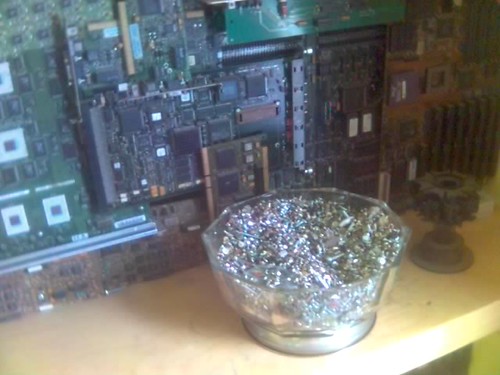
Computer Recycling Scrapyard Ottawa Canada 1996 2 enh



Deconstructing Obsolescence
Computer recycling, often termed 'e-waste' recycling, is a sophisticated industrial process designed to manage the end-of-life phase of electronic devices, particularly computers. It transcends simple disposal, focusing on the systematic dismantling, material recovery, and safe management of potentially hazardous components. The primary objective is to divert these complex products from landfills, where their constituent materials could leach into the environment, and instead, to reclaim valuable resources.
This involves a multi-stage approach, beginning with the collection and aggregation of discarded electronics, followed by meticulous disassembly. Specialized facilities employ trained personnel and advanced machinery to separate components like printed circuit boards (PCBs), hard disk drives, power supplies, and display units. The efficiency and environmental integrity of this initial phase are paramount, as it dictates the success of subsequent material recovery operations and the minimization of environmental risks.
The Material Alchemy
The heart of computer recycling lies in its material recovery processes, a form of industrial alchemy. Once components are separated, they undergo further treatment. Precious metals, such as gold, silver, palladium, and platinum, are often found in minute quantities on PCBs.
These are typically processed through hydrometallurgical or pyrometallurgical methods, involving chemical solutions or high-temperature smelting, to extract and refine these valuable elements. Base metals like copper, aluminum, and steel are recovered through shredding, magnetic separation, and eddy current separation, then melted down for remanufacturing. Plastics, which constitute a significant portion of a computer's mass, are sorted by type, cleaned, and granulated into pellets for reuse in various plastic products, though challenges remain in recycling mixed plastics. Glass from CRT monitors, while less common now, contains lead and requires specialized processing to be safely recycled or disposed of.
The technological advancements in sorting and separation are continuously improving the yield and purity of recovered materials.
The Imperative of E-Waste Management
The imperative for robust computer recycling programs is driven by a confluence of environmental and economic factors. Environmentally, e-waste is a growing global concern. Electronics contain toxic substances like lead, mercury, cadmium, and brominated flame retardants.
Improper disposal can lead to severe soil and water contamination, posing significant risks to ecosystems and human health. Recycling mitigates these risks by ensuring these hazardous materials are managed responsibly. Economically, e-waste represents a significant loss of valuable resources if not recovered.
The extraction of virgin materials is energy-intensive and environmentally damaging. Recovering metals and plastics from discarded electronics reduces the demand for new mining and manufacturing, thereby conserving natural resources, lowering energy consumption, and decreasing greenhouse gas emissions. Furthermore, the e-waste recycling industry itself creates jobs and contributes to a circular economy, where resources are kept in use for as long as possible.
Evolution of E-Waste Handling
The history of computer recycling is intrinsically linked to the rapid evolution of technology and growing environmental consciousness. In the early decades of personal computing, e-waste management was largely an afterthought, with most discarded electronics ending up in landfills or being exported to developing countries for informal, often hazardous, dismantling. As the volume of e-waste surged and its environmental consequences became undeniable, a shift began.
The late 20th and early 21st centuries saw the emergence of specialized e-waste recycling companies and the development of more sophisticated processing technologies. Crucially, legislative frameworks started to take shape. Extended Producer Responsibility (EPR) laws, for instance, began to hold manufacturers accountable for the end-of-life management of their products, incentivizing design for disassembly and recycling.
International agreements and national regulations have since become vital in guiding responsible e-waste handling, promoting circular economy principles, and ensuring that the digital age does not leave behind a toxic legacy.
Real-World Applications and Future Frontiers
The tangible outcomes of computer recycling are diverse and impactful. Recovered metals are fed back into the manufacturing supply chain for new electronics, automotive parts, and construction materials. Recycled plastics find their way into consumer goods, furniture, and even textiles.
Beyond material recovery, refurbished computers play a vital role in bridging the digital divide, providing access to technology for educational institutions and underserved communities. Looking forward, the field is exploring advanced AI-driven sorting, chemical recycling for complex plastics, and innovative methods for recovering rare earth elements. The focus is increasingly on designing electronics for easier disassembly and repair, promoting longevity, and fostering a truly circular economy where the concept of 'waste' is minimized, and resources are perpetually cycled.
See also
Frequently Asked Questions
What is computer recycling?+
Why is it important to recycle old computers?+
How do recycling centers get the metals from computers?+
Are there any dangerous parts in old computers that need special care?+
Can recycled computer parts be used to make new things?+
Based on content from Wikipedia · Licensed under CC BY-SA 4.0