

Compact disc
Images
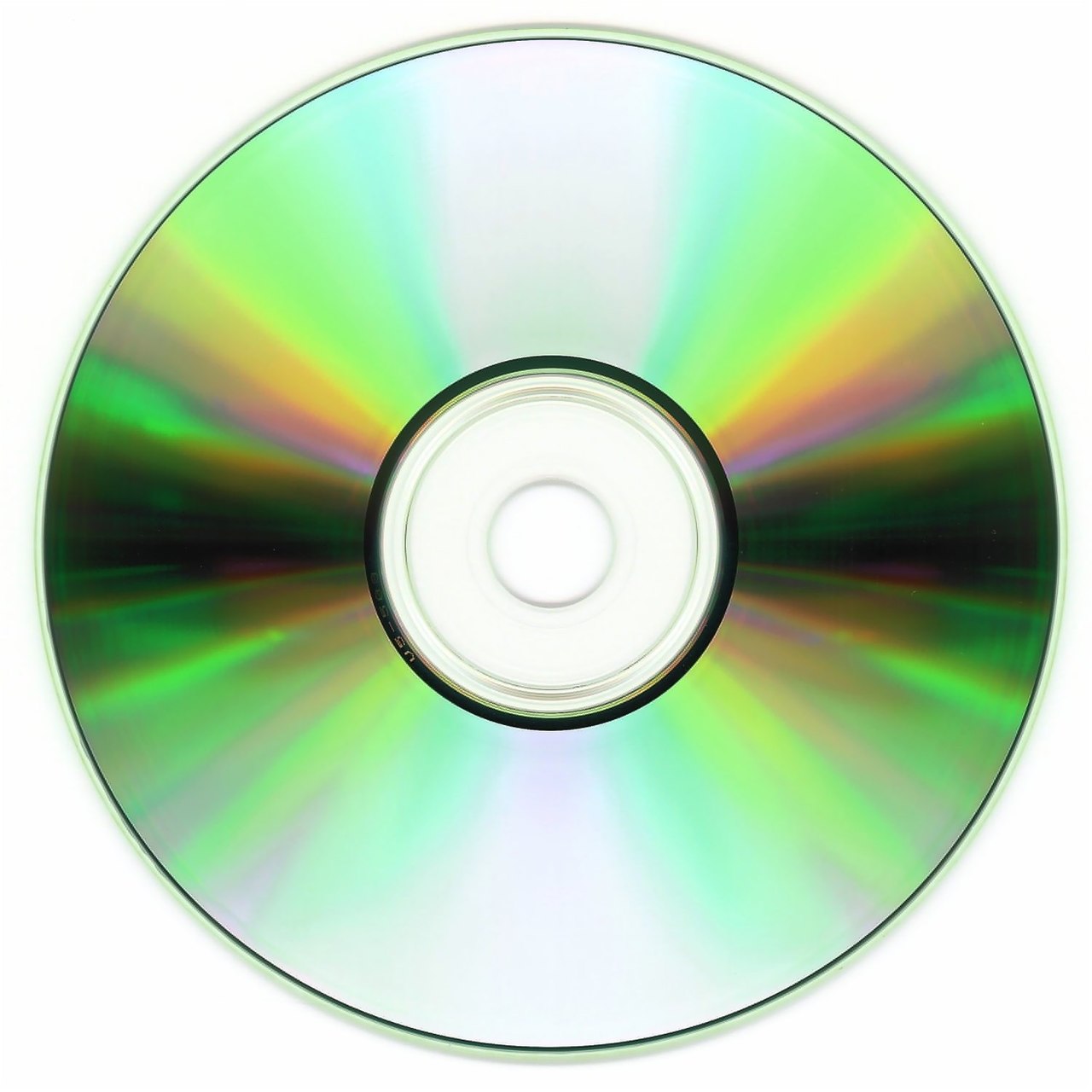
Compact Disc


Genesis of the Compact Disc
The compact disc emerged in the early 1980s as a collaborative effort between Philips and Sony, aiming to create a superior digital audio format. This initiative was driven by the limitations of existing analog media like vinyl records, which were susceptible to wear and environmental factors, and cassette tapes, which offered lower fidelity and could degrade over time. The CD-DA (Compact Disc Digital Audio) standard, established by these two giants, promised uncompressed stereo audio with unprecedented clarity and durability.
Launched in Japan in October 1982, the CD was the second optical disc format to market, succeeding the larger LaserDisc. Its 120mm diameter offered a balance of portability and capacity, quickly positioning it as a revolutionary medium. The underlying technology, involving a laser reading microscopic pits and lands on a polycarbonate surface, was a significant advancement, enabling a higher density of information storage compared to previous formats and setting the stage for its eventual adaptation beyond audio.
From Audio Ascendancy to Data Dominance
The compact disc's success was not confined to the music industry. Its inherent digital nature made it an ideal candidate for computer data storage. The development of the CD-ROM (Compact Disc Read-Only Memory) format was a pivotal moment, offering storage capacities that rivaled and often surpassed contemporary hard disk drives.
This allowed for the distribution of large software applications, encyclopedic databases, and multimedia content that were previously impractical. The format continued to evolve with writable variants like CD-R (recordable) and rewritable CD-RW, empowering users to create their own discs for backups, data sharing, and personal media projects. Further specialized formats like Video CD (VCD), Photo CD, and Super Audio CD (SACD) demonstrated the CD's remarkable adaptability, showcasing its potential across diverse applications and solidifying its role as a versatile digital storage medium.
The Mechanics of the CD
The operational principle of a compact disc relies on sophisticated laser optics and digital encoding. A standard CD measures 120mm in diameter and typically holds around 650-700 MiB of data, or approximately 74-80 minutes of uncompressed audio. This information is stored as a continuous spiral track of microscopic pits and lands, starting from the center and extending outwards.
When a CD is played, a laser diode emits a focused beam of light onto this track. The reflection of this light changes depending on whether it hits a pit or a land. A photodiode sensor detects these variations in reflected light.
These changes are interpreted as binary data (1s and 0s) by the player's electronics. The speed at which the disc rotates is precisely controlled (constant linear velocity or CLV) to ensure the laser reads the data at a consistent rate, allowing the player to reconstruct the original audio signal or digital information with high fidelity.
Market Supremacy and the Dawn of the Digital Age
The compact disc experienced a meteoric rise in popularity throughout the late 1980s and early 1990s. By 1991, it had decisively overtaken the phonograph record and cassette tape in sales within the United States, becoming the undisputed dominant physical audio format. By the turn of the millennium, CDs commanded an overwhelming 92.3% share of the U.S. music market.
This era is often referred to as the 'album era,' with the CD serving as its definitive physical medium. While the advent of MP3 compression, digital downloads, and subsequent streaming platforms in the mid-2000s led to a significant decline in CD sales, the format's legacy is profound. It democratized high-quality digital audio, influenced the design of subsequent optical storage technologies, and fundamentally altered consumer expectations for sound reproduction and data accessibility, leaving an indelible mark on the history of digital media.
Go deeper
Frequently Asked Questions
What is a compact disc and how does it play music?+
Why did people start using CDs instead of vinyl records or cassette tapes?+
How much music can a CD hold?+
Can I write my own songs on a CD?+
What other things can CDs store besides music?+
Based on content from Wikipedia · Licensed under CC BY-SA 4.0