

Claude Niépce
Images

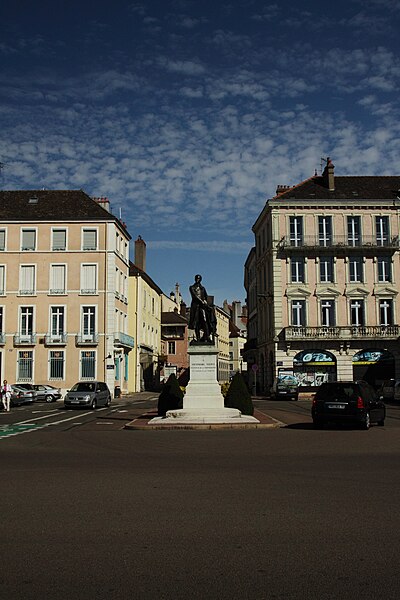
01 CWSui, Niepce Foto, 2012, jpg

The Niépce Brothers
Claude Félix Abel Niépce (1764 – early 1828) stands as a testament to the often-unseen collaborative forces behind groundbreaking inventions. As the elder brother of Nicéphore Niépce, the celebrated pioneer of photography, Claude’s own contributions have been largely eclipsed by his sibling’s fame. However, historical accounts suggest a deep and active partnership between the two.
Their shared intellectual curiosity and inventive drive propelled them to explore complex technological challenges, most notably the development of an internal combustion engine. This engine concept, far ahead of its time, required significant theoretical and practical input, much of which Claude likely provided. His role was not merely supportive but foundational, contributing to the conceptualization and early development stages.
This dynamic highlights a crucial aspect of scientific and technological progress: the power of shared vision and complementary skills in pushing the boundaries of what is possible. The Niépce brothers' collaboration serves as an early model for the iterative and cooperative nature of innovation that continues to define modern research and development.
A Transatlantic Quest for Technological Realization
The ambition to see their inventions realized led Claude Niépce to undertake a significant diplomatic and entrepreneurial mission to England. In the early 19th century, the pursuit of funding for radical new technologies was a formidable undertaking, requiring not only technical acumen but also persuasive communication and a deep understanding of potential investors. Claude's journey to England was motivated by the desire to secure sponsorship for their internal combustion engine.
This endeavor involved identifying patrons, articulating the engine's potential, and navigating the complex socio-economic landscape of early industrial Britain. His efforts, though ultimately unsuccessful in securing the necessary backing before his death, underscore the practical challenges inventors faced in translating theoretical breakthroughs into tangible products. His presence in England also suggests an awareness of international technological trends and a strategic approach to globalizing their innovations.
Claude’s personal sacrifice and dedication in pursuing this goal speak volumes about his commitment to invention.
The Unacknowledged Influence on Heliography
While Nicéphore Niépce is universally recognized for producing the world's first permanent photograph, the heliograph, the precise extent of Claude's involvement remains a subject of historical inquiry. Given their close working relationship and shared interests in optics, chemistry, and image reproduction, it is highly improbable that Claude was entirely uninvolved in the experiments that led to the heliograph. The brothers likely shared knowledge, resources, and experimental findings.
Claude's inventive mind and his practical approach to problem-solving would have been invaluable during the arduous process of developing light-sensitive materials and exposure techniques. His passing in early 1828, shortly before or during the final stages of Nicéphore's most significant photographic achievements, may have contributed to his contributions being overlooked. The historical narrative, often focusing on the singular discoverer, can inadvertently diminish the roles of crucial collaborators like Claude, whose input was integral to the foundational steps of photographic history.
Claude Niépce
Claude Niépce's legacy transcends his brother's fame, offering a profound lesson in the nature of innovation. His life story illuminates the critical, yet often uncredited, role of collaborators in scientific and technological advancement. Claude’s dedication to invention, his ambitious transatlantic pursuit of funding, and his probable involvement in the genesis of photography underscore his significance.
He represents the spirit of perseverance and the collaborative ethos that is essential for progress. By examining Claude's life, we gain a more nuanced understanding of how major breakthroughs occur – not in isolation, but through shared effort, intellectual exchange, and mutual support. His story encourages a broader appreciation for the collective human endeavor that drives invention, reminding us that history's most celebrated achievements often have unsung heroes whose contributions are vital to their very existence.
See also
Based on content from Wikipedia · Licensed under CC BY-SA 4.0