

The Cerebrum: Your Brain's Super-Smart Boss!
Images
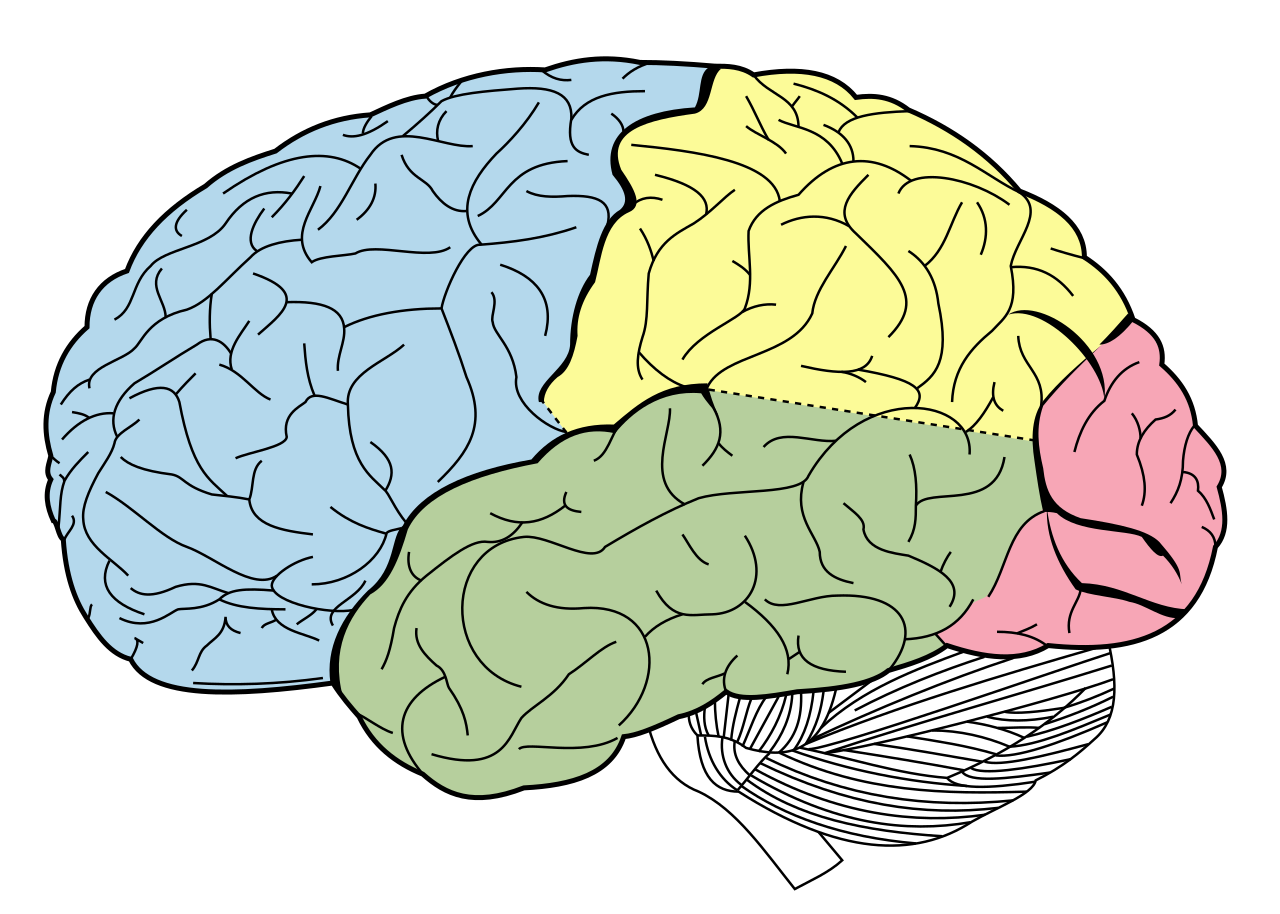
Cerebrum
Anatomy and Evolutionary Significance of the Cerebrum
The Cerebrum represents the pinnacle of human brain evolution, constituting approximately 85% of the brain's mass and occupying the majority of the cranial cavity. Its most striking feature is its highly convoluted surface, comprised of elevated ridges (gyri) and deep fissures (sulci). This intricate folding dramatically increases the cortical surface area, allowing for an immense number of neurons to be housed within a confined space.
This expanded cortex is the foundation for our sophisticated cognitive abilities. The Cerebrum is divided into two distinct cerebral hemispheres, the left and right, which are largely symmetrical but exhibit functional lateralization. These hemispheres are interconnected by the corpus callosum, a massive commissural pathway that facilitates interhemispheric communication, enabling integrated brain function.
The evolutionary trajectory of the Cerebrum shows a significant increase in size and complexity across primate species, with humans exhibiting the most pronounced development, particularly in the prefrontal cortex.
The Cerebrum's Role in Sensory Perception and Motor Control
The Cerebrum is the primary processing center for all sensory information and voluntary motor commands. Each sensory modality vision, audition, somatosensation, olfaction, and gustation has dedicated cortical areas within the Cerebrum. For instance, the occipital lobe is primarily responsible for visual processing, the temporal lobe for auditory processing and memory, and the parietal lobe for integrating sensory information and spatial awareness.
Similarly, the frontal lobe, particularly the motor cortex, is crucial for planning, initiating, and executing voluntary movements. The somatosensory cortex, located in the parietal lobe, receives and processes tactile information, temperature, and pain. This intricate network allows us to perceive our environment with remarkable detail and to interact with it through precise motor actions, forming the basis of our interaction with the physical world.
Higher Cognitive Functions
Beyond sensory processing and motor control, the Cerebrum is the seat of our most complex cognitive functions, including language, memory, reasoning, problem-solving, and consciousness. The cerebral cortex, the outer layer of the Cerebrum, is where these higher-order processes are thought to occur. Specific regions, such as Broca's area and Wernicke's area, are critical for language production and comprehension, respectively.
Memory formation and retrieval involve complex interactions between various cortical and subcortical structures, with the hippocampus playing a key role in consolidating new memories. The prefrontal cortex, located at the front of the frontal lobe, is essential for executive functions such as planning, decision-making, working memory, and regulating social behavior. Consciousness itself, the subjective awareness of our internal and external states, is a profound emergent property of the Cerebrum's integrated activity.
Neuroplasticity and the Developing Cerebrum
The Cerebrum is not a static organ; it possesses a remarkable capacity for change and adaptation known as neuroplasticity. Throughout life, the brain can reorganize its structure and function in response to experience, learning, and injury. This plasticity is particularly pronounced during development, where early experiences play a critical role in shaping neural pathways.
For example, learning a new language or mastering a musical instrument leads to measurable changes in the Cerebrum's structure and connectivity. This adaptability allows individuals to acquire new skills, recover from brain damage to some extent, and continuously learn and grow. Understanding neuroplasticity has profound implications for education, rehabilitation, and the treatment of neurological disorders.
Clinical Relevance and Future Directions
Disruptions to Cerebrum function underlie a vast array of neurological and psychiatric conditions. Strokes, traumatic brain injuries, neurodegenerative diseases like Alzheimer's and Parkinson's, and developmental disorders such as autism spectrum disorder all involve significant Cerebrum pathology. Research into the Cerebrum's intricate workings is crucial for developing effective diagnostic tools and therapeutic interventions. Advances in neuroimaging techniques, such as fMRI and EEG, allow scientists to study the Cerebrum in action, providing unprecedented insights into its functional organization. Future research aims to further unravel the neural basis of consciousness, develop targeted treatments for Cerebrum-related disorders, and harness neuroplasticity for enhanced learning and recovery.
Go deeper
Frequently Asked Questions
What is the cerebrum and why is it so important?+
How does the cerebrum’s folded surface help us?+
What do the left and right hemispheres of the cerebrum do?+
Which parts of the cerebrum help us see, hear, and move?+
Can the cerebrum change as we learn new things?+
Based on content from Wikipedia · Licensed under CC BY-SA 4.0