

Carnegie Hall
Images

MUSIC - Daniil Trifonov - Carnegie Hall


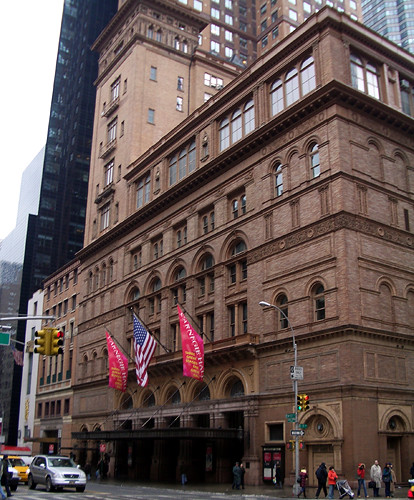


Architectural Genesis and Andrew Carnegie's Vision
Carnegie Hall, originally conceived as the Music Hall, stands as a testament to the philanthropic vision of Andrew Carnegie and the architectural ingenuity of William Burnet Tuthill. Constructed between 1889 and 1891, its design was a response to the growing need for a world-class venue to accommodate the burgeoning musical scene in New York City. Carnegie, a titan of industry, believed that access to the arts was crucial for societal enrichment.
The hall was initially intended to house the Oratorio Society of New York and the New York Symphony Society, establishing its foundational role in classical music. The building's construction was a significant undertaking, employing materials and techniques of the era to create a space renowned for its aesthetic beauty and, crucially, its exceptional acoustics. The hall's initial ownership by the Carnegie family for over three decades cemented its legacy as a personal and cultural investment.
A Symphony of Spaces
The Carnegie Hall complex is a masterful example of how a single venue can encompass diverse performance experiences. It comprises three distinct auditoriums, each with its own capacity and character. The flagship Stern Auditorium, a five-story marvel, boasts 2,790 seats and is celebrated globally for its unparalleled sound quality, making it a dream venue for performers and audiences alike.
Beneath street level lies Zankel Hall, a more contemporary space with 599 seats, designed to host a broader spectrum of musical genres and experimental performances. Completing the trio is the Joan and Sanford I. Weill Recital Hall, an intimate setting with 268 seats, perfect for solo recitals and chamber music where every nuance can be appreciated.
Beyond these performance spaces, the upper stories of Carnegie Hall house administrative offices, underscoring its operational complexity and its role as a self-sustaining arts organization.
The Crucible of Crisis
Carnegie Hall's survival is a compelling narrative of cultural preservation against the forces of urban development. In the mid-20th century, the hall faced an existential threat when the New York Philharmonic announced its relocation to Lincoln Center in 1962. The prospect of demolition loomed large, sparking widespread concern among artists, patrons, and the public.
This crisis galvanized a powerful grassroots movement, spearheaded by the esteemed violinist Isaac Stern. His impassioned advocacy and the subsequent public campaign were instrumental in rallying support and ultimately securing the hall's future. The successful effort led to Carnegie Hall being designated a National Historic Landmark and placed under the protection of the New York City Landmarks Preservation Commission, ensuring its preservation for future generations and highlighting the profound public appreciation for its historical and artistic significance.
Enduring Relevance
Despite the departure of its original resident orchestra, Carnegie Hall has not only endured but thrived, maintaining its status as a premier global music destination. Its operational model is a key factor in its continued success. The hall maintains its own dedicated departments for artistic programming, development, and marketing, allowing for curated seasons that attract a diverse audience.
Presenting approximately 250 performances each season, Carnegie Hall showcases a wide array of musical genres, from classical and jazz to contemporary and world music. Furthermore, its rental policy enables other performing arts organizations to utilize its esteemed stages, fostering a dynamic and collaborative artistic ecosystem. This multifaceted approach ensures that Carnegie Hall remains a vibrant, relevant, and indispensable institution in the global cultural landscape, continuously shaping and reflecting the evolution of music.
Go deeper
Frequently Asked Questions
What is Carnegie Hall?+
How many auditoriums does Carnegie Hall have and how many seats are in each?+
Why did Andrew Carnegie build Carnegie Hall?+
What happened when the New York Philharmonic moved to Lincoln Center?+
What kinds of music can you hear at Carnegie Hall?+
Based on content from Wikipedia · Licensed under CC BY-SA 4.0