

Carl Sagan: Our Starry-Eyed Explorer
Images
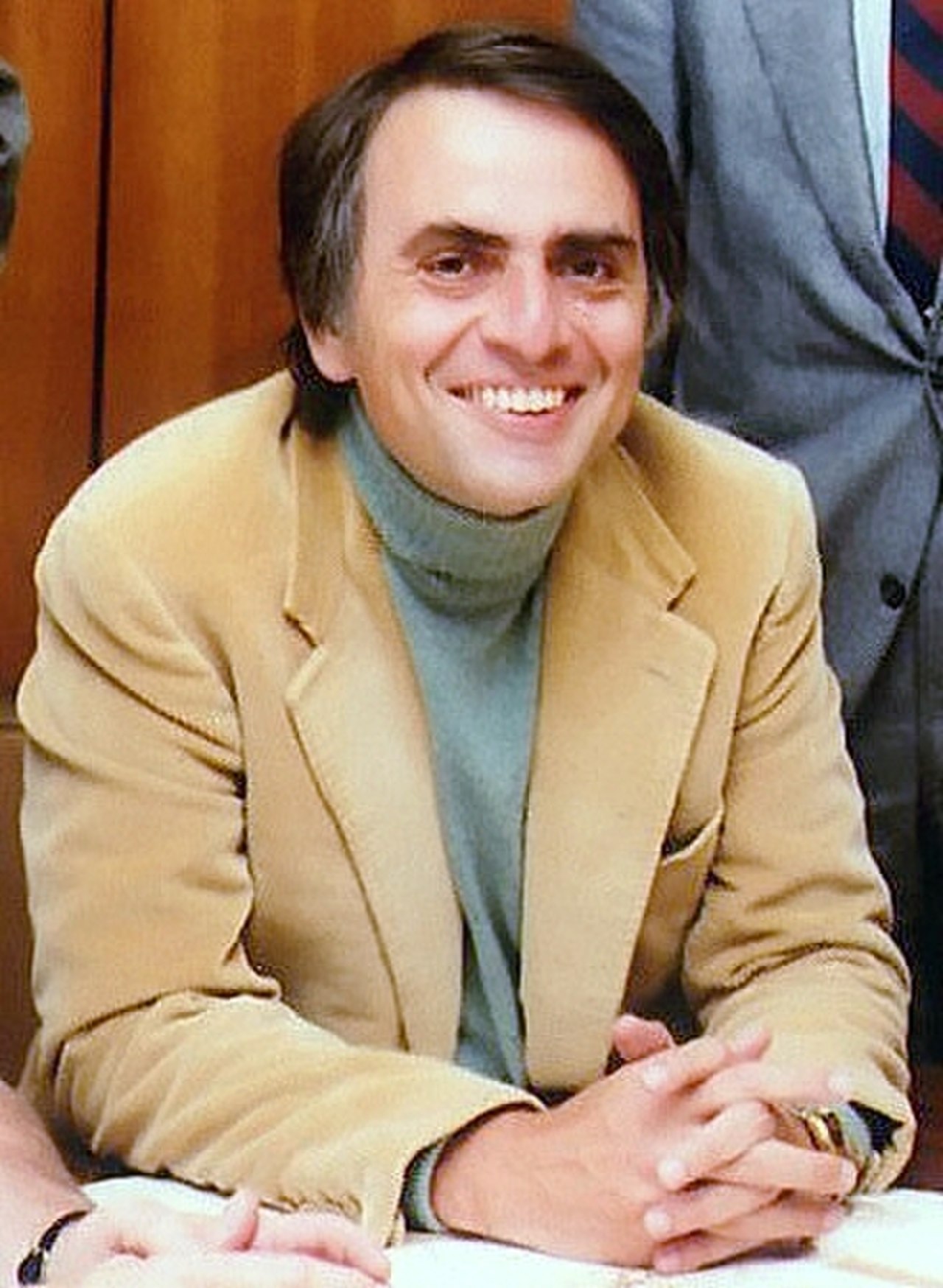
Carl Sagan
Sagan's Legacy in Science Communication
Carl Sagan's impact extends far beyond his scientific publications. He fundamentally reshaped public perception of astronomy and planetary science through his exceptional talent for communication. The 1980 television series 'Cosmos: A Personal Voyage,' co-written and narrated by Sagan, stands as a monumental achievement.
Its unprecedented reach-viewed by at least 500 million people across 60 countries-democratized access to scientific knowledge, transforming complex cosmological and biological concepts into accessible narratives. Sagan's approach was not merely didactic; it was inspirational, fostering a sense of wonder and curiosity about our place in the universe. He authored numerous popular science books, including 'The Dragons of Eden' (which earned him a Pulitzer Prize), 'Pale Blue Dot,' and 'The Demon-Haunted World,' each further solidifying his role as a leading public intellectual who championed scientific literacy and critical thinking.
His ability to weave together scientific rigor with philosophical contemplation made him a unique and enduring voice.
Interstellar Embassies
Sagan's vision extended to humanity's first attempts at interstellar communication. He chaired the committee that designed the Pioneer plaque, a symbolic message of peace and information intended for any extraterrestrial intelligence that might intercept the Pioneer 10 and 11 spacecraft. This plaque featured diagrams of a man and woman, the Sun's position, and a representation of the spacecraft's trajectory.
Building on this, Sagan was the driving force behind the Voyager Golden Record, a more ambitious project for the Voyager 1 and 2 probes. This record contained a curated selection of sounds and images representing the diversity of life and culture on Earth, including music from various eras and cultures, spoken greetings in 55 languages, and natural sounds. These artifacts are more than scientific instruments; they are profound statements about humanity's identity and aspirations, representing our first deliberate efforts to engage with the cosmos on a diplomatic level, carrying our story into the vastness of space.
Pioneering Planetary Science and the Search for Extraterrestrial Life
Sagan's scientific career was marked by significant contributions to planetary science. He was a leading proponent of the hypothesis that Venus's extreme surface temperatures are a result of a runaway greenhouse effect, a finding that has profound implications for understanding planetary atmospheres and climate dynamics. His research also delved into the potential for life beyond Earth.
He pioneered the field of exobiology and was a staunch advocate for the Search for Extraterrestrial Intelligence (SETI). Sagan conducted experiments demonstrating the abiotic synthesis of amino acids-the fundamental building blocks of proteins-from basic chemical compounds exposed to ultraviolet light, suggesting plausible pathways for the origin of life on early Earth or other celestial bodies. This work provided a scientific basis for the ongoing search for life elsewhere, moving it from speculation to empirical investigation.
A Life Dedicated to Skepticism and Cosmic Perspective
Throughout his career, Carl Sagan was a passionate advocate for skeptical inquiry and the scientific method. He consistently championed reason and evidence-based thinking, urging the public to critically evaluate extraordinary claims. His book 'The Demon-Haunted World: Science as a Candle in the Dark' remains a seminal work on critical thinking and the importance of scientific literacy in combating pseudoscience and irrationality.
Sagan's profound sense of cosmic perspective, famously articulated in his reflections on the 'Pale Blue Dot' image of Earth from Voyager 1, encouraged humility and a unified view of humanity. He held academic positions at Harvard University before spending the majority of his career at Cornell University, where he directed the Laboratory for Planetary Studies. His prolific output-over 600 scientific papers and articles, and more than 20 books-along with numerous awards, including two Emmys and a Peabody for 'Cosmos,' underscore his immense influence.
Sagan's legacy is that of a scientist who not only expanded our knowledge of the universe but also profoundly enriched our understanding of ourselves within it.
Go deeper
Frequently Asked Questions
Who was Carl Sagan?+
What was the Cosmos TV series?+
What is the Pioneer plaque?+
What is the Voyager Golden Record?+
What did Carl Sagan discover about Venus?+
Based on content from Wikipedia · Licensed under CC BY-SA 4.0