

Burkina Faso: A Land of Amazing Stories!
Images
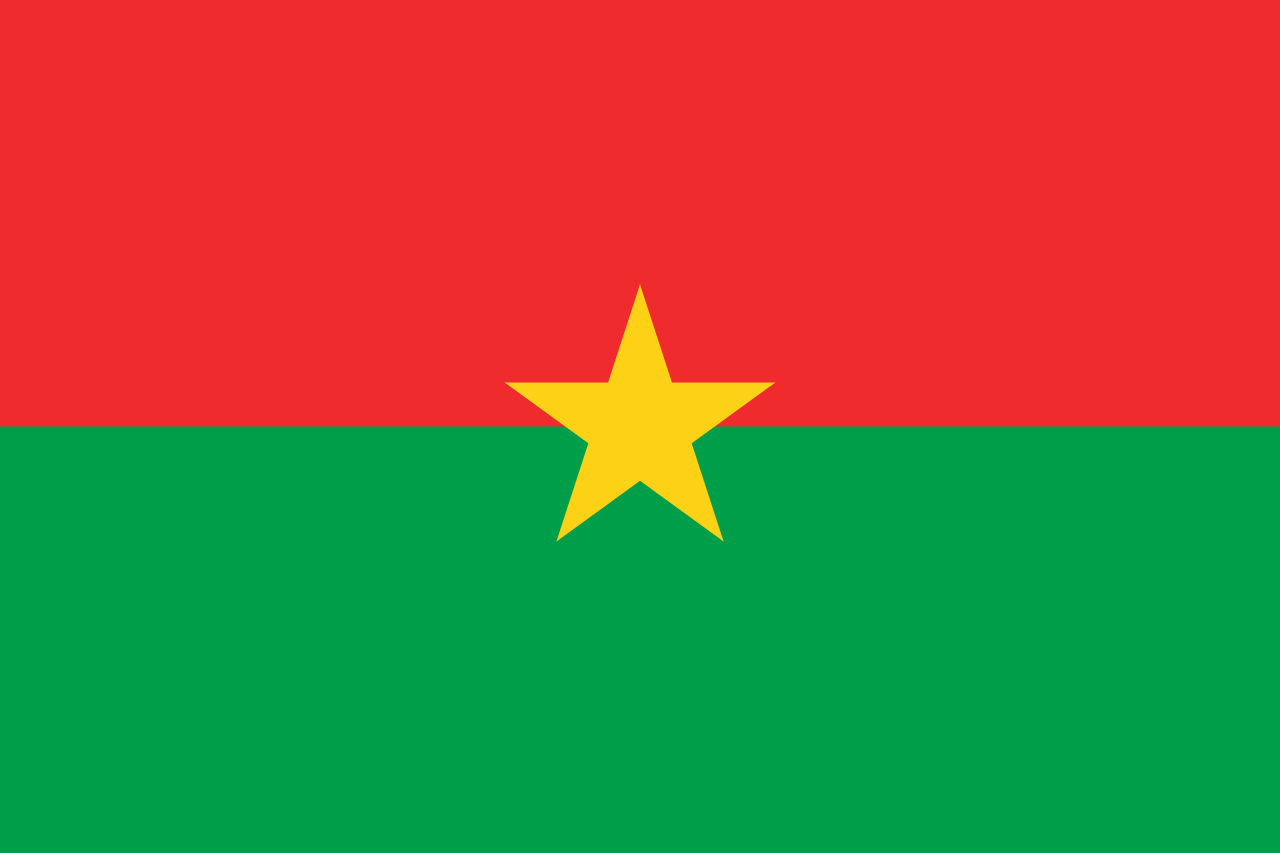
Burkina Faso
The Genesis of Burkina Faso
Burkina Faso, situated in the heart of West Africa, is a nation whose identity has been shaped by centuries of history, culminating in its modern formation. Its geographical position as a landlocked country, bordered by Mali, Niger, Benin, Togo, Ghana, and Ivory Coast, influences its regional dynamics and economic pathways. The nation's population, estimated at over 23 million in 2024, is diverse, with the Mossi people forming the largest ethnic group, whose historical presence dates back to the 11th and 13th centuries.
These early settlers established significant kingdoms, including Ouagadougou, Tenkodogo, and Yatenga, laying foundational political and social structures. The French colonization in 1896 integrated the territory into French West Africa, a period that profoundly impacted its administrative and cultural landscape. In 1958, Upper Volta became a self-governing colony within the French Community, a precursor to full independence achieved in 1960 under Maurice Yaméogo.
This journey from indigenous kingdoms through colonial rule to independence is a central narrative of Burkina Faso's existence.
The Symbolic Power of a Name
The transformation from the colonial-era name 'Republic of Upper Volta' to 'Burkina Faso' in 1984 was a pivotal moment, orchestrated by President Thomas Sankara. This renaming was far more than a cosmetic change; it was a deliberate act of decolonization and a powerful assertion of national sovereignty and cultural pride. 'Burkina' derives from the Mòoré language, signifying 'integrity' or 'honesty,' while 'Faso' comes from the Dyula language, meaning 'homeland.' The combined name, 'Land of Honest People,' encapsulates a vision for the nation rooted in its indigenous values and aspirations for good governance and authentic self-rule.
This symbolic act aimed to foster a unified national identity, distinct from its colonial past, and to inspire a new era of national development guided by principles of self-reliance and integrity.
A Rich Cultural and Linguistic Landscape
Burkina Faso is a vibrant testament to West African cultural diversity, boasting a rich tapestry of ethnic groups and languages. While the Mossi are the dominant group, numerous other communities, such as the Bissa, Dyula, and Fula, contribute to the nation's unique cultural mosaic. This diversity is reflected in its linguistic landscape, with four official languages: Mooré, Bissa, Dyula, and Fula.
Mooré, spoken by over half the population, holds particular significance. Furthermore, the Burkinabè government officially recognizes an impressive 60 indigenous languages, underscoring a commitment to preserving and valuing its linguistic heritage. Historically, French served as the primary language of government and business.
However, a significant constitutional amendment in January 2024 demoted French to a 'working language' alongside English, signaling a shift towards greater linguistic autonomy and potentially enhancing the prominence of indigenous languages in official capacities.
Economic Realities, Natural Wealth, and Artistic Renown
Burkina Faso faces significant economic challenges, consistently ranking among the least developed countries globally, with a GDP of $16.226 billion in 2022. Despite these challenges, the nation possesses substantial natural resources, including significant reserves of gold, manganese, and copper, which are crucial for its economy. The country's diverse geography supports these resources and contributes to its biodiverse environment.
Beyond its mineral wealth, Burkina Faso is globally renowned for its art, particularly its orthodox artistic styles, which are deeply intertwined with its multicultural heritage. This artistic tradition is a vital aspect of its cultural identity and a source of national pride. The nation's governance structure is a semi-presidential republic, with established executive, legislative, and judicial branches, and it actively participates in international organizations like the United Nations and the Organisation of Islamic Cooperation, though it has recently announced its exit from ECOWAS and the African Union.
Go deeper
Based on content from Wikipedia · Licensed under CC BY-SA 4.0