

Buckingham Palace
Images

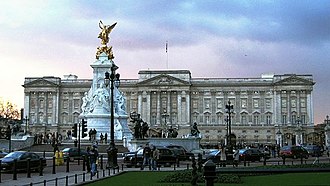
Buckingham Palace London Morning 2020 01 (Cropped)




Geopolitical Significance and Urban Integration
Buckingham Palace occupies a prime location within the City of Westminster, London, serving not merely as a royal residence but as the United Kingdom's monarchical administrative headquarters. Its placement is central to state occasions and royal hospitality, making it a consistent focal point for national sentiment, both in times of collective rejoicing and profound mourning. The palace's physical presence in the capital underscores the enduring connection between the British people and their monarchy, acting as a tangible symbol of national identity and continuity.
Its role extends beyond ceremonial functions; it is the operational hub from which the monarch's official duties are coordinated, reflecting a deep integration of the royal institution within the fabric of the British state and its capital city.
Architectural Evolution and Royal Acquisition
The genesis of Buckingham Palace lies in Buckingham House, a substantial townhouse erected in 1703 for John Sheffield, 1st Duke of Buckingham and Normanby. This original structure was situated on land with a long history of private ownership. The pivotal shift occurred in 1761 when King George III acquired the property, intending it as a private residence for his consort, Queen Charlotte.
It was subsequently known as The Queen's House. The palace's current grandeur is largely the result of extensive 19th-century renovations and expansions. Architects John Nash and Edward Blore were instrumental in constructing three new wings around a central courtyard, dramatically increasing the building's scale and complexity.
The palace officially transitioned to its role as the principal London residence of the British monarch upon Queen Victoria's accession in 1837, marking a significant moment in its history.
Grand Interiors and Public Access
Buckingham Palace is an immense structure, containing 775 rooms, a number that dwarfs most institutional buildings. Complementing its interior scale is the largest private garden in London, a vast expanse offering a secluded natural retreat within the urban environment. The State Rooms, meticulously maintained for official and state entertaining, represent the pinnacle of royal reception spaces.
Annually, during August and September, and on select days in winter and spring, these opulent rooms are opened to the public. This period of public access allows millions to experience the palace's historical and artistic richness. The interior design is a testament to evolving royal tastes, featuring original 19th-century elements like vibrant scagliola and lapis lazuli, alongside later redecorations, such as King Edward VII's Belle Époque cream and gold scheme.
Some reception rooms are furnished in the Chinese Regency style, incorporating pieces from the Royal Pavilion in Brighton and Carlton House.
Endurance Through Conflict and Artistic Legacy
The palace has undergone significant structural additions, notably the East Front completed in the late 19th and early 20th centuries, which includes the iconic balcony. This balcony has become a crucial element of royal public appearances, particularly during national celebrations. The palace's resilience was tested during World War II when a bomb destroyed the King's private chapel.
In its place, the King's Gallery was constructed and opened to the public in 1962. This gallery serves as a dedicated exhibition space for rotating displays from the Royal Collection, showcasing masterpieces of painting, sculpture, and decorative arts accumulated by British monarchs over centuries. This transformation highlights the palace's adaptability, preserving its historical significance while embracing new functions that engage the public with its artistic heritage.
Modern Relevance and Royal Functionality
Buckingham Palace continues to function as the primary working base for the monarch, housing offices for the Royal Household and serving as the venue for numerous state ceremonies, investitures, and garden parties. Its role in modern Britain is multifaceted: it is a symbol of the monarchy's historical continuity, a center for diplomatic engagement through state visits, and a significant tourist attraction that contributes to the national economy. The palace's ability to adapt, from its architectural expansions to the repurposing of spaces like the former chapel into the King's Gallery, demonstrates its enduring relevance.
It remains a dynamic institution, balancing its historical legacy with the practical demands of contemporary royal governance and public representation.
Go deeper
Frequently Asked Questions
What is Buckingham Palace and where is it located?+
How many rooms does Buckingham Palace have?+
When can visitors see the State Rooms?+
Who built the big wings around the palace?+
What happened to the palace during World War II?+
Based on content from Wikipedia · Licensed under CC BY-SA 4.0