

Booster separation motor
Images
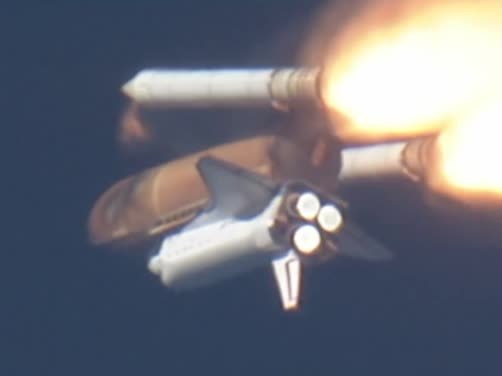
Booster separation motor


The Physics and Engineering of Ascent Optimization
Booster separation motors are indispensable components in multi-stage rocket systems, playing a pivotal role in maximizing ascent efficiency. Their primary function is to impart a controlled impulse, facilitating the jettison of spent booster stages. This process is governed by fundamental principles of physics, most notably Newton's laws of motion.
As a rocket ascends, its mass decreases as propellant is consumed. However, the large external booster tanks represent significant dead weight once their fuel is depleted. Booster separation motors, typically small solid rocket motors or pyrotechnic devices, are strategically placed to generate a precise thrust vector.
This thrust overcomes residual structural loads and aerodynamic forces, pushing the boosters away from the core stage or upper stage. The timing and magnitude of this impulse are critical; premature separation can lead to instability or collision, while delayed separation reduces the overall velocity gain achievable by the core stage due to the continued acceleration of unnecessary mass. The design must also account for the extreme thermal and vibrational environment of launch, demanding robust materials and precise manufacturing.
Historical Evolution of Stage Separation Technologies
The evolution of booster separation mechanisms mirrors the progression of rocketry itself. Early rocket designs, such as those developed during World War II and the nascent space race, often relied on simpler, less refined methods for stage separation. These could include explosive bolts or even manual separation commands in some experimental craft.
The advent of large, multi-stage launch vehicles like the Atlas, Titan, and particularly the Saturn V, necessitated more sophisticated and reliable separation systems. The Saturn V's first stage boosters, for instance, were massive structures, and their separation required powerful, precisely timed actions. Over decades, engineers have refined these systems, moving from purely explosive bolts to integrated motor systems that provide a more controlled and predictable separation.
Modern launch vehicles, including those from SpaceX and Blue Origin, continue this trend, employing highly reliable separation motors that are crucial for the success of complex missions, including reusable rocket stages where precise separation is key to recovery.
Strategic Importance and Performance Implications
The strategic importance of booster separation motors cannot be overstated, as they directly influence a rocket's payload capacity and achievable trajectories. By enabling the rapid shedding of spent stages, these motors significantly reduce the vehicle's overall mass. This mass reduction is directly proportional to the increase in acceleration, as per Newton's second law (F=ma).
A lighter vehicle requires less thrust to achieve the same acceleration, or conversely, can achieve much higher accelerations with the same thrust. This enhanced acceleration is vital for reaching orbital velocity or escape velocity efficiently. Furthermore, the clean separation prevents potential re-contact between stages, which could lead to catastrophic mission failure.
The ability to precisely control this separation event allows mission planners to optimize staging points, thereby minimizing fuel consumption and maximizing the mass that can be delivered to orbit or beyond. This efficiency is paramount in cost-effective space access and ambitious interplanetary missions.
Mechanisms and Design Considerations
Booster separation motors are typically designed as self-contained units, often employing solid propellants for their simplicity, reliability, and high thrust-to-weight ratio. These motors are mounted in clusters around the circumference of the stage interface. Upon receiving a command signal, an initiator ignites the propellant grain.
The rapid combustion produces high-pressure gas, which is expelled through a nozzle, generating thrust. The design must carefully balance the required separation force with the need to avoid imparting excessive angular momentum to the core stage. Factors such as the number, size, and placement of the motors are optimized based on the specific rocket's configuration, including its mass, structural integrity, and aerodynamic profile.
Advanced systems may incorporate redundant initiators and sophisticated control logic to ensure activation even in the event of partial motor failure. The materials used must withstand extreme temperatures, pressures, and vibrations inherent to the launch environment, often involving specialized alloys and ablative liners.
Related Technologies and Future Trends
Booster separation motors are part of a broader suite of stage separation technologies essential for spaceflight. These include pyrotechnic bolts, tension ties, and inflatable separation systems, each with its own advantages and applications. The trend in modern rocketry, particularly with the rise of reusable launch systems, is towards increasingly sophisticated and reliable separation mechanisms.
For reusable boosters, precise separation is not only critical for the booster's trajectory but also for the subsequent recovery operations. Future developments may focus on even more efficient separation techniques, potentially involving electro-mechanical systems or advanced pyrotechnics that offer greater control and reduced debris. The ongoing pursuit of lower launch costs and higher mission success rates ensures that the engineering of booster separation will remain a critical area of innovation in the aerospace industry.
See also
Based on content from Wikipedia · Licensed under CC BY-SA 4.0