

Bois Noirs (Livradois)
Images
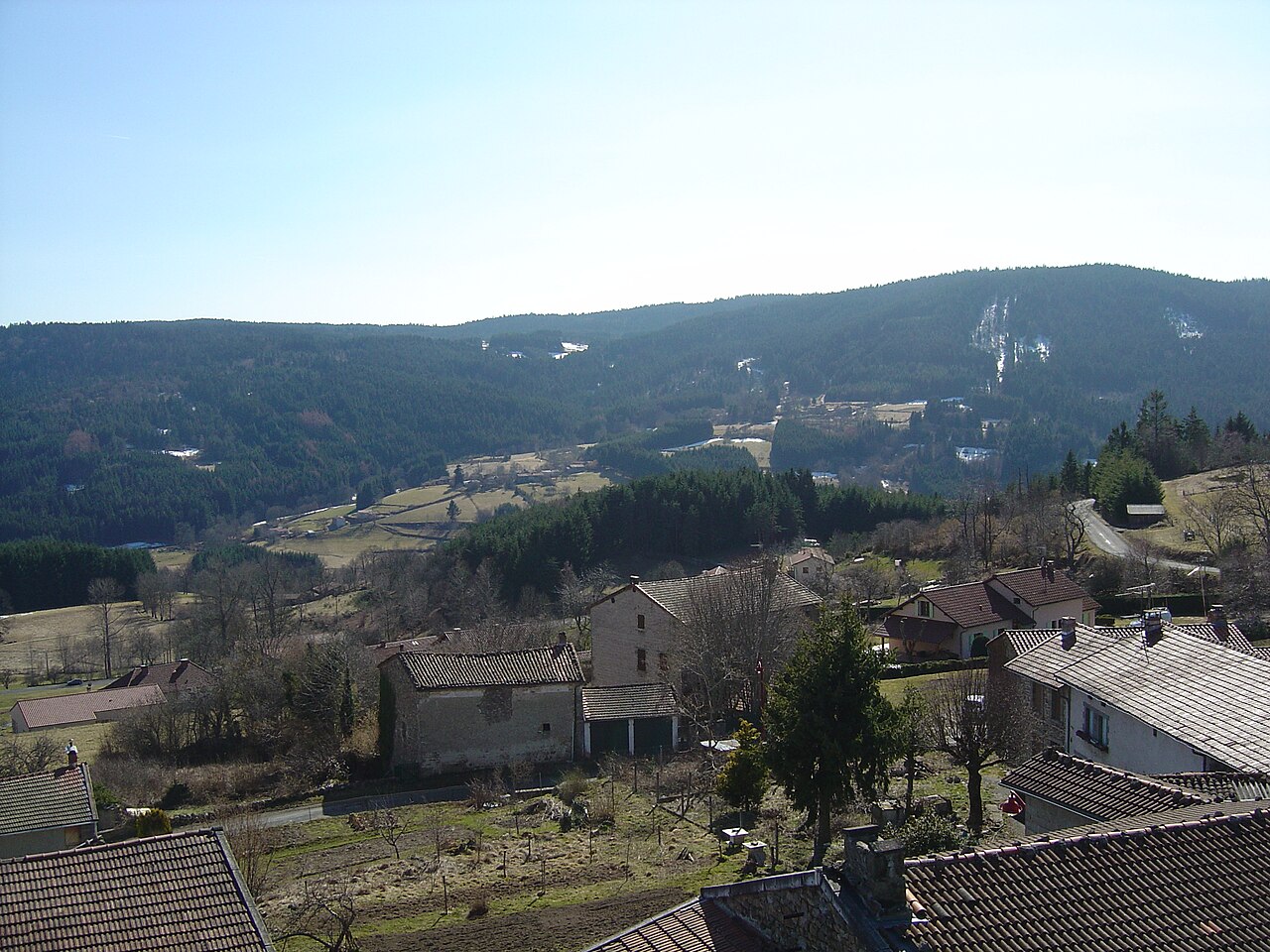
ForêTs Du Livradois
The Zenith of the Livradois Massif
Bois Noirs, a name resonating with the evocative 'Black Woods,' represents the apex of the Livradois mountain range, a significant geographical feature within the Puy-de-Dôme department of France. Its absolute summit, designated as Signal de Mons, reaches an elevation of 1,215 meters above sea level. This altitude places it in a distinct ecological zone, characterized by specific climatic conditions and flora adapted to higher elevations.
The forest is an integral part of the Livradois-Forez Regional Natural Park, a designation that underscores its ecological and landscape value. The dense, dark canopy, predominantly composed of coniferous species, contributes to its namesake and shapes the microclimate within its boundaries. Understanding Bois Noirs is to understand a key component of the Livradois's topographic and ecological identity.
A Summit's Paradox
The summit of Bois Noirs presents an intriguing geographical paradox. Despite being the highest point in the massif, Signal de Mons does not offer the sweeping panoramic views one might expect from such an elevated position. This phenomenon is a direct consequence of the forest's own dominance; the mature coniferous trees form an unbroken, dense canopy that effectively obscures distant vistas.
This characteristic transforms the experience of reaching the summit from one of expansive observation to one of immersion within the forest itself. It highlights how natural growth and ecological succession can shape the very perception of a landscape, making the journey through the woods as significant as the destination. The 'black woods' thus offer a more intimate, rather than a grand, perspective.
Ecological Significance and Environmental Role
As the highest point in the Livradois, Bois Noirs plays a crucial role in the regional hydrological and meteorological systems. Its elevation influences precipitation patterns, potentially acting as a source for streams and rivers that feed into lower-lying areas. The dense coniferous forest is a significant carbon sink, sequestering atmospheric carbon dioxide and contributing to air quality.
Furthermore, its presence within the Livradois-Forez Regional Natural Park signifies its importance for biodiversity conservation. While specific flora and fauna are not detailed in the provided source, such high-altitude coniferous forests typically support specialized species adapted to cooler temperatures and specific soil conditions. The preservation of Bois Noirs is therefore vital for maintaining the ecological integrity of the wider Livradois region and contributes to France's national conservation goals.
The 'Black Woods' in Context
Bois Noirs is more than just a high point; it is a geographical landmark that defines a significant portion of the Livradois. Its location within the Puy-de-Dôme department places it within a region known for its volcanic landscapes and diverse natural environments. The designation as part of the Livradois-Forez Regional Natural Park emphasizes a commitment to sustainable land management and the protection of natural and cultural heritage.
This park system in France aims to balance human activities with the preservation of natural resources, ensuring that areas like Bois Noirs remain intact for scientific study, recreational use, and ecological benefit. The 'Black Woods' serve as a tangible example of the interplay between geology, botany, and conservation policy in shaping a unique landscape.
See also
Frequently Asked Questions
What is Bois Noirs in France?+
How tall is the summit of Bois Noirs?+
Why can't you see far from the top of Bois Noirs?+
What does Bois Noirs do for the environment?+
Where is Bois Noirs protected?+
Based on content from Wikipedia · Licensed under CC BY-SA 4.0