

Bogor Regency
Images

'F 1962 NK' Angkutan Perkotaan Kabupaten Bogor (Bogor Regency city transportation)


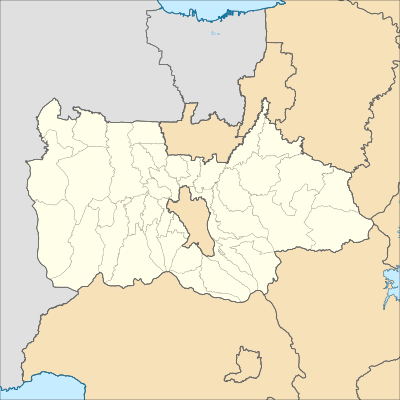
Geographic Context and Demographic Dominance
Bogor Regency, situated approximately 40-50 kilometers south of Indonesia's national capital, Jakarta, is a landlocked administrative division within the province of West Java. Its geographical expanse covers a substantial 2,991.78 square kilometers, a territory that has historically been significant but has seen administrative reconfigurations. The regency's most striking characteristic is its immense population.
As of the 2020 census, it was home to 5,427,068 residents, and estimates for mid-2024 place the figure even higher at 5,682,303. This makes Bogor Regency the most populous regency in Indonesia, a demographic powerhouse whose scale influences regional planning and resource allocation. The town of Cibinong serves as the administrative seat, a central point for governance within this vast and populous area.
The regency's location positions it as a critical component of the Greater Jakarta metropolitan area, often described as a 'bedroom community' due to the large number of residents who commute to the capital for employment.
Evolution of Administrative Boundaries and Population Dynamics
The history of Bogor Regency is marked by significant administrative changes driven by rapid population growth and urbanization. Two notable instances of its territory being carved out to form independent administrative units are the creation of Depok and Bogor City. Depok was unified with neighboring districts from Bogor Regency on April 27, 1999, to become an autonomous city.
Bogor City, prior to this, had also been established as an independent entity, separate from the regency's administration. Despite these substantial territorial divisions, Bogor Regency has not only retained but also continued to grow its population. This sustained demographic expansion, even after losing significant landmass to new cities, underscores the regency's role as a major residential hub and its capacity to absorb and accommodate a growing populace.
The ongoing population increase, with estimates for mid-2024 showing further growth, highlights the regency's dynamic demographic trajectory.
Socio-Cultural Fabric and Economic Interdependence
While the provided source focuses on demographic and administrative aspects, the social and cultural fabric of Bogor Regency is intrinsically linked to its status as a large residential area for Jakarta. As a 'bedroom community,' a significant portion of its adult population likely engages in daily commutes to the capital for work, creating a distinct socio-economic rhythm. This interdependence means that economic trends in Jakarta have a direct impact on Bogor Regency.
The primary language of administration and public life is Indonesian, but the region's historical context suggests that local languages, such as Sundanese, are also widely spoken, contributing to a rich linguistic diversity. The sheer density of population implies a vibrant local economy catering to daily needs, alongside the outflow of labor to the metropolitan center. Understanding Bogor Regency requires appreciating this dual identity: a self-contained administrative region with its own governance and a vital component of the larger Jakarta economic and social ecosystem.
Governance and Educational Landscape
Bogor Regency operates under Indonesia's system of regional governance, where a regency (kabupaten) is a primary administrative division. The regency is led by a Regent (Bupati) and a legislative council, responsible for local administration, development, and public services. The administrative center in Cibinong houses the key governmental functions.
The regency's role as a densely populated area implies a significant demand for public services, including education. While specific details on educational institutions are not provided in the source, it is reasonable to infer that Bogor Regency hosts a comprehensive network of schools, from primary to secondary levels, to cater to its large youth population. The continuous population growth suggests an ongoing need for educational infrastructure development and expansion to accommodate future generations and ensure access to learning opportunities for all residents.
See also
Frequently Asked Questions
What is Bogor Regency?+
Why is Bogor Regency called a "bedroom community"?+
How many people live in Bogor Regency?+
Where is the administrative center of Bogor Regency?+
What happened to Depok and Bogor City?+
Based on content from Wikipedia · Licensed under CC BY-SA 4.0