

Berliner (doughnut)
Images

Berliner Pfannkuchen


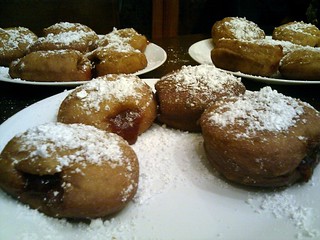


The Berliner
The Berliner, a celebrated German pastry, represents a distinct category of filled doughnuts, differentiated by its lack of a central hole and its rich, sweet yeast dough base. While its precise origin is a subject of historical debate, with various apocryphal tales attributing its invention to specific bakers or events, its widespread adoption and regional variations underscore its deep integration into German culinary heritage. Commonly referred to as Krapfen in many German-speaking regions, the pastry is characterized by its plump, spherical form achieved through deep-frying.
This cooking method imparts a delicate crispness to the exterior while maintaining a soft, airy crumb within. The interior is typically injected with a variety of sweet fillings, most traditionally fruit preserves such as apricot, plum, or strawberry jam, though modern interpretations may include cream or chocolate. The final dusting of powdered sugar is a signature element, adding a touch of sweetness and visual appeal.
Understanding the Berliner requires appreciating its textural interplay: the slight chewiness of the fried dough against the smooth, often tart, fruit filling.
From Humble Beginnings to Festive Staple
The evolution of the Berliner from a simple fried dough to a cultural icon is a fascinating aspect of its story. The practice of frying dough for sustenance and celebration dates back centuries, with many European cultures having their own versions of fried pastries. The specific development of the Berliner as we know it today is often linked to the 18th or 19th century in Germany.
Its rise in popularity can be attributed to its accessibility, relatively simple preparation, and its inherent deliciousness. The Berliner became particularly associated with festive occasions, such as Carnival (Fasching) and New Year's Eve, where it served as a celebratory treat. This association elevated the pastry beyond mere sustenance, embedding it into the social fabric of German life.
The tradition of sharing Berliners during these times fostered a sense of community and shared enjoyment, solidifying its status as a beloved national pastry.
The Art and Science of the Perfect Berliner
Crafting an exceptional Berliner involves a meticulous balance of ingredients and technique. The foundation is a well-developed sweet yeast dough, which requires careful proofing to achieve optimal rise and texture. The quality of the yeast is paramount, influencing both the flavor and the airy structure of the final product.
Deep-frying is another critical stage; precise temperature control of the cooking oil is essential. If the oil is too cool, the Berliner will absorb excess fat, becoming greasy. If it's too hot, the exterior will burn before the interior is cooked through.
The injection of the filling is an art form in itself, requiring a steady hand to distribute the jam evenly without compromising the pastry's integrity. The choice of jam also plays a significant role, with the balance of sweetness and acidity crucial for complementing the dough. The final dusting of powdered sugar, while seemingly simple, adds a final layer of sweetness and a characteristic visual finish that is instantly recognizable.
Cultural Significance and Modern Relevance of the Berliner
The Berliner holds a significant place in German culture, transcending its role as a mere dessert. It is a symbol of comfort, celebration, and tradition. Its presence at bakeries across Germany, from bustling city centers to quaint villages, speaks to its enduring popularity.
Beyond its traditional role in holidays, the Berliner is a common feature in everyday life, enjoyed as a breakfast item, a midday snack, or an after-dinner treat. Its adaptability is also noteworthy; while traditional fillings remain popular, contemporary patisseries often experiment with innovative flavors and presentations, keeping the Berliner relevant for new generations. The pastry also serves as a point of cultural identity, often sparking discussions about regional variations and personal preferences.
In essence, the Berliner is a testament to the power of simple, well-executed food to foster connection and create lasting memories.
The Berliner in a Global Context
While intrinsically linked to Germany, the concept of the filled doughnut has found echoes in various global cuisines. Similar pastries, often with regional names and slight variations in dough or filling, can be found across Europe and beyond. For instance, the Polish 'pączek' shares many characteristics with the Berliner, being a rich, deep-fried, jam-filled doughnut.
In the United States, while the 'doughnut' typically refers to a ring-shaped pastry, filled varieties are also common. The Berliner's enduring appeal lies in its universal concept: a sweet, fried dough encasing a delightful surprise. Its popularity demonstrates how certain culinary innovations can capture the imagination and taste buds of people worldwide, becoming beloved treats that bridge cultural divides.
The Berliner, therefore, is not just a German pastry but a representation of a globally appreciated form of sweet indulgence.
See also
Frequently Asked Questions
What is a Berliner?+
How is a Berliner made?+
Why is it called a Berliner?+
Where do people eat Berliners?+
What kinds of fillings can a Berliner have?+
Based on content from Wikipedia · Licensed under CC BY-SA 4.0