

Beret
Images

Yia Yia in Beret


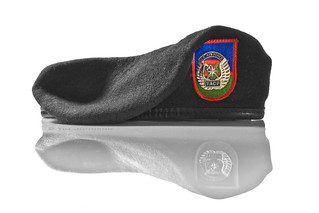


From Pastoral Necessity to Regional Emblem
The beret's genesis is intrinsically linked to the pastoral traditions of the Basque Country, where its practical design-a soft, round, flat-crowned cap-was ideal for shepherds and rural workers. Crafted from hand-knitted wool, its construction provided warmth and protection without hindering movement. This utilitarian origin story is crucial to understanding its early adoption.
By the 19th century, mass production began, solidifying its presence in the Basque region and facilitating its spread into neighboring areas of Southern France and northern Spain. This period marked a transition from purely functional headwear to a recognizable cultural marker, deeply associated with the identity and heritage of these regions. The beret's simple form proved remarkably adaptable, laying the groundwork for its future diversification.
The Beret's Multifaceted Identity
The beret's journey through the 20th century saw it embrace diverse roles, most notably in fashion and military service. In the realm of fashion, it became synonymous with artistic and intellectual circles, adopted by painters, writers, and students as a symbol of bohemianism and creative expression. Its minimalist aesthetic lent itself to countless stylistic interpretations, making it a perennial favorite in haute couture and street style alike.
Simultaneously, the beret cemented its status as a functional uniform item. Military and police forces worldwide adopted it, often in specific colors (e.g., maroon for paratroopers, black for some armored units), signifying unit affiliation, discipline, and esprit de corps. This dual identity-as a symbol of free-spirited artistry and disciplined service-underscores the beret's remarkable cultural plasticity.
Material Science and Manufacturing Processes
The construction of a beret, while seemingly simple, involves specific material choices and manufacturing techniques. Traditionally, hand-knitted wool was the primary material, offering excellent insulation and a soft feel. Modern production has expanded to include crocheted cotton and, significantly, wool felt and acrylic fibers.
Wool felt is created by matting and pressing wool fibers together, resulting in a dense, durable fabric that holds its shape well. Acrylic fibers offer a more affordable and often more colorfast alternative, though they may lack the natural breathability of wool. The manufacturing process typically involves shaping these materials into a circular crown, often with a slightly thicker band for structure and a snug fit.
This evolution in materials and methods ensures the beret's continued relevance and accessibility across different markets and price points.
Symbolism and Enduring Relevance
The enduring appeal of the beret lies in its potent symbolism and its ability to transcend cultural and social boundaries. It represents not only regional identity (Basque) but also artistic freedom, intellectualism, and belonging to a disciplined collective (military/police). Its simple, unadorned form allows the wearer to imbue it with personal meaning.
In an era of fast fashion, the beret stands out as a timeless accessory, a testament to enduring design principles. Its continued presence in various uniforms and fashion collections demonstrates its lasting impact and its capacity to adapt to changing times while retaining its core identity. The beret is more than just headwear; it is a historical artifact that continues to resonate globally.
See also
Frequently Asked Questions
What is a beret?+
Where did the beret first come from?+
Why do soldiers wear berets?+
How is a beret made?+
Why is the beret popular in fashion?+
Based on content from Wikipedia · Licensed under CC BY-SA 4.0