

Belling the Cat
Images

Happy New Year , Dear Friends !


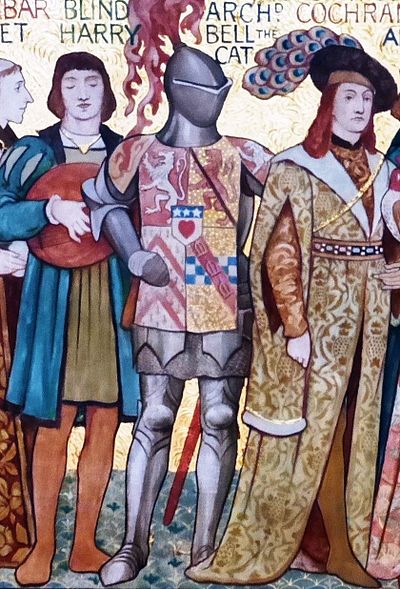


The Fable's Genesis
The fable of 'Belling the Cat,' also known as 'The Bell and the Cat' or 'The Mice in Council,' presents a seemingly straightforward narrative: mice devise a plan to attach a bell to a cat's neck to preempt its predatory advances, but ultimately fail to find a volunteer brave enough to execute the task. While frequently associated with Aesop, scholarly consensus places its origin firmly in the Middle Ages, distinct from classical Aesopic tradition.
Ben Edwin Perry's comprehensive classification of fables assigns it number 613, a designation reserved for medieval attributions outside the established Aesopic corpus. This distinction is crucial, highlighting the fable's independent development and its emergence within a later cultural and literary landscape. The story's thematic resonance with medieval societal concerns, such as the challenges of communal decision-making and the execution of difficult tasks, likely contributed to its popularity and dissemination during that era.
Its survival and adaptation underscore the enduring power of its central dilemma.
The Collective Action Conundrum
At its heart, 'Belling the Cat' is a profound illustration of a collective action problem. The mice, as a group, recognize a shared threat and agree upon an optimal solution that would benefit all members. However, the successful implementation of this solution requires individual sacrifice and the assumption of significant personal risk.
The fable vividly portrays the paralysis that can ensue when the perceived cost of individual action outweighs the perceived benefit, or when individuals believe others will bear the burden. This dynamic is mirrored in countless real-world scenarios, from environmental protection initiatives where individuals may hesitate to change their habits if they doubt others will do the same, to political activism where the burden of participation can deter engagement. The fable's enduring appeal lies in its stark depiction of this fundamental challenge in human cooperation and governance.
Linguistic Legacy
The narrative's potent depiction of a group's inability to act on a universally agreed-upon plan has cemented its place in language through the idiom 'to bell the cat.' This phrase encapsulates the act of undertaking a dangerous, difficult, or seemingly impossible task, especially when it is proposed by a group but requires individual courage to accomplish. The idiom serves as a concise and powerful shorthand for this specific type of challenge. Its widespread use across various cultures and contexts speaks to the fable's universal applicability.
When someone is described as 'belling the cat,' it implies they are the one willing to confront the primary obstacle, often at personal cost, for the benefit of the collective. This linguistic legacy ensures that the fable's core message continues to resonate and inform our understanding of risk, responsibility, and leadership.
Fable as Social Commentary
The medieval period, from which 'Belling the Cat' originates, was a time of significant social and political upheaval, marked by feudal structures, nascent urban centers, and complex interdependencies. Fables, with their allegorical nature, served as potent tools for social commentary, offering accessible critiques of power dynamics, human foibles, and the challenges of communal living. 'Belling the Cat' can be interpreted as a commentary on the difficulties of leadership and decision-making within councils or assemblies, where agreement on a course of action might be easy, but the commitment to execute it, especially when it involves personal danger or hardship, proves elusive.
The fable's continued relevance in the 21st century highlights that these challenges are not confined to any single historical period. They are intrinsic to the human condition and to the functioning of any group, organization, or society striving to overcome shared obstacles.
Beyond the Mice
While 'Belling the Cat' is a distinct medieval fable, it shares thematic ground with other stories across various traditions that explore similar concepts of risk, deception, and the dynamics between predators and prey. The confusion with a classical fable titled 'The Cat and the Mice' by Ben Edwin Perry (numbered 112) is notable. That older fable typically focuses on the mice's cleverness in escaping the cat, often involving a trick or a specific strategy for survival, rather than the dilemma of collective action.
Comparing these narratives reveals how the focus of fables can shift over time, reflecting evolving societal concerns. The medieval 'Belling the Cat' moves beyond simple escape to interrogate the complexities of group decision-making and the courage required for implementation, offering a more nuanced exploration of the predator-prey relationship and its implications for social organization.
See also
Based on content from Wikipedia · Licensed under CC BY-SA 4.0