

Beijing National Stadium
Images
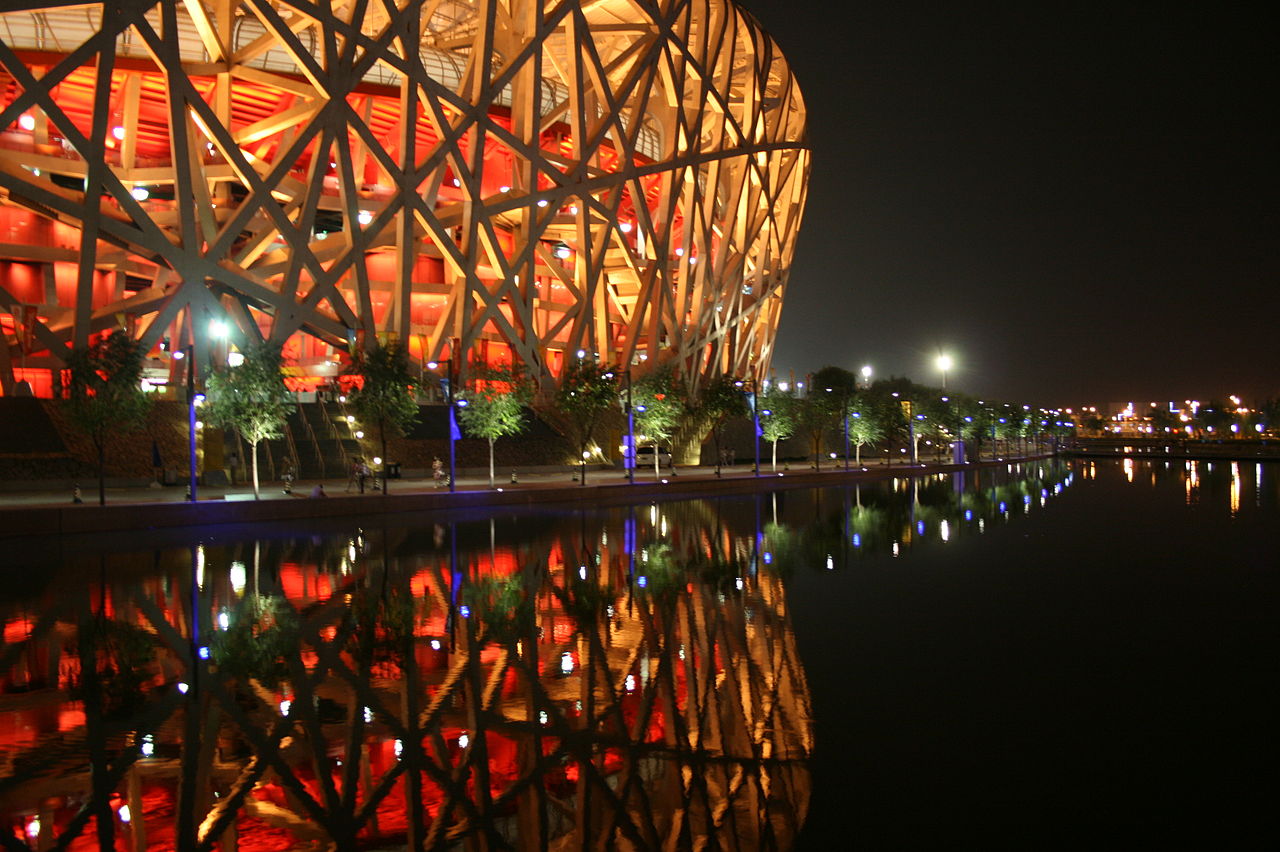
Beijing National Stadium At Night


Geographical Context and Urban Integration
The Beijing National Stadium, colloquially known as the 'Bird's Nest,' is strategically situated within the Olympic Green in Chaoyang District, Beijing, China. As the capital and a major global metropolis, Beijing presents a dynamic urban landscape where this iconic structure is integrated. The stadium occupies a substantial footprint of 204,000 square meters, a scale that required significant urban planning and infrastructure development.
Beijing's continental monsoon climate, characterized by distinct seasons including hot, humid summers and cold, dry winters, influenced construction materials and design considerations to ensure durability and functionality across varied weather conditions. Its placement within the Olympic Green signifies its role as a focal point for national and international gatherings, contributing to the city's identity as a hub for major sporting and cultural events.
Genesis and Construction Milestones
The conception and construction of the Beijing National Stadium represent a significant undertaking in modern architectural history. Groundbreaking occurred in December 2003, with full-scale construction commencing in March 2004. The project culminated in its official completion in June 2008, just in time to serve as the premier venue for the XXIX Olympiad and the XIII Paralympic Games.
This ambitious timeline demanded meticulous project management and advanced construction techniques. The stadium's ownership and operation are managed by a partnership company, with Beijing Municipal State-owned Assets Management Co Ltd holding a majority stake (58%) and CITIC Group holding the remainder (42%), reflecting a blend of state and corporate investment in this national icon.
Dual Olympic Legacy and Multifaceted Utility
The Beijing National Stadium boasts a unique distinction in Olympic history: it has served as a primary venue for both the Summer and Winter Olympic Games. Initially designed and built for the 2008 Summer Olympics and Paralympics, it captivated the world with its opening and closing ceremonies, as well as athletic competitions. Its architectural grandeur and functional capacity were so impressive that it was repurposed and utilized again for the 2022 Winter Olympics and Paralympics.
This dual hosting capability underscores the stadium's versatility and enduring relevance, making it a rare example of a venue that has successfully transitioned between vastly different sporting disciplines and seasonal requirements, cementing its status as a truly global sporting arena.
Architectural Innovation and Capacity
The 'Bird's Nest' design is its most defining characteristic, an innovative approach to stadium architecture that has garnered international acclaim. The complex interwoven steel structure, resembling a bird's nest, is not merely aesthetic but a crucial element of its structural integrity, supporting the vast roof and seating areas. This unique design allows the stadium to accommodate an impressive 80,000 spectators, with the capacity expandable to over 91,000 through the use of temporary seating.
This substantial capacity makes it one of the largest stadiums in the world, capable of hosting massive crowds for major events. The interplay of light and shadow through the steel latticework creates a dynamic visual experience for both participants and spectators, contributing to its iconic status.
Socio-Economic and Cultural Resonance
Beyond its architectural and sporting significance, the Beijing National Stadium holds considerable socio-economic and cultural importance. As a symbol of China's growing global influence and its commitment to hosting international events, it has become a point of national pride. The stadium's construction and operation have generated employment and stimulated economic activity in Beijing.
Culturally, it represents a fusion of traditional Chinese aesthetics, inspired by the natural form of a bird's nest, with cutting-edge engineering. Its continued use for various events, beyond the Olympics, ensures its ongoing relevance and contribution to the cultural landscape of Beijing and China, serving as a lasting monument to a period of significant national development and global engagement.
Go deeper
Frequently Asked Questions
What is the Beijing National Stadium also called?+
Why is the stadium called the Bird's Nest?+
When did the stadium finish building and for which Olympics was it first used?+
How many people can the stadium hold?+
Did the stadium host any Winter Olympics events?+
Based on content from Wikipedia · Licensed under CC BY-SA 4.0