

Badghis Province
Images

More than just a pallet


![ISAF Sergeant Major visits Darrah-I-Bum Marines [Image 1 of 10]](https://live.staticflickr.com/5161/5327191969_035572aaeb_n.jpg)
Geopolitical Location and Environmental Context
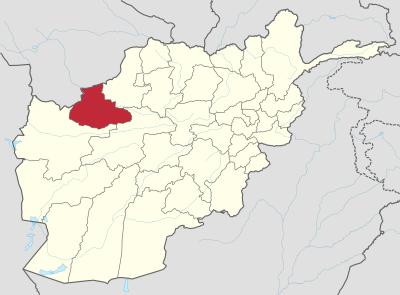
Badghis Province occupies a strategic position in northwestern Afghanistan, sharing a significant international border with Turkmenistan. This geographical placement positions it as a crucial interface between Afghanistan and Central Asia, influencing regional dynamics and trade possibilities, though these are often hampered by existing infrastructure limitations. The province's topography is predominantly mountainous, a characteristic that profoundly impacts its climate, making winters severe with substantial snowfall and summers intensely hot and arid.
This challenging environment dictates agricultural practices and settlement patterns, often leading to isolation for remote communities. Badghis is consistently identified as one of Afghanistan's most underdeveloped provinces, a designation underscored by its exceptionally high poverty rate, which presents ongoing humanitarian and developmental challenges for its population.
A Palimpsest of History
The historical depth of Badghis Province is remarkable, evidenced by the archaeological remnants of Marw al-Rudh. This medieval city was once the illustrious capital of the Gharjistan region, a testament to the area's historical prominence as a center of culture, trade, and power. The ruins of Marw al-Rudh serve as a tangible link to Afghanistan's rich past, offering insights into urban development, architectural styles, and societal structures of bygone eras.
Throughout history, Badghis has been a nexus for various empires and cultural exchanges, contributing to its complex identity. The legacy of these historical periods continues to shape the cultural landscape and the collective memory of its inhabitants, providing a foundation for understanding contemporary Afghan identity.
Socio-Cultural Fabric and Demographic Realities
The social fabric of Badghis Province is woven from diverse ethnic threads and deeply ingrained traditions. Despite facing considerable economic hardship, the people of Badghis maintain a resilient cultural heritage characterized by strong community bonds and time-honored customs. Daily life is largely agrarian, with subsistence farming and animal husbandry forming the backbone of the local economy.
The linguistic landscape reflects Afghanistan's multi-ethnic reality, with Pashto and Dari being prominent. Social cohesion is often reinforced through shared cultural practices, celebrations, and a collective adherence to traditional values. These cultural elements are vital for social stability and identity formation, particularly in the face of external pressures and developmental challenges.
Economic Vulnerabilities and Development Imperatives
Badghis Province grapples with profound economic vulnerabilities, most notably its status as the province with the highest poverty rate in Afghanistan. The economy's heavy reliance on rain-fed agriculture and livestock makes it exceptionally susceptible to climatic fluctuations, such as droughts, and broader economic instability. This precarious economic situation necessitates targeted interventions to foster sustainable livelihoods and reduce dependency.
Efforts to improve infrastructure, enhance agricultural productivity through modern techniques, and diversify economic activities are crucial. Addressing the root causes of poverty requires a multi-faceted approach, including investment in human capital, access to markets, and the development of non-agricultural employment opportunities to build long-term economic resilience.
Governance Structures and the Pivotal Role of Education
The governance of Badghis Province operates within the broader national framework of Afghanistan, with Qala e Naw serving as the administrative and political hub. The provincial government is tasked with implementing national policies and addressing local needs, though its effectiveness can be constrained by resource limitations and security concerns. Education is universally recognized as a cornerstone for sustainable development and poverty alleviation in Badghis. Despite the challenges in access and quality, there is a concerted effort to expand educational opportunities for all residents.
Investing in education is seen as a critical strategy for empowering the next generation, fostering critical thinking, and equipping individuals with the skills necessary to drive positive change and contribute to the province's future prosperity.
See also
Frequently Asked Questions
What is Badghis Province like?+
Why does Badghis have a high poverty rate?+
Where does Badghis share a border?+
What historic city is found in Badghis?+
How do people in Badghis keep their culture alive?+
Based on content from Wikipedia · Licensed under CC BY-SA 4.0