

Avar Language
Images

Grande Moravie




The Avar Language
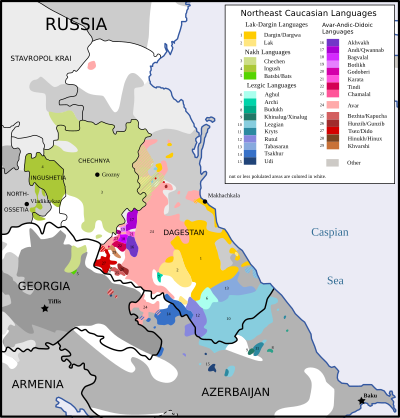
The Avar language, referred to by its speakers as 'maⱨarul maⱬ' (language of the mountains) or 'авар мацӏ' (Avar language), stands as a prominent member of the Northeast Caucasian language family, specifically within the Avar–Andic subgroup. This classification places it in a distinct linguistic lineage, separate from Indo-European or Turkic language families prevalent in surrounding regions. As of 2010, the language boasted approximately one million speakers, a substantial number that underscores its vitality.
The vast majority of these speakers reside in Dagestan, a highly diverse republic within the Russian Federation renowned for its complex ethno-linguistic landscape. A smaller number of speakers are dispersed across other parts of Russia. The significant speaker population highlights Avar's role not merely as a means of communication but as a fundamental component of Avar identity and a crucial element in the preservation of their unique cultural heritage amidst a region characterized by numerous distinct ethnic groups and languages.
Historical Trajectory
The historical development of the Avar language is intrinsically linked to the ancient history of the Caucasus Mountains and the peoples who have inhabited them for millennia. As a Northeast Caucasian language, its origins can be traced back to proto-languages spoken in the region thousands of years ago. The name 'maⱨarul maⱬ' itself is a testament to this deep historical connection, signifying a language that has evolved in close proximity to and in adaptation with its mountainous environment.
While specific historical records detailing the language's evolution are scarce, its continued presence and robust speaker base in Dagestan indicate a long and unbroken tradition of use. The language has likely undergone internal changes and absorbed influences over centuries, yet it has maintained its core identity, serving as a continuous linguistic link for the Avar people through various historical epochs and societal transformations.
Cultural Nexus
The Avar language functions as the primary conduit for the transmission of Avar culture, history, and social values. For its nearly one million speakers, it is the language of daily life, family, community, and cultural expression. In Dagestan, a region celebrated for its extraordinary linguistic diversity, Avar plays a pivotal role in sustaining the distinct identity of the Avar people.
It serves as a repository of traditional knowledge, folklore, oral histories, and unique worldviews that have been shaped by centuries of existence in the Caucasus. The language's vitality is essential for the continuity of Avar traditions, ensuring that cultural narratives and ancestral wisdom are passed down effectively from one generation to the next. Its significance extends beyond mere communication, acting as a powerful symbol of collective identity and a bulwark against cultural assimilation in a complex geopolitical and social environment.
Linguistic Characteristics
While detailed linguistic analysis is beyond the scope of this overview, Avar's classification within the Northeast Caucasian family suggests certain inherent characteristics. Languages in this family are often noted for their complex phonological systems, frequently featuring a rich array of consonants, including ejective and pharyngeal sounds, which may differ significantly from sounds found in more widely spoken languages. Grammatically, Northeast Caucasian languages can exhibit intricate case systems and verb structures.
The name 'maⱨarul maⱬ' itself, meaning 'language of the mountains,' might subtly hint at phonetic or structural adaptations influenced by the acoustics or communicative needs within a mountainous terrain. Understanding these potential linguistic features is key to appreciating the unique nature of Avar and its place within the broader landscape of global linguistic diversity.
Avar in the Modern World
In the contemporary era, the Avar language, like many minority languages, navigates a complex landscape of challenges and opportunities. While its substantial speaker base in Dagestan indicates a degree of resilience, the influence of dominant languages, particularly Russian, presents ongoing pressures. Maintaining Avar's vitality requires active efforts in education, media, and cultural promotion.
The language's continued use in everyday life, coupled with its status as an official language in Dagestan alongside Russian and other local languages, provides a framework for its preservation. The existence of literature, media, and educational materials in Avar is crucial for its transmission to younger generations. The story of Avar is a microcosm of the broader global conversation about language endangerment and revitalization, highlighting the importance of linguistic diversity and the enduring power of language to connect people to their heritage.
See also
Frequently Asked Questions
What does the name "maⱨarul maⱬ" mean?+
Where do most Avar speakers live?+
How many people speak Avar?+
Why is the Avar language important to the Avar people?+
Is Avar part of the same family as English or Turkish?+
Based on content from Wikipedia · Licensed under CC BY-SA 4.0