

The Austrian State Treaty
Images
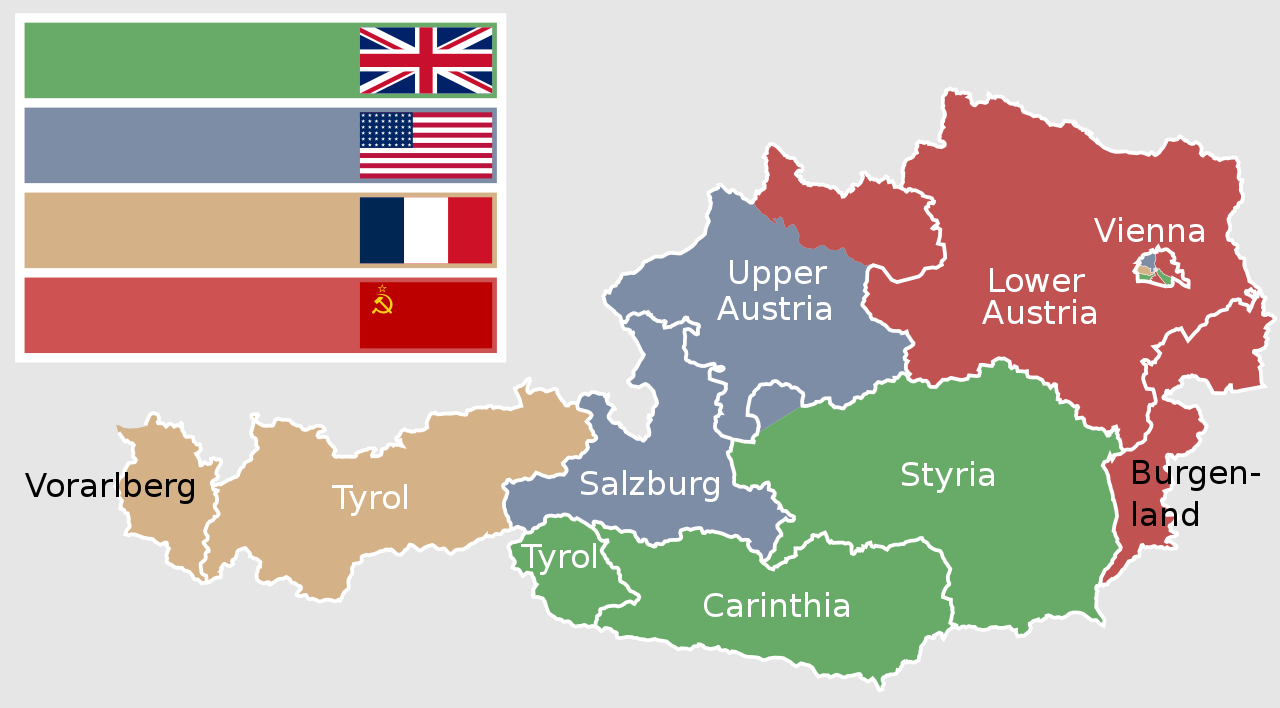
Austria Occupation Zones 1945 55 En


Post-War Austria
Following its annexation by Nazi Germany and subsequent defeat in World War II, Austria found itself in a precarious position. The Allied powers, victorious in the war, divided Austria into four occupation zones: American, British, French, and Soviet. Vienna, the capital, was similarly partitioned, creating a complex administrative landscape.
This occupation, initially intended to de-Nazify and democratize the country, persisted for a decade. The Austrian government, while functioning, operated under the watchful eyes and ultimate authority of the Allied Control Council. The prolonged occupation fueled a strong desire for full sovereignty among the Austrian populace, who yearned to shed the legacy of the Anschluss and re-establish a truly independent and self-governing nation.
The geopolitical climate of the Cold War, however, complicated these aspirations, as the Soviet Union, in particular, was hesitant to relinquish its influence in Eastern Europe.
The Genesis of the State Treaty
The path to the Austrian State Treaty was long and arduous, marked by complex diplomatic maneuvering and significant international pressure. Negotiations spanned years, with the four Allied powers holding differing interests and priorities. The Soviet Union, initially reluctant to agree to Austrian independence without certain concessions, eventually linked it to broader Cold War détente efforts.
The breakthrough came in the early 1950s, spurred by a desire to stabilize Central Europe and reduce Cold War tensions. The Moscow Memorandum of 1955 proved pivotal, outlining the key terms for the treaty. The treaty itself was signed on May 15, 1955, at the Belvedere Palace in Vienna, a symbolic location steeped in Austrian history.
The signatories included the foreign ministers of the four Allied powers and the Austrian Chancellor Julius Raab and Foreign Minister Leopold Figl. This act represented a triumph of diplomacy, achieving what many thought impossible: the peaceful withdrawal of occupying forces and the restoration of a sovereign state.
Key Provisions and Their Lasting Impact
The Austrian State Treaty, officially titled the 'Treaty for the re-establishment of an independent and democratic Austria,' contained several critical provisions that shaped Austria's future. Its primary achievement was the unequivocal declaration of Austria's independence and territorial integrity. It mandated the withdrawal of all Allied occupation forces by October 25, 1955, effectively ending a decade of foreign military presence.
Crucially, the treaty stipulated Austria's commitment to perpetual neutrality, a cornerstone of its foreign policy that has endured to this day. This neutrality meant Austria would not join military alliances, a condition largely seen as a concession to the Soviet Union. The treaty also guaranteed democratic freedoms and human rights for all Austrian citizens, ensuring a return to democratic governance.
Furthermore, it addressed reparations and property claims, though these were often settled through separate agreements. The treaty officially entered into force on July 27, 1955, marking the true rebirth of the Austrian state.
Geopolitical Significance and Austria's Modern Role
The Austrian State Treaty was a landmark event not only for Austria but also for the broader geopolitical landscape of post-war Europe. It demonstrated that even amidst the deep divisions of the Cold War, peaceful resolutions and the restoration of sovereignty were possible. Austria's commitment to neutrality, enshrined in the treaty, allowed it to carve out a unique niche in international affairs.
It became a neutral ground for international organizations and diplomatic conferences, with Vienna emerging as a global hub for organizations like the UN and the IAEA. This neutrality has allowed Austria to maintain good relations with both Eastern and Western blocs, fostering a role as a mediator and facilitator. The treaty's legacy continues to influence Austria's foreign policy and its identity as a stable, democratic, and internationally engaged nation, culminating in its accession to the European Union in 1995, a move that further solidified its place within the European community while maintaining its neutral stance.
Education and Cultural Continuity
The State Treaty's emphasis on re-establishing a democratic Austria naturally included a focus on education and cultural preservation. The treaty aimed to ensure that Austria would develop as a nation that valued its heritage and provided opportunities for its citizens. Post-treaty, Austria invested heavily in its educational system, rebuilding institutions and curricula to reflect democratic values and national identity.
This included promoting the German language as the primary medium of instruction and fostering a sense of shared Austrian culture. The treaty's guarantee of democratic freedoms meant that academic inquiry and cultural expression could flourish without external censorship. This environment allowed for the rediscovery and celebration of Austria's rich artistic, musical, and literary traditions, which had been suppressed or distorted during the Nazi era.
The educational system became a vital tool in forging a new generation of Austrians, proud of their independent nation and its democratic future.
See also
Frequently Asked Questions
What is the Austrian State Treaty?+
When was the treaty signed and when did it start?+
Why did Austria need the treaty?+
Who signed the treaty?+
What does Austria’s neutrality mean?+
Based on content from Wikipedia · Licensed under CC BY-SA 4.0