

Auguste Comte: The Idea Explorer!
Images
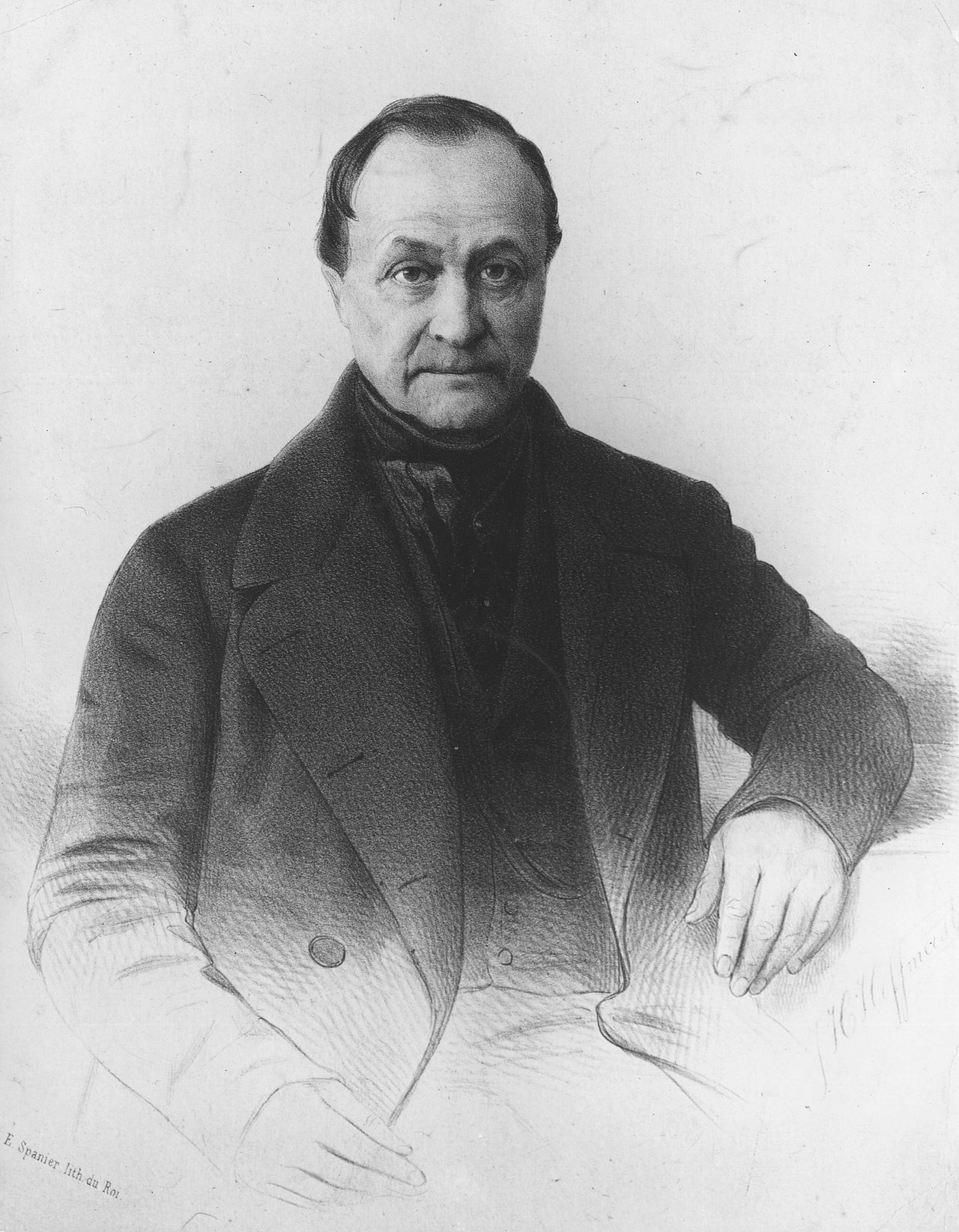
Auguste Comte
A Philosopher of Science in a Turbulent Era
Isidore Auguste Marie François Xavier Comte, born in Montpellier, France, on January 19, 1798, emerged as a pivotal figure in 19th-century intellectual history. His formative years coincided with the aftermath of the French Revolution, a period of profound social and political upheaval that deeply influenced his philosophical outlook. Comte perceived this era as a critical transition, signaling the decline of theological and metaphysical modes of thought and the imminent rise of a new, scientifically grounded social order.
He sought to provide a systematic intellectual framework to navigate this transition, aiming to remedy the perceived social disorder by establishing a new doctrine based on empirical observation and rational analysis, a philosophy he would come to label positivism.
The Doctrine of Positivism
At the core of Comte's intellectual project was positivism, a doctrine that championed the scientific method as the sole reliable path to knowledge. He argued that human understanding progresses through distinct stages: the theological, where phenomena are explained by supernatural agents; the metaphysical, where abstract forces are invoked; and finally, the positive, characterized by the discovery of invariant laws through observation and reason. Comte believed that society, like nature, was governed by discoverable laws.
Positivism rejected speculation and metaphysics in favor of verifiable facts and the systematic study of observable phenomena. This emphasis on empirical evidence and scientific rigor positioned Comte as a foundational figure in the philosophy of science, advocating for a unified scientific approach across all disciplines.
Inventing Sociology
Comte's most enduring legacy is arguably the creation of sociology. He coined the term 'sociology' and envisioned it as the 'queen of sciences,' the ultimate synthesis of all scientific knowledge. He believed that while other sciences studied specific aspects of the universe, sociology would focus on the most complex subject of all: human society.
Comte saw sociology as crucial for understanding the laws of social statics (the forces that hold society together) and social dynamics (the forces that drive social change). His ambition was to establish sociology as a rigorous, objective discipline capable of guiding social reform and progress, treating it as the crowning achievement of the scientific enterprise.
The Religion of Humanity and the Ethics of Altruism
In his later years, Comte developed a more spiritualistic, albeit secular, vision: the 'Religion of Humanity.' This was not a traditional religion but a system of ethics and social cohesion centered on the veneration of humanity itself. It aimed to provide a moral framework and a sense of collective purpose in a post-religious age, emphasizing love, order, and progress. Comte proposed a priesthood of scientists and artists who would guide society through moral instruction and the cultivation of altruistic sentiments.
He is also credited with coining the term 'altruism,' a concept central to this ethical system, defining it as living for others. This vision presaged the development of non-theistic religious humanist and secular humanist organizations that emerged later in the 19th century.
Enduring Influence and Modern Relevance
Auguste Comte's impact on 19th-century thought was profound, influencing thinkers like John Stuart Mill and George Eliot. His concepts of sociology and social evolutionism laid the groundwork for early social theorists and anthropologists such as Harriet Martineau and Herbert Spencer. Émile Durkheim, a towering figure in sociology, built upon Comte's foundations, emphasizing practical and objective social research. While some of Comte's more utopian or authoritarian ideas have been critiqued, his fundamental insistence on the scientific study of society and his vision for a more rational, cooperative world continue to resonate.
His work remains a crucial reference point for understanding the historical development of social sciences and the ongoing quest for a scientific understanding of human social life.
Go deeper
Frequently Asked Questions
What is Auguste Comte famous for?+
Why did Comte think science was the only reliable way to know things?+
How did Comte want to study society like scientists study nature?+
Where and when was Auguste Comte born?+
What is the "Religion of Humanity" that Comte proposed?+
Based on content from Wikipedia · Licensed under CC BY-SA 4.0