

Auderghem: A Brussels Adventure!
Images
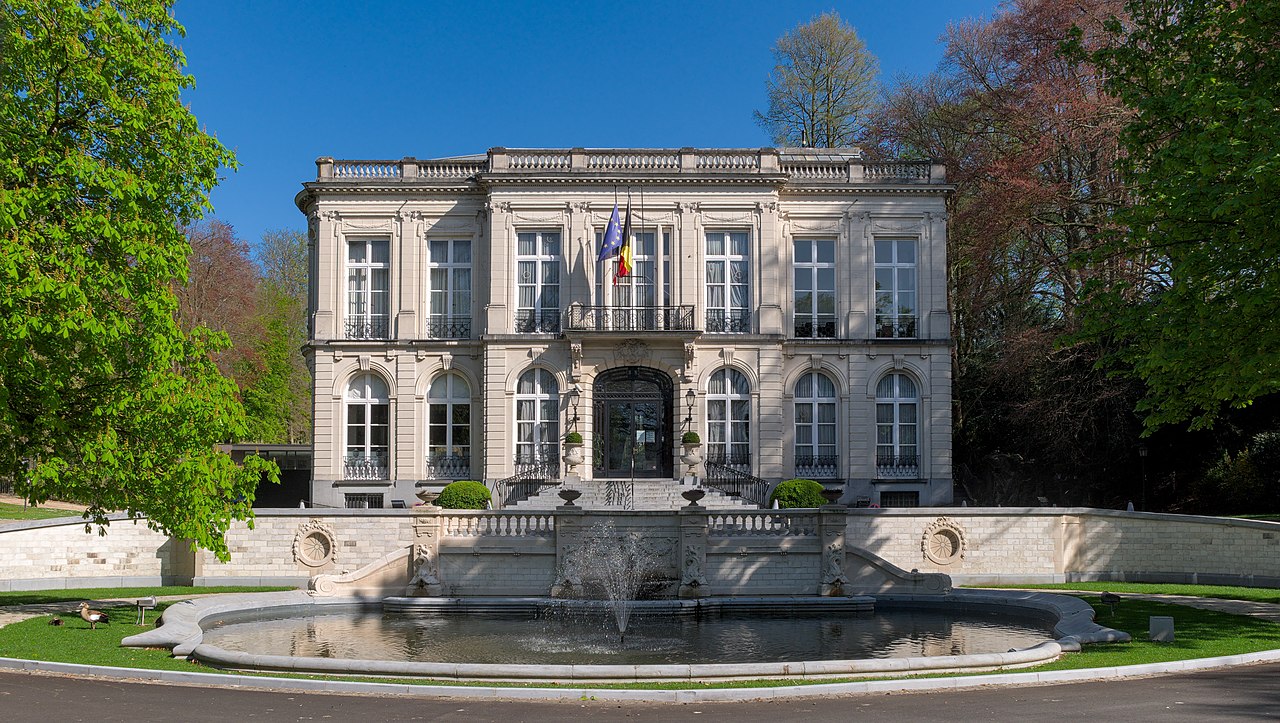
ChâTeau Sainte Anne (DSCF7140)


Geographic Context and Environmental Resilience
Auderghem occupies a strategic position within the Brussels-Capital Region, situated in its southeastern quadrant. Its geography is characterized by the Woluwe valley, a natural corridor that influences its topography and hydrology, and its direct adjacency to the Sonian Forest. This forest, a remnant of an ancient woodland, provides Auderghem with a crucial ecological buffer and a significant recreational amenity, contributing to its reputation as a 'green lung' within the urban fabric.
The municipality shares borders with several other Brussels communes, including Etterbeek, Ixelles, Watermael-Boitsfort, and Woluwe-Saint-Pierre, as well as Flemish municipalities like Tervuren and Overijse, highlighting its transitional role between different administrative and linguistic territories. Despite the inevitable encroachment of urban infrastructure, such as major roadways that bisect the area and contribute to traffic congestion, Auderghem has demonstrated a notable capacity for environmental resilience.
The preservation of its natural elements, including creeks and the forest edge, alongside its historical sites, underscores a deliberate effort to mitigate the impacts of urbanization and maintain a distinct environmental character.
Historical Layers
The historical narrative of Auderghem is deeply intertwined with its religious and aristocratic past. The Rouge Cloître Abbey, originally a Cistercian monastery founded in the 14th century, represents a significant monastic heritage. Its transformation into an art center signifies a modern adaptation of historical structures, integrating cultural programming within a venerable setting.
The Priory of Val-Duchesse, another important historical religious institution, further contributes to the area's spiritual and architectural legacy. Complementing these ecclesiastical sites are several notable chateaus, including the Château of Trois-Fontaines and the Château Saint-Anne, alongside the St. Anne's Chapel.
These estates reflect the historical presence of nobility and wealthy landowners in the region, showcasing architectural styles and land-use patterns from different eras. The continued existence and preservation of these sites offer invaluable insights into the socio-economic development and cultural evolution of Auderghem over centuries, serving as tangible reminders of its layered history.
Socio-Linguistic Dynamics and Cultural Identity
As an integral part of the Brussels-Capital Region, Auderghem operates within a legally bilingual framework, officially recognizing both French and Dutch. This linguistic duality is a fundamental characteristic of Brussels and shapes the daily interactions and cultural landscape of its municipalities. While the provided source does not delve into specific cultural traditions, festivals, or prominent individuals originating from Auderghem, its bilingual status inherently points to a diverse population and a dynamic cultural exchange.
The municipality's ability to preserve its natural and historical heritage suggests a community that values its identity and actively works to maintain the unique qualities that distinguish it within the broader Brussels context. This commitment to heritage preservation, coupled with its linguistic diversity, contributes to a rich and complex socio-cultural fabric.
Governance and Urban Planning Challenges
Auderghem functions as one of the 19 municipalities under the administrative umbrella of the Brussels-Capital Region. Its governance structure, like others in the region, is tasked with managing local affairs while adhering to broader regional policies. A key challenge for Auderghem, as highlighted in the source, is the ongoing tension between urban development and heritage conservation.
The presence of significant roadways and the associated increase in traffic necessitate careful urban planning to balance accessibility and economic activity with the protection of its environmental assets and historical sites. The municipality's success in preserving parts of its natural and historical legacy, such as the creeks, abbey, priory, and chateaus, demonstrates a proactive approach to urban planning that prioritizes the long-term value of its heritage. This ongoing negotiation between modernization and preservation is a critical aspect of Auderghem's contemporary identity and future development.
Education and Community Engagement
While the provided Wikipedia source does not offer specific details about the educational institutions or the educational landscape within Auderghem, its status as a municipality within the Brussels-Capital Region implies access to a comprehensive educational system. This system would typically include a range of public and private schools catering to various age groups, from early childhood education through secondary schooling. Given the bilingual nature of the region, educational offerings in both French and Dutch are standard.
The presence of historical sites and natural areas like the Sonian Forest likely provides unique opportunities for experiential learning and community engagement. Schools in Auderghem could potentially leverage these local resources for educational programs focused on history, ecology, and environmental stewardship. The municipality's commitment to preserving its heritage suggests a potential for educational initiatives that connect students with their local history and environment, fostering a sense of place and civic responsibility.
See also
Frequently Asked Questions
What is Auderghem?+
Why is the Sonian Forest important to Auderghem?+
What old places can you visit in Auderghem?+
How does Auderghem protect its nature even with roads?+
Why does Auderghem use both French and Dutch?+
Based on content from Wikipedia · Licensed under CC BY-SA 4.0