

Artur Schnabel
Images
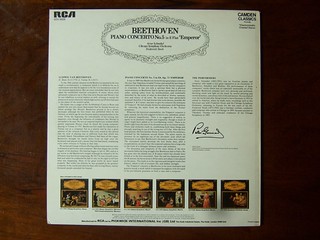
Backside Beethoven - Piano Concerto No.5 'Emperor' - Artur Schnabel Piano, RCA


Beyond Virtuosity
Artur Schnabel, born in Austria in 1882, emerged as a towering figure in 20th-century classical music, distinguished by his profound intellectual seriousness rather than mere technical flash. While possessing formidable pianistic skills, Schnabel deliberately eschewed pure virtuosity, believing that the essence of music lay in its expressive and philosophical depth. His performances were characterized by a palpable vitality, a deep spirituality, and an unwavering commitment to the composer's intent.
This approach resonated most powerfully with the Austro-German classical repertoire, particularly the monumental works of Beethoven and Schubert, composers whose music demands not just technical mastery but profound insight into the human condition.
The Beethoven Revelation
Schnabel's name is inextricably linked with Ludwig van Beethoven. Music critic Harold C. Schonberg famously quipped that Schnabel was 'the man who invented Beethoven,' a testament to the transformative impact of his interpretations.
This was not hyperbole; Schnabel's performances breathed new life into these familiar masterpieces, revealing layers of emotional complexity and structural coherence that had perhaps been overlooked. His most significant contribution in this regard was the monumental undertaking between 1932 and 1935: the first complete recording of Beethoven's thirty-two piano sonatas. This project was revolutionary, capturing his definitive interpretations and setting a benchmark for future generations of pianists and listeners alike.
A Legacy Preserved
The enduring significance of Schnabel's complete Beethoven sonata recordings was formally recognized decades after their creation. In 2018, the Library of Congress, the United States' de facto national library and archive of recorded sound, selected this historic recording for inclusion in the National Recording Registry. This prestigious honor is reserved for works of 'historical, cultural, and aesthetic significance,' underscoring the profound impact Schnabel's work has had on musical heritage.
The inclusion signifies that these recordings are not merely historical artifacts but vital documents that continue to inform and inspire, preserving Schnabel's unique musical voice and his unparalleled understanding of Beethoven's genius.
The Teacher and the Composer
Beyond his celebrated career as a pianist, Artur Schnabel was also a highly respected pedagogue. He imparted his deep musical philosophy and interpretive insights to numerous students, shaping the development of many prominent musicians who would carry his legacy forward. His teaching was an extension of his performance philosophy, emphasizing understanding, expression, and the spiritual dimension of music.
Furthermore, Schnabel was himself a composer, though his compositions are less widely known than his piano performances. His creative output further demonstrates his holistic engagement with music, viewing performance and composition as interconnected facets of musical artistry.
Cultural Context and Enduring Relevance
Artur Schnabel's career unfolded during a period of immense social and political upheaval in Europe, including the rise of Nazism, which ultimately led him to leave his native Austria. His commitment to the Austro-German musical tradition, often seen as a bastion of high culture, took on added weight in this context. His performances offered a sense of continuity and profound artistic expression amidst uncertainty.
Today, Schnabel's recordings continue to be essential listening for anyone seeking to understand the core of the Western classical piano repertoire. His emphasis on intellectual depth and spiritual resonance remains a vital counterpoint to the often technically driven demands of modern performance, reminding us of music's power to transcend the superficial and connect with our deepest selves.
See also
Frequently Asked Questions
Who was Artur Schnabel?+
What is Artur Schnabel famous for?+
Why did the Library of Congress choose his recordings?+
Did Artur Schnabel teach other musicians?+
Was Artur Schnabel also a composer?+
Based on content from Wikipedia · Licensed under CC BY-SA 4.0