

Argentine Peso: Argentina's Money Adventure!
Images

Fake Argentine Pesos


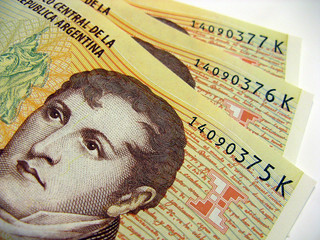


A Legacy of Currency Reforms
The current Argentine peso, officially the 'peso convertible de curso legal', was introduced in 1992 as a radical measure to combat rampant inflation that had plagued the nation for decades. This reform was part of the Convertibility Plan, which pegged the peso at a 1:1 ratio with the US dollar. This was a monumental shift, replacing the austral at an astonishing rate of 10,000 australes to one peso.
The sheer scale of this redenomination aimed to restore confidence in the currency and stabilize the economy. Prior to this, Argentina had experienced numerous currency changes, each an attempt to escape the cycle of devaluation and hyperinflation, often involving revaluations at staggering ratios, such as the 1970 currency which was 10 trillion times less valuable than the peso introduced in 1992.
The Peso's Precarious Path
Despite the initial success of the Convertibility Plan, the Argentine peso has faced persistent inflationary pressures and significant fluctuations in its value. The peg to the US dollar was abandoned in early 2002, leading to a sharp devaluation. Since then, the peso has experienced a dramatic decline against the dollar.
For instance, the exchange rate moved from approximately 3 pesos per dollar in 2003 to around 178 pesos per dollar by early 2023. This sustained depreciation has fueled inflation, making imported goods expensive and eroding the purchasing power of ordinary Argentinians. The government has employed various strategies, including official and unofficial exchange rates, to manage the currency's value, reflecting the ongoing struggle to achieve monetary stability.
Economic Impact
The volatility of the Argentine peso has profound implications for the nation's economy and its citizens. High inflation erodes savings, makes long-term financial planning nearly impossible, and disproportionately affects lower-income households who spend a larger portion of their income on essential goods. Businesses face uncertainty in pricing, investment, and international trade.
The constant need to adjust to changing currency values creates an environment of instability that can deter foreign investment and hinder economic growth. The peso's performance is a critical indicator of Argentina's economic health, influencing everything from consumer confidence to the government's ability to finance its operations and social programs.
Monetary Policy and the Future of the Peso
Argentina's central bank faces the immense challenge of implementing effective monetary policy to stabilize the peso. Recent policy shifts, such as the significant devaluation following the election of President Javier Milei in late 2023, underscore the reactive nature of some economic decisions. The move to devalue the peso by over 50% against the US dollar, coupled with a target for monthly devaluation, signals an attempt to align the official rate with market realities and potentially curb inflation through a more competitive exchange rate.
However, the long-term success of such strategies depends on broader economic reforms, fiscal discipline, and sustained confidence in the government's economic management.
Global Context
The Argentine peso's journey is a case study in the challenges faced by emerging economies managing their currencies. Its relationship with the US dollar, a global reserve currency, is particularly significant. The peso's fluctuations not only impact Argentina's trade balance and foreign debt but also influence regional economic dynamics.
International financial institutions and investors closely monitor the peso's stability, as it can signal broader economic trends within Latin America. The ongoing efforts to manage the peso's value are part of a larger global conversation about currency management, inflation control, and the pursuit of sustainable economic growth in an interconnected world.
See also
Based on content from Wikipedia · Licensed under CC BY-SA 4.0