

Archduchy of Austria
Images

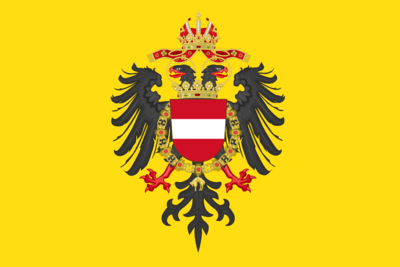
Flag Of Austria (1230–1934, 1945–2000)




Geopolitical Genesis
The Archduchy of Austria's origins lie in its strategic position as a frontier territory, the Margraviate of Austria, within the Duchy of Bavaria. Its very name, derived from the Old High German 'Oustrich,' signifies its role as an 'Eastern Kingdom' relative to the Frankish heartlands. This geographical placement on the southeastern periphery of the Holy Roman Empire dictated its early development, emphasizing defense and expansion.
The pivotal moment came in 1156 with Emperor Frederick Barbarossa's Privilegium Minus, which not only elevated the territory to a Duchy but also granted significant autonomy, including hereditary succession and the right to appoint officials. This act laid the groundwork for Austria's emergence as a distinct political entity, moving beyond its role as a mere borderland to become a self-governing principality with the potential for future aggrandizement. Its location, while initially a defensive outpost, would later prove advantageous for projecting power across Central Europe.
The Habsburg Ascendancy and the Archducal Title
The acquisition of Austria by the House of Habsburg in 1282 marked a profound turning point, initiating a dynastic rule that would redefine the political landscape of Europe. The Habsburgs, initially minor nobles, systematically consolidated their power within Austria, transforming it into the bedrock of their burgeoning empire. Their ambition and strategic acumen were evident in their gradual territorial expansion and their increasing influence within the Holy Roman Empire.
The formal adoption of the archducal title by Emperor Frederick III in 1453 was not merely symbolic; it officially recognized Austria's elevated status and the unique authority of its rulers. This title, 'Archduke,' signifying a rank superior to Duke, underscored Austria's preeminence among the Empire's principalities. Consequently, from the 15th century onwards, Austria became inextricably linked with imperial power, with nearly every Holy Roman Emperor bearing the title of Archduke of Austria.
Consolidation of Power
The Archduchy of Austria's transformation into a major European power was significantly accelerated by the acquisition of the Bohemian and Hungarian crowns in 1526. This event, following the death of Louis II of Hungary at the Battle of Mohács, brought vast territories and diverse populations under Habsburg rule. Austria, with its established administrative structures and the powerful archducal title, became the central organizing nucleus for these newly acquired lands.
The Habsburg hereditary lands, now encompassing Austria, Bohemia, and Hungary, formed a formidable bloc that commanded significant military and economic resources. Vienna, as the capital of the Archduchy, evolved into a cosmopolitan center, fostering a rich cultural milieu and serving as the administrative hub for this sprawling, multi-ethnic dominion, setting the stage for centuries of Habsburg dominance.
Transition and Legacy
The Archduchy of Austria's existence as an imperial state within the Holy Roman Empire concluded with the Empire's dissolution in 1806, a direct consequence of the Napoleonic Wars and shifting European power dynamics. Emperor Francis II, recognizing the changing political realities, dissolved the ancient empire and proclaimed the Austrian Empire, with himself as Emperor Francis I. The former Archduchy was subsequently reorganized into crown lands, specifically Lower and Upper Austria.
This administrative change did not erase the historical significance of the Archduchy. Its legacy persisted, deeply embedded in the identity and governance of the Austrian Empire and its successor states. The administrative, cultural, and political foundations laid during the Archduchy period continued to influence the region, shaping its trajectory through the 19th and 20th centuries and leaving an enduring mark on modern Austria and Central Europe.
See also
Frequently Asked Questions
What was the Archduchy of Austria and how did it start?+
Why did Austria become important in Europe?+
How did the Habsburgs get control of Austria?+
What does the title "Archduke" mean?+
When did the Archduchy of Austria stop being part of the Holy Roman Empire?+
Based on content from Wikipedia · Licensed under CC BY-SA 4.0