

Andrzej Sapkowski
Images

Andrzej Sapkowski 02


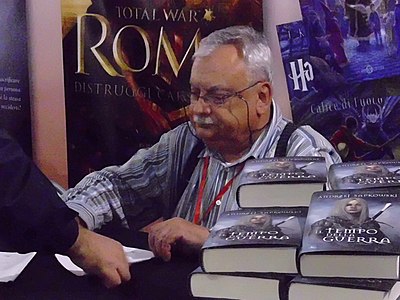


Forging a Unique Voice
Andrzej Sapkowski, born in 1948 in Łódź, Poland, emerged as a pivotal figure in contemporary fantasy literature, largely through his seminal 'Witcher' series. His literary career began with short stories, but it was the creation of Geralt of Rivia, a professional monster hunter, that cemented his legacy. Sapkowski's genius lies in his deliberate departure from traditional Western European fantasy tropes.
Instead, he draws deeply from the rich wellspring of Slavic mythology, folklore, and history, infusing his narratives with a distinct cultural identity. This grounding in Slavic traditions, characterized by its often darker, more morally ambiguous deities and creatures, provides a unique texture and philosophical depth to his world. The 'Witcher' saga is not merely an adventure; it is a sophisticated exploration of societal prejudice, the nature of monstrosity, and the ethical dilemmas faced by individuals in a complex world.
His prose, often described as gritty and realistic despite its fantastical elements, has garnered him critical acclaim and a devoted international following, positioning him as a 'Polish Tolkien' but with a decidedly Eastern European sensibility.
The Witcher's Enduring Appeal
The enduring appeal of Andrzej Sapkowski's 'The Witcher' stems from its sophisticated thematic complexity and its profound cultural resonance. Unlike many fantasy narratives that present clear-cut dichotomies of good and evil, Sapkowski’s work thrives in shades of gray. Geralt, the titular Witcher, is an outsider, a genetically modified human feared by many, yet often the only one capable of protecting humanity from supernatural threats.
This paradox highlights Sapkowski's exploration of prejudice, the societal tendency to demonize what is different, and the subjective nature of heroism. The series also delves into political intrigue, the consequences of war, and the personal cost of duty. The integration of Slavic mythology is not superficial; it informs the very fabric of the world, from its superstitions and rituals to its moral frameworks.
This authentic cultural infusion gives 'The Witcher' a unique gravitas, distinguishing it within the global fantasy landscape and fostering a deep connection with readers who appreciate its nuanced portrayal of human (and non-human) nature.
Transmedia Dominance
The literary success of Andrzej Sapkowski's 'The Witcher' has been amplified exponentially through its successful transition into other media, creating a global entertainment juggernaut. The video game adaptations, particularly those developed by CD Projekt Red, are widely lauded for their immersive storytelling, complex narratives, and faithful (yet expanded) interpretations of Sapkowski's world. These games have been instrumental in introducing 'The Witcher' to a massive international audience, often serving as a gateway to the original books.
More recently, the Netflix television series has further propelled the franchise into mainstream consciousness, bringing Geralt and his adventures to millions of households worldwide. This multi-platform success, encompassing novels, short stories, video games, television, and comic books, demonstrates the remarkable adaptability and universal appeal of Sapkowski's narrative universe. It solidifies his status not just as a writer, but as the architect of a significant modern cultural phenomenon.
A Literary Luminary
Andrzej Sapkowski's contributions to literature have been recognized with numerous prestigious awards, underscoring his impact on the fantasy genre. He is a five-time recipient of the Zajdel Award, Poland's highest honor for science fiction and fantasy, and has also garnered international accolades such as the David Gemmell Award and the World Fantasy Life Achievement Award. His literary achievements are further highlighted by the extensive global reach of his work; 'The Witcher' series has been translated into an impressive 37 languages, making him the second most-translated Polish science fiction and fantasy author, trailing only the legendary Stanisław Lem.
This widespread translation speaks to the universal themes and compelling storytelling that resonate across diverse cultures. Sapkowski's influence extends beyond his personal accolades, having significantly elevated the profile of Polish fantasy literature on the international stage and inspired a new generation of writers and creators.
See also
Frequently Asked Questions
Who is Andrzej Sapkowski?+
What is the Witcher?+
Where does Sapkowski get his stories from?+
Why are the Witcher books popular?+
Did the Witcher become a game or TV show?+
Based on content from Wikipedia · Licensed under CC BY-SA 4.0