

Amedeo Avogadro
Images
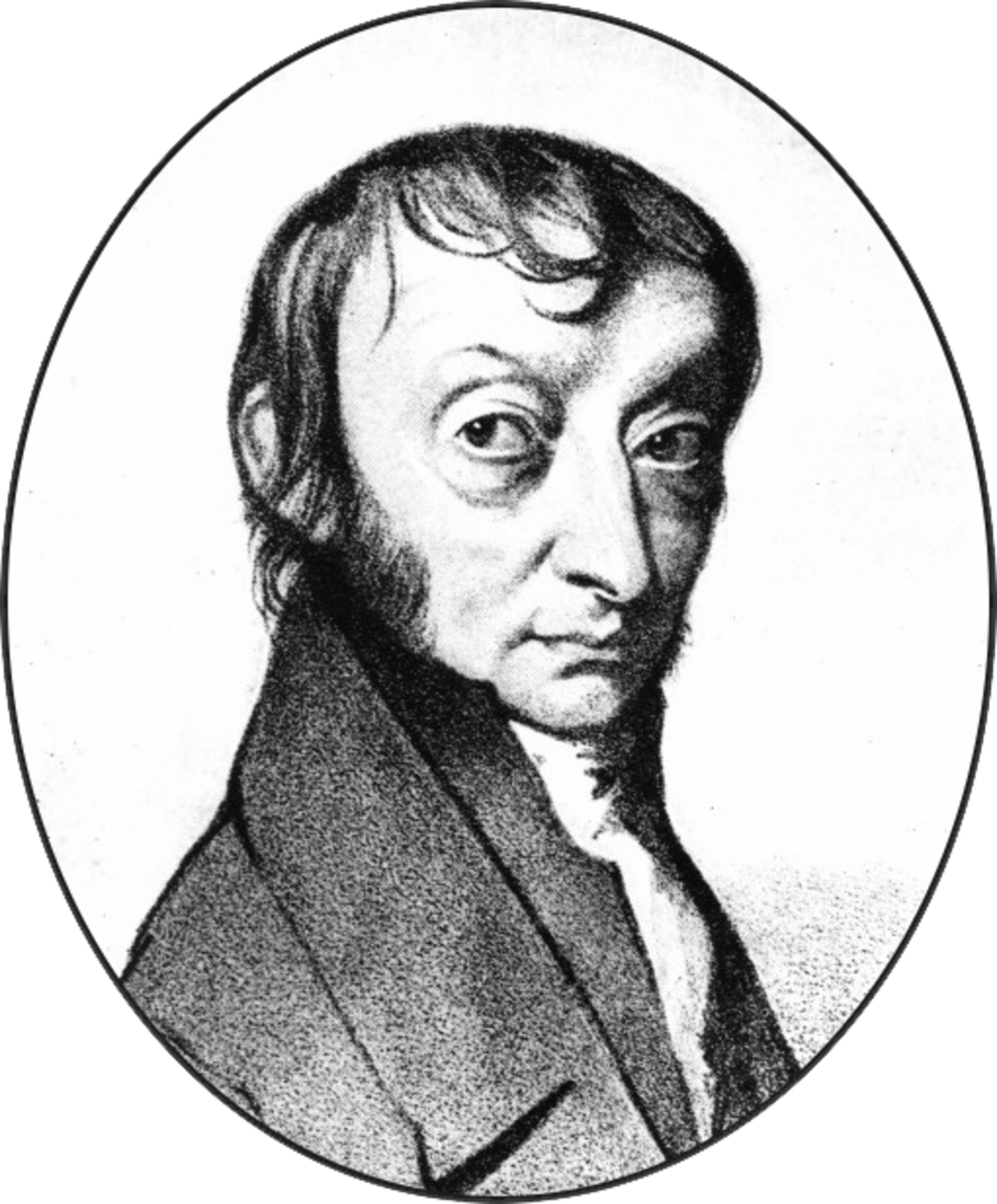
Amedeo Avogadro
From Turin's Aristocracy to the Frontiers of Chemistry
Lorenzo Romano Amedeo Carlo Avogadro di Quaregna e di Cerreto, born in Turin on August 9, 1776, hailed from a distinguished noble family in the Kingdom of Sardinia. Initially pursuing a career in law, his intellectual curiosity soon drew him towards the burgeoning fields of physics and chemistry. He began his scientific journey with studies on electricity, but it was the perplexing behavior of gases that captured his keenest interest.
In an era where the atomic and molecular nature of matter was still a subject of intense debate and confusion, Avogadro embarked on a path to clarify these fundamental concepts. His early work demonstrated a rigorous scientific methodology, a trait that would define his most significant contributions, even if they were initially overlooked by the scientific community.
The Hypothesis That Defined Molecular Identity
In 1811, Avogadro published his seminal paper, 'Essay on the Manner of Composing Liquids from the Electrical Approximation of Their Particles,' which contained his famous hypothesis. This hypothesis, now known as Avogadro's Law, posits that equal volumes of all gases, under the same conditions of temperature and pressure, contain the same number of molecules. This was a revolutionary concept because it provided a clear distinction between atoms and molecules, a point of contention among scientists like John Dalton.
Avogadro suggested that elementary gases, such as hydrogen and oxygen, existed as diatomic molecules (H₂ and O₂), not as individual atoms. This insight was crucial for explaining chemical reactions and determining accurate molecular weights, resolving discrepancies that had plagued earlier theories. For instance, it explained why combining equal volumes of hydrogen and chlorine produced twice the volume of hydrogen chloride gas.
The Ripple Effect
The implications of Avogadro's hypothesis were profound, though its widespread acceptance was delayed for decades. By establishing a direct relationship between volume and the number of molecules, Avogadro provided chemists with an indispensable tool for quantitative analysis. His work enabled the accurate determination of atomic and molecular weights, which was essential for establishing the periodic table and understanding stoichiometry.
This clarity in molecular composition allowed for the precise formulation of chemical compounds and the prediction of reaction outcomes. Without Avogadro's Law, the development of fields like organic chemistry, biochemistry, and industrial chemical processes would have been significantly hampered, if not impossible.
A Legacy Cemented in Constants and Concepts
Amedeo Avogadro died on July 9, 1856, in Turin, leaving behind a scientific legacy that would eventually be recognized as foundational. His hypothesis was championed by Stanislao Cannizzaro at the Karlsruhe Congress in 1860, which finally led to its broad acceptance. The ultimate tribute to his contribution came with the naming of 'Avogadro's number' (approximately 6.022 x 10²³), representing the number of constituent particles (usually molecules, atoms, or ions) that are contained in the amount of substance given by one mole.
This constant is central to the mole concept, a fundamental unit in chemistry used for measuring the amount of substance. Avogadro's work continues to be a cornerstone of chemical education and research, underscoring his status as a pivotal figure in the history of science.
The Enduring Significance of Molecular Counting
Avogadro's Law and the constant named in his honor are not mere academic curiosities; they are vital tools in modern scientific endeavors. From pharmaceutical research, where precise molecular quantities are critical for drug efficacy and safety, to materials science, where understanding molecular structure dictates material properties, his principles are indispensable. In environmental science, tracking the concentration of gases in the atmosphere relies heavily on the mole concept and Avogadro's number.
His work fundamentally changed how scientists perceive and quantify matter at its most basic level, enabling the sophisticated chemical technologies and understanding we possess today. The ability to 'count' molecules, however indirectly, is a testament to Avogadro's foresight and genius.
Go deeper
Frequently Asked Questions
Who was Amedeo Avogadro?+
What is Avogadro's Law?+
Why did Avogadro think gases are made of molecules?+
How did Avogadro help chemists?+
What is Avogadro's number?+
Based on content from Wikipedia · Licensed under CC BY-SA 4.0