

Amber: Nature's Ancient Treasure
Images
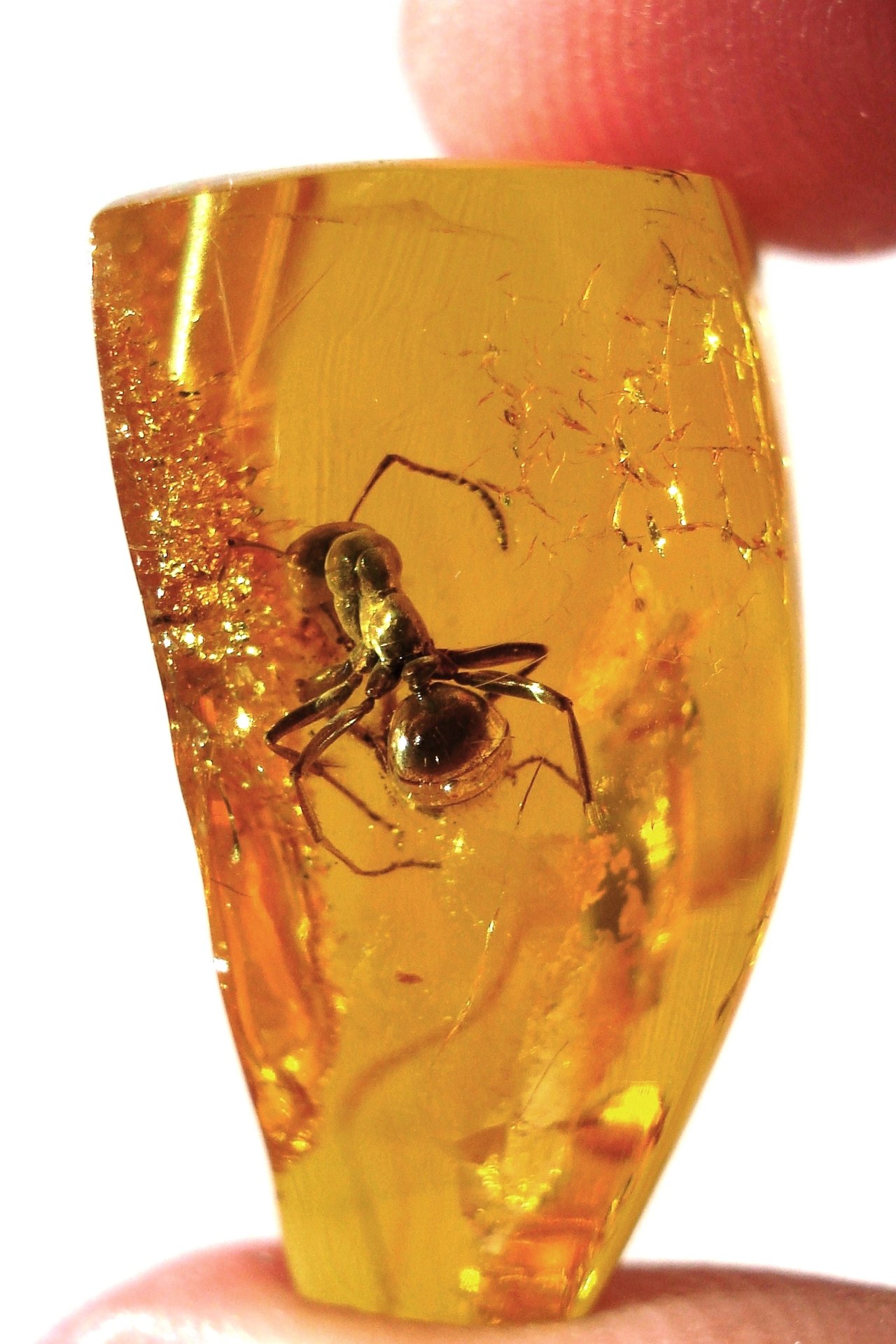
Amber


The Geological Genesis of Amber
Amber is not a mineral but rather a fossilized tree resin, an organic substance that originates from ancient trees. Its formation process typically begins with the exudation of resin from trees, often in response to injury. This sticky sap then encounters environmental conditions that lead to its preservation.
Over millions of years, the resin undergoes polymerization and oxidation, hardening and transforming into a stable fossilized state. This process is frequently associated with sedimentary environments, particularly coal seams, where the resin is protected from rapid decay and subjected to moderate heat and pressure. The specific geological conditions and the type of ancient tree species, such as conifers, dictate the chemical composition and physical properties of the resulting amber.
Different classifications of amber, like succinite (Baltic amber) and retinite, are based on these distinct chemical constituents, reflecting variations in their origin and fossilization pathways.
Nature's Micro-Museums
The most captivating aspect of amber is its capacity to encapsulate and preserve organic inclusions with remarkable fidelity. As a viscous resin, it readily trapped small organisms and plant fragments that came into contact with it. These inclusions can range from microscopic pollen grains and fungal spores to entire insects, arachnids, and even small vertebrates like lizards or bird feathers.
The exceptional preservation allows for detailed scientific study, offering unparalleled insights into the morphology, behavior, and evolutionary history of ancient life. Paleontologists analyze these specimens to reconstruct ancient ecosystems, understand insect-plant interactions, and trace the lineage of modern species. The study of amber inclusions has significantly advanced our understanding of paleontology, paleoecology, and evolutionary biology, effectively turning each piece of amber into a miniature, time-locked museum.
Aesthetic Diversity and Historical Significance
Amber's appeal extends beyond its scientific value; its aesthetic qualities have made it a coveted material for adornment and art throughout human history. Its warm, translucent appearance, coupled with a wide spectrum of colors-from pale yellow and honey-orange to deep reds and even rare blues and greens-contributes to its desirability. The color variations are influenced by the original resin composition, the presence of impurities, and the degree of oxidation and degradation over time.
Historically, amber has been traded extensively, playing a significant role in ancient economies and cultures. The Greeks associated it with the sun god Helios and believed it possessed healing powers, coining the term 'elektron' from which 'electricity' is derived due to its electrostatic properties when rubbed. This long-standing appreciation underscores amber's enduring cultural significance as a tangible link to the past.
Amber's Classification and Modern Relevance
Scientifically, amber is classified into five main classes based on its chemical makeup, primarily determined by its succinic acid content and the presence of specific compounds. Class I, for instance, is characterized by high succinic acid content, typical of Baltic amber. This classification helps in tracing the geographic origin and geological age of amber samples. Beyond its paleontological and historical importance, amber continues to hold relevance today.
It is still widely used in jewelry, and its unique properties are explored in various fields. Furthermore, the study of amber's preservation mechanisms can inform conservation efforts for other organic materials. Its role as a window into ancient worlds ensures its continued fascination for scientists, collectors, and enthusiasts alike, bridging the gap between deep time and contemporary understanding.
Go deeper
Frequently Asked Questions
What is amber and how does it form?+
How does amber keep tiny insects and plants inside?+
Why does amber come in many colors?+
What can scientists learn from amber?+
How was amber used by ancient people?+
Based on content from Wikipedia · Licensed under CC BY-SA 4.0