

Alexander Graham Bell
Images
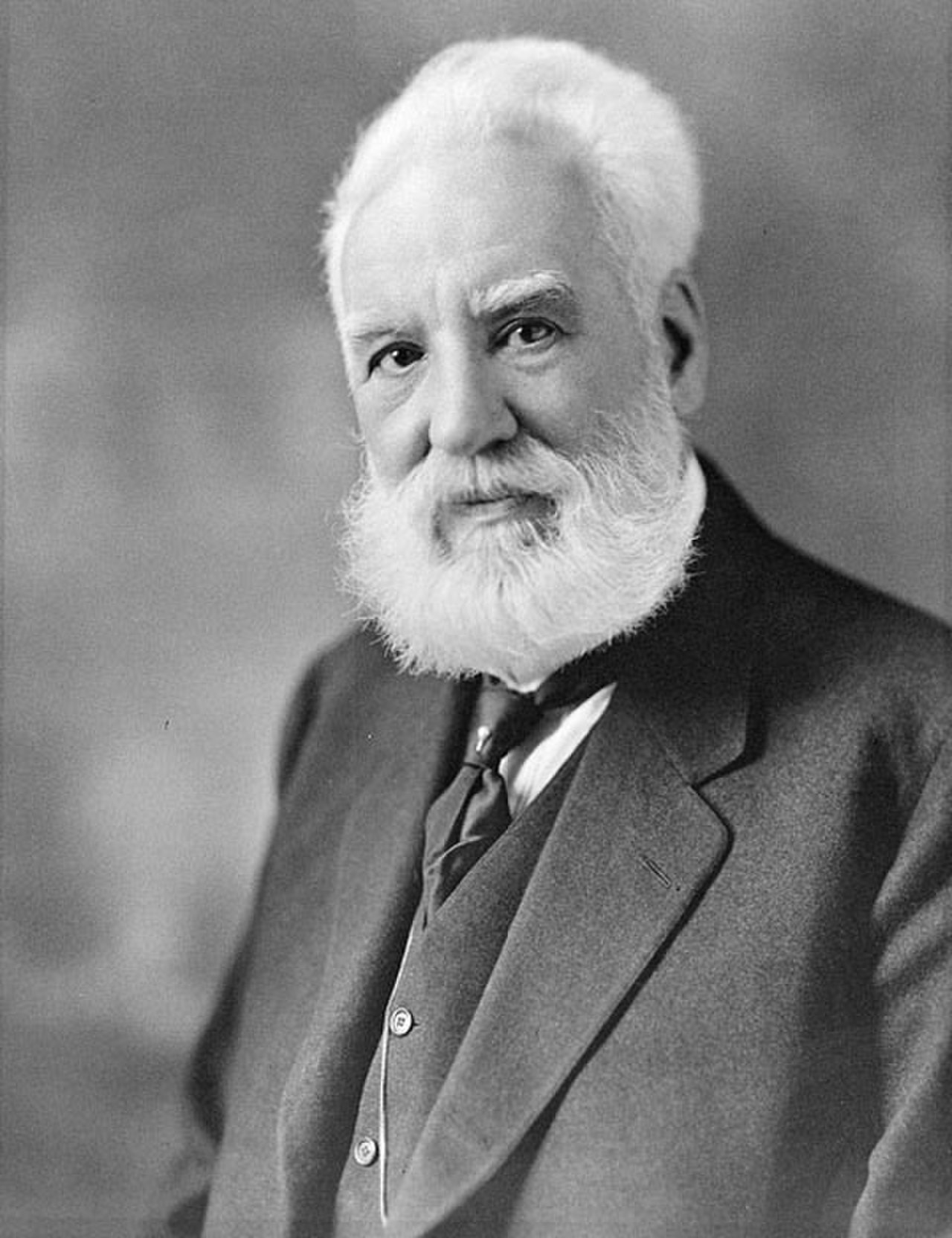
Alexander Graham Bell
A Foundation Built on Sound, Speech, and Empathy
Alexander Graham Bell's formative years were steeped in the study of sound and speech, a trajectory profoundly shaped by his family's expertise and personal experiences. His father, Melville Bell, developed Visible Speech, a system of symbols representing speech sounds, and his grandfather was a renowned actor and teacher of elocution. This familial legacy was compounded by the profound influence of deafness in his life; both his mother, Eliza Grace Symonds Bell, and his wife, Mabel Gardiner Hubbard, were deaf.
These intimate connections fostered a deep empathy and an unwavering commitment to improving communication for those with hearing impairments. Bell's early work was not solely aimed at invention but was driven by a genuine desire to understand the mechanics of hearing and speech, leading him to experiment with devices like the 'audiometer' to detect hearing problems. This foundational understanding of acoustics and human physiology was critical to his later breakthroughs.
The Genesis of the Telephone
Bell's path to the telephone was an evolution from existing technologies, particularly the telegraph. He initially sought to improve the telegraph by developing a 'harmonic telegraph' capable of sending multiple messages simultaneously over a single wire, a concept rooted in the idea of transmitting different musical tones. This pursuit led him to explore the principles of transmitting sound waves electrically.
The pivotal moment occurred on March 10, 1876, when, during an experiment with his assistant Thomas Watson, Bell accidentally transmitted intelligible human speech. The famous words, 'Mr. Watson, come here, I want to see you,' heard clearly through the apparatus, confirmed the viability of his invention.
Bell had been granted U.S. Patent No. 174,465 for the telephone just days prior, on March 7, 1876. This patent, though fiercely contested, laid the groundwork for the global telecommunications revolution, fundamentally altering the speed and accessibility of human interaction.
A Spectrum of Innovation
Bell's inventive spirit extended far beyond the telephone, encompassing a remarkable breadth of scientific and engineering endeavors. He was a pioneer in optical telecommunications, conceptualizing devices that transmitted sound on beams of light, a foundational idea for modern fiber optics and wireless communication. His work with hydrofoils led to the development of high-speed watercraft, significantly advancing marine technology.
In aeronautics, Bell's experiments with large kites, such as the 'Cygnet,' contributed to the understanding of aerodynamics and lift, influencing early aviation pioneers. Furthermore, his role as the second president of the National Geographic Society (1898-1903) was instrumental in shaping the organization into a leading platform for exploration and scientific dissemination, broadening public awareness of geography and natural history.
The Scientist's Perspective
Paradoxically, Alexander Graham Bell often viewed his invention of the telephone as a distraction from what he considered his more significant scientific work, particularly his extensive research into human heredity. He dedicated considerable effort to studying the inheritance of traits, conducting large-scale surveys and analyses that were, at the time, among the most comprehensive in America. Bell believed these studies represented a crucial contribution to the nascent field of genetics and human biology.
Despite his personal reservations about the telephone's impact on his scientific pursuits, its societal ramifications were immense. The ability to communicate instantly across distances collapsed geographical barriers, transforming commerce, fostering social connections, and laying the infrastructure for the interconnected digital age. Bell's legacy is thus a complex tapestry of technological innovation, scientific inquiry, and a profound, albeit sometimes reluctant, reshaping of human society.
Go deeper
Frequently Asked Questions
What did Alexander Graham Bell invent that changed how we talk?+
Why did Bell care so much about people who couldn't hear?+
How did Bell first create the telephone?+
What other cool inventions did Bell work on besides the telephone?+
Did Bell think the telephone was his most important work?+
Based on content from Wikipedia · Licensed under CC BY-SA 4.0