

Albert King
Images

Albert King - I'll Play the Blues for You


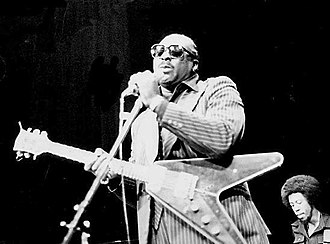


The "Velvet Bulldozer"
Albert King's physical presence was as commanding as his music. Standing between 6 feet 4 inches and an astonishing 6 feet 7 inches tall and weighing around 250 pounds, he was a man of considerable stature. This imposing physique, coupled with a voice described as smooth as velvet, earned him the evocative nickname "Velvet Bulldozer." This moniker perfectly encapsulated the duality of his persona: the gentle, almost comforting tone of his singing contrasted with the immense power and impact of his guitar playing and his sheer physical presence.
The nickname also alluded to his early working-class roots, including a period where he operated heavy machinery like bulldozers, grounding his larger-than-life musical persona in tangible experience. This blend of raw power and refined artistry made him a unique and captivating figure in the music world.
Revolutionizing Blues Guitar Technique
Albert King's impact on the evolution of blues and rock guitar is immeasurable. He was renowned for his distinctive playing style, characterized by a deep, dramatic tone that was widely imitated. Unlike many guitarists who played right-handed guitars flipped over, King played a Gibson Flying V upside down and restrung for his left-handed playing, contributing to his unique sound.
His string bending and vibrato were particularly expressive, imbuing his solos with a vocal-like quality. This innovative approach significantly influenced a generation of guitarists, including rock icons like Eric Clapton and Stevie Ray Vaughan, who openly acknowledged King's profound effect on their own playing. His seminal 1967 album, "Born Under a Bad Sign," and its iconic title track, became cornerstones of the blues repertoire, solidifying his place as a guitar innovator.
The Unrelated Trinity
Albert King is frequently mentioned alongside B.B. King and Freddie King, forming the celebrated "Three Kings of the Blues." This designation highlights their collective dominance and influence over the blues guitar landscape. It is crucial to note, however, that despite the shared surname, these three titans of music were not related by blood.
Each brought a distinct flavor to the blues: B.B. King with his eloquent, stinging solos; Freddie King with his powerful, driving R&B-infused blues; and Albert King with his raw, deeply emotional, and often deceptively simple yet profoundly impactful style. Together, they represented different facets of the blues, collectively shaping its sound and popularizing it for a global audience, ensuring its enduring legacy.
Enduring Recognition and Lasting Influence
Albert King's monumental contributions to music have been consistently recognized through prestigious accolades. His induction into the Blues Hall of Fame in 1983 was a significant acknowledgment of his foundational role in the genre. The subsequent posthumous induction into the Rock and Roll Hall of Fame in 2013 further underscored his broad impact, demonstrating how his blues roots profoundly influenced rock music.
His enduring relevance was reaffirmed in 2023 when Rolling Stone magazine ranked him number 22 on their list of the 250 Greatest Guitarists of All Time. This consistent recognition across decades and genres speaks volumes about the lasting power of his music and his status as a true guitar legend whose sound continues to resonate.
Go deeper
Frequently Asked Questions
Who was Albert King?+
Why was he called "Velvet Bulldozer"?+
How did Albert King play the guitar differently?+
What is Albert King’s most famous song?+
What awards did Albert King receive?+
Based on content from Wikipedia · Licensed under CC BY-SA 4.0