

Albany, New York
Images

Albany Houses


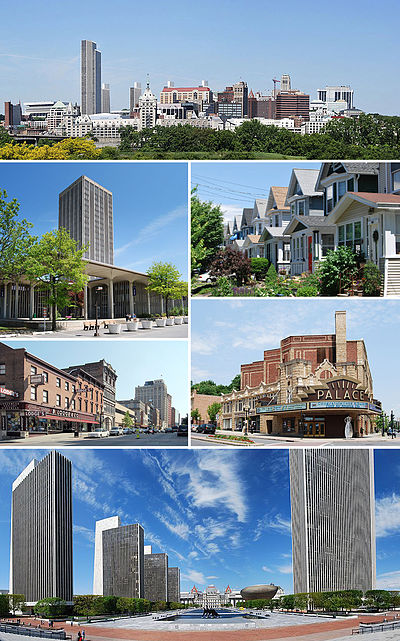


Geostrategic Position on the Hudson River Corridor
Albany's geographical placement is fundamental to its historical and ongoing significance. Situated on the west bank of the Hudson River, approximately ten miles south of its confluence with the Mohawk River, it commands a critical position within New York's extensive waterway system. This location historically facilitated trade and transportation, connecting the Atlantic coast with the interior of the continent.
The Hudson River itself is a major artery, and Albany's proximity to the Mohawk provides access to a broader network of rivers and, historically, the Erie Canal. The city experiences a humid continental climate, characterized by distinct seasons, including cold, snowy winters and warm, humid summers, influencing both its natural environment and human activities throughout the year. The surrounding Capital District, a metropolitan area encompassing Albany, Troy, Schenectady, and Saratoga Springs, boasts a substantial population, underscoring the region's economic and cultural gravity.
Centuries of Settlement and Shifting Sovereignty
Albany boasts a rich and layered history, earning its title as the oldest city in New York. Its origins trace back to the indigenous Algonquian-speaking Mohican people. European settlement began with Dutch colonists in the early 17th century, who established Fort Nassau in 1614 for fur trading and later Fort Orange in 1624, laying the groundwork for a permanent settlement.
In 1664, English control replaced Dutch rule, and the settlement was renamed Albany in honor of the Duke of Albany. The city received its official charter in 1686 under English governance. Following the formation of the United States, Albany was designated the capital of New York in 1797, solidifying its political importance.
Its status as one of the oldest surviving English settlements north of Virginia highlights its foundational role in American colonial history.
The Evolving Economic Landscape
Albany has consistently served as a vital economic engine, adapting to changing times. In the late 18th and throughout the 19th centuries, it was a paramount center for trade and transportation. Its position as the eastern terminus of the Erie Canal was transformative, linking the Great Lakes to the Hudson River and making Albany a crucial hub for commerce.
The advent of railroads further cemented its role as a transportation nexus. While facing challenges like urban sprawl and suburbanization in the late 20th century, which led to population shifts, Albany has strategically reinvested in its future. A significant building and renovation plan in the 1990s revitalized its downtown core.
More recently, the city has embraced the high-technology sector, particularly excelling in nanotechnology, positioning itself at the forefront of scientific and economic innovation.
Governance, Education, and Modern Urban Dynamics
As the state capital, Albany is the seat of New York's government, housing the State Legislature and numerous state agencies. This concentration of governmental functions shapes the city's identity and economy, attracting professionals in law, public policy, and administration. Beyond governance, Albany is a significant educational center.
It is home to the University at Albany, SUNY, and other institutions of higher learning, fostering research and development, particularly in fields like nanotechnology. The city's political landscape has also been marked by influential figures and political machines, contributing to its unique civic history. Despite historical population declines due to suburbanization, recent redevelopment efforts and growth in the technology sector are contributing to a resurgence, demonstrating Albany's resilience and forward-looking vision.
See also
Frequently Asked Questions
What is Albany known for?+
Where is Albany located?+
Why was Albany important in the past?+
How does Albany stay modern today?+
What kind of weather does Albany have?+
Based on content from Wikipedia · Licensed under CC BY-SA 4.0